
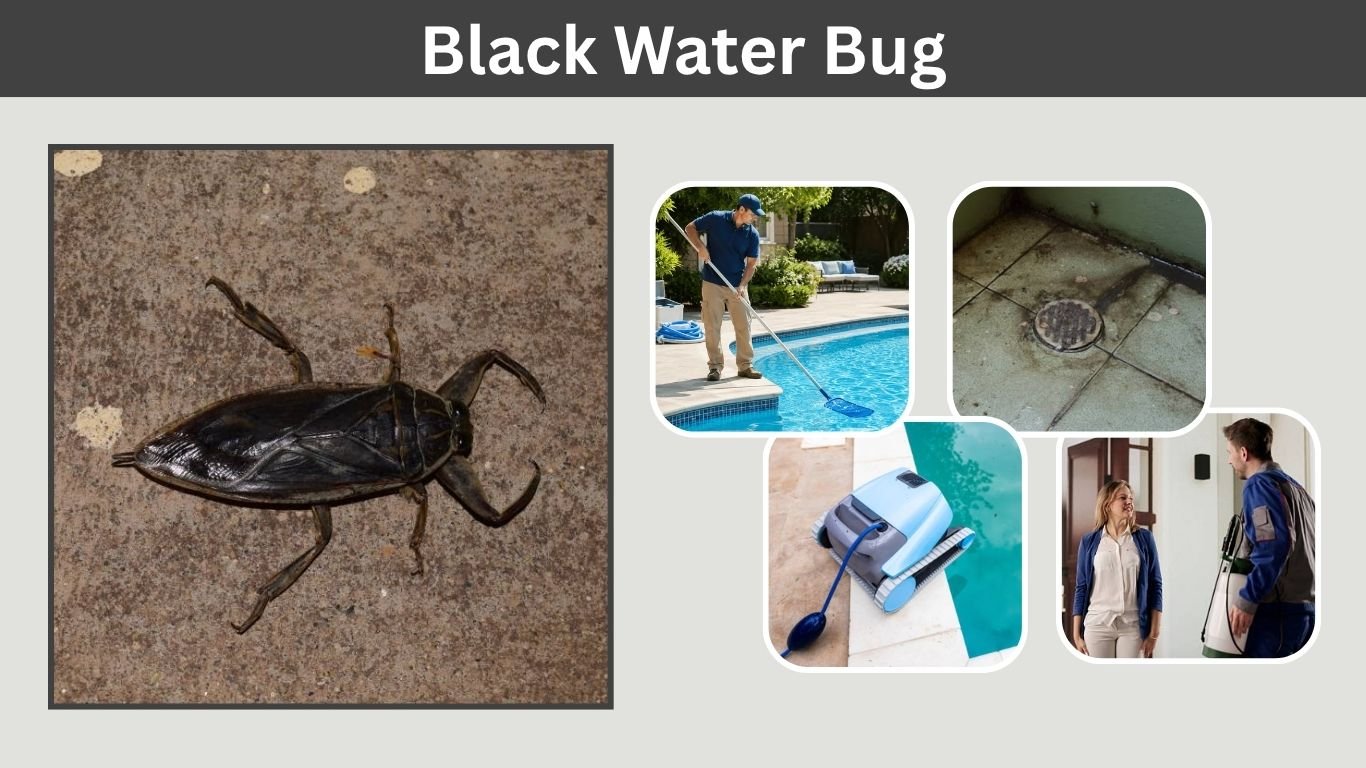
A black water bug found inside a house is often an Oriental cockroach rather than a true aquatic insect. Oriental cockroaches have shiny, dark-brown to nearly black bodies and prefer cool, damp locations such as basements, drains, crawl spaces and areas beneath appliances. Outdoors, however, “black water bug” may describe a giant water bug, water beetle or another dark aquatic insect. Correct identification is essential because cockroaches can infest buildings, while true water bugs usually enter accidentally.
What Is a Black Water Bug?
“Black water bug” is a general name rather than one precise species. It is commonly applied to dark insects found near plumbing, standing water, pools, ponds and damp basements.
Possible identifications include:
- Oriental cockroach
- Giant water bug
- Water scavenger beetle
- Predaceous diving beetle
- Backswimmer or water boatman
- Cockroach nymph
- Ground beetle that accidentally entered a house
Inside buildings, the Oriental cockroach is the most likely candidate. It is commonly called a water bug or black beetle because it has an almost-black body and prefers dark, moist surroundings.
Black Water Bug Quick Facts
| Feature | Oriental cockroach | Giant water bug |
| Scientific group | Blatta orientalis | Family Belostomatidae |
| Typical color | Dark brown to nearly black | Brown, olive or very dark brown |
| Size | About 1–1¼ inches | Some species exceed 4 inches |
| Antennae | Very long | Short and less noticeable |
| Front legs | Spiny running legs | Thick, grasping legs |
| Habitat | Drains, basements and sewers | Ponds, marshes and slow streams |
| Indoor infestation | Possible | Very unlikely |
| Bite risk | Rarely bites | Can deliver a painful defensive bite |
What Does a Black Water Bug Look Like?
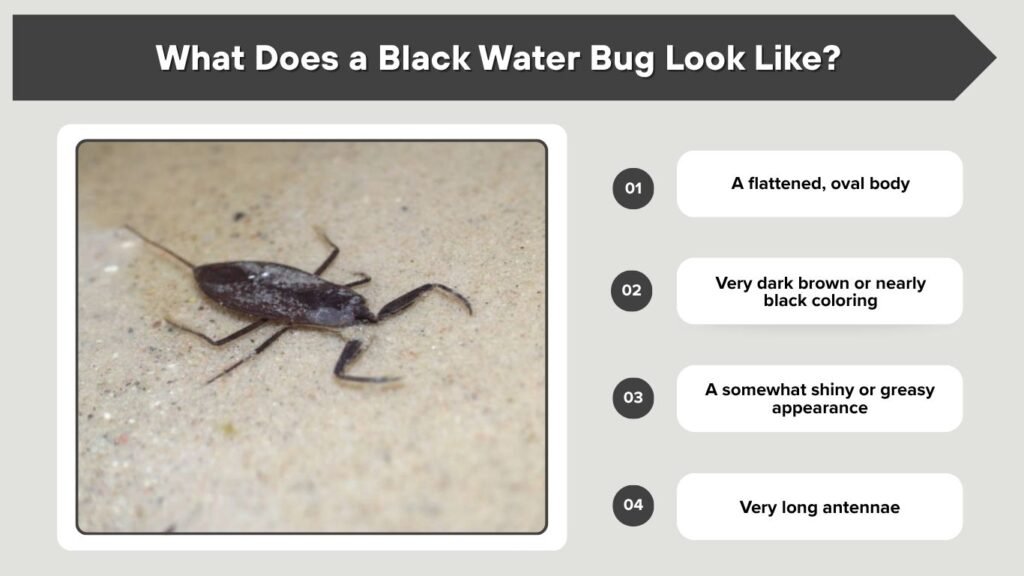
Identification depends on the insect’s body shape, legs, antennae, location and behavior. Color alone is unreliable because several unrelated insects may appear black.
Oriental Cockroach Identification
An adult Oriental cockroach has:
- A flattened, oval body
- Very dark brown or nearly black coloring
- A somewhat shiny or greasy appearance
- Very long antennae
- Six spiny legs
- A body around one inch long
- Reduced wings in females
- Wings shorter than the body in males
Neither sex is considered capable of normal flight. Young Oriental cockroaches are smaller and wingless, and immature nymphs may appear reddish-brown before becoming darker.
Giant Black Water Bug Identification
A giant water bug is broad, oval and somewhat flattened. Unlike a cockroach, it has shorter antennae and thick, pincer-like front legs used to capture aquatic prey. Its rear legs are flattened and fringed with fine hairs that help it swim.
Giant water bugs normally live in freshwater ponds, marshes and slow-moving streams. Adults can fly and may be attracted to lights, sometimes landing in swimming pools or near buildings at night.
Small Black Water Bugs
A small black water bug may be:
- A young cockroach
- A water boatman
- A backswimmer
- A diving beetle
- A mosquito pupa or larva
- A small beetle attracted to moisture
Small insects repeatedly appearing beneath sinks or appliances are more likely to be cockroach nymphs. Small insects actively swimming in a pool or pond are more likely to be aquatic bugs or beetles.
Black Water Bug vs. Cockroach
Many insects called black water bugs are actually cockroaches.
| Feature | Cockroach-type water bug | True aquatic water bug |
| Antennae | Long and threadlike | Usually shorter |
| Body | Flattened and oval | Broad or boat-shaped |
| Movement | Runs quickly | Swims efficiently |
| Front legs | Similar to other walking legs | Often thick and grasping |
| Main location | Basements, drains and kitchens | Pools, ponds and wetlands |
| Reproduction indoors | Possible | Unlikely |
| Attraction to lights | Some species | Common in flying adults |
If the insect has long antennae and runs across the basement floor, it is probably a cockroach. If it has short antennae, swimming legs and powerful front pincers, it may be a true water bug.
Why Are Black Water Bugs in the House?
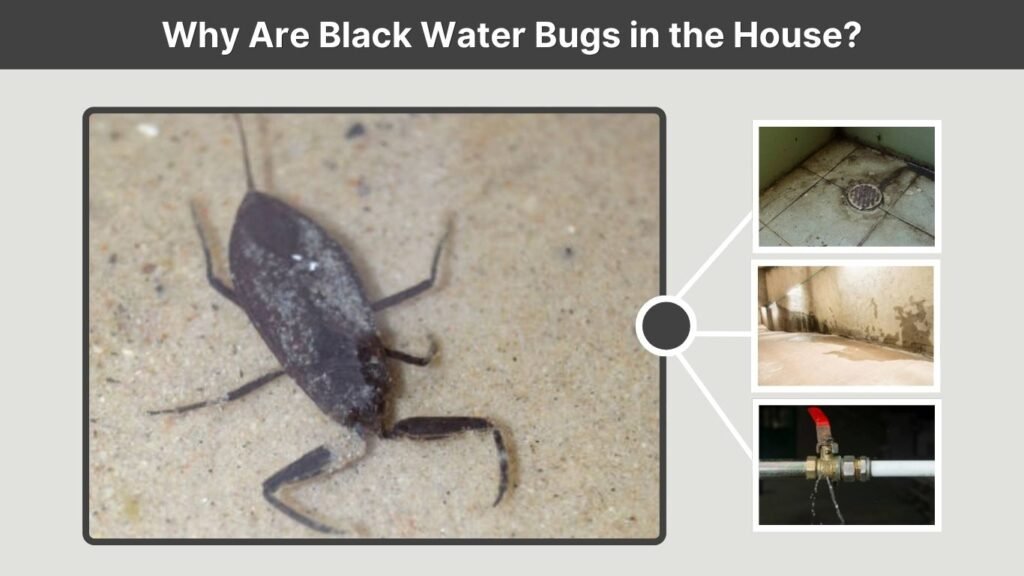
Oriental cockroaches enter homes because they need moisture, food and protected shelter. They are commonly associated with sewers, drains, leaking pipes and damp spaces at or below ground level.
Moisture Problems
Common attractants include:
- Leaking plumbing
- Damp basements
- Floor drains
- Condensation
- Wet crawl spaces
- Water beneath refrigerators
- Washing-machine leaks
- Poor basement ventilation
Entry Points
Black cockroaches may enter through:
- Gaps beneath doors
- Foundation cracks
- Damaged drainpipes
- Sewer connections
- Basement windows
- Openings around plumbing
- Utility lines
- Vents without screens
Oriental cockroaches may move indoors after excessive rainfall, seasonal changes or outdoor disturbances such as lawn mowing.
Food and Shelter
Cockroaches eat rubbish, crumbs, grease and decaying organic material. Clutter, cardboard, pet food and debris near the foundation provide additional shelter and food.
Are Black Water Bugs Dangerous?
The risk depends on the species.
Oriental Cockroach Risks
Oriental cockroaches may travel through drains, sewers, rubbish and decaying material before reaching indoor surfaces. They can contaminate food and may carry disease-causing microorganisms. Their saliva, feces and shed skins can also aggravate allergies and asthma.
Do Black Water Bugs Bite?
Oriental cockroaches are not aggressive and rarely bite people. Their primary risks are contamination and allergen exposure.
Giant water bugs can deliver a painful defensive bite with their piercing mouthparts when handled or stepped on. Their bite is painful but is not considered toxic to humans. Use a container or long-handled net rather than bare hands to move one.
Black Water Bugs in a Pool
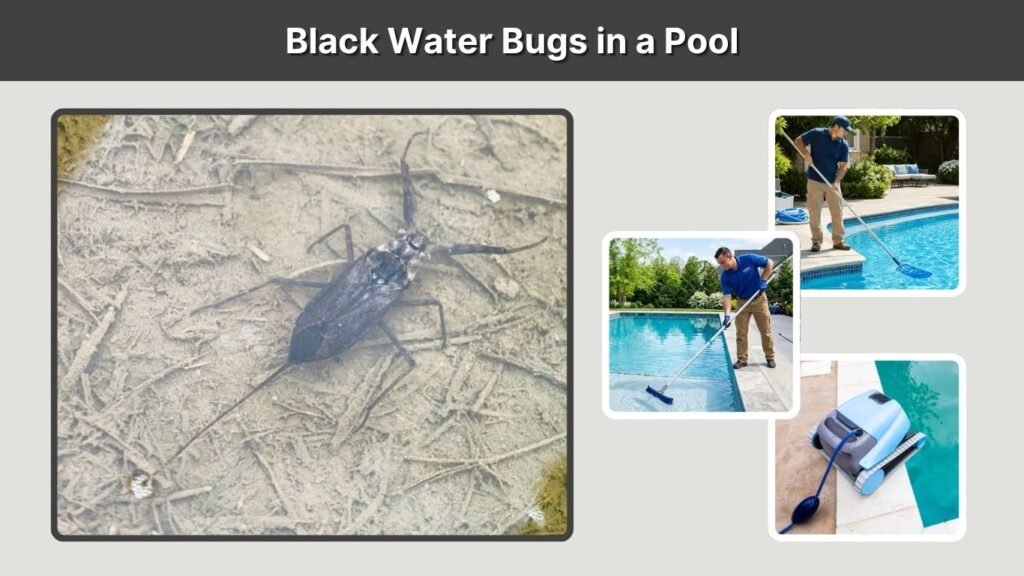
Black bugs swimming in a pool may be water boatmen, backswimmers, diving beetles or true giant water bugs.
Water boatmen generally feed on algae and organic material. Backswimmers are predators that may follow water boatmen and other small insects into the pool. Backswimmers can bite when handled.
Remove pool insects with a long-handled skimmer. Then:
- Remove leaves and organic debris.
- Brush the walls, steps and floor.
- Vacuum the pool.
- Test and correct sanitizer levels.
- Clean or backwash the filter.
- Reduce unnecessary lights near the pool at night.
- Use a fitted cover when the pool is not in use.
Do not pour household insecticide into swimming-pool water.
How to Get Rid of Black Water Bugs in the House
When the insect is an Oriental cockroach, control should address food, moisture, shelter and entry points.
Inspect and Monitor
Place sticky traps against walls near:
- Floor drains
- Water heaters
- Washing machines
- Basement doors
- Sinks
- Refrigerators
- Plumbing openings
Sticky traps help identify where activity is highest and whether control measures are working.
Remove Water and Food
Repair plumbing leaks, dry damp surfaces and improve ventilation. Store food in sealed containers, clean grease and crumbs, empty rubbish regularly and avoid leaving pet food out overnight.
Sanitation is essential because pesticides alone will not solve a cockroach problem.
Use Cockroach Baits
Place labeled gel bait or enclosed bait stations close to hiding and travel areas. Baits generally provide better long-term control than spraying exposed insects, although it may take seven days or longer to notice a meaningful decline.
Keep bait away from children, pets and food-preparation surfaces. Follow every instruction on the product label.
Seal Entry Points
Install door sweeps, repair drainpipes and seal cracks around plumbing, windows, foundations and utility lines. Keep floor drains covered when practical and remove leaf litter, woodpiles and dense vegetation from the foundation.
Avoid Foggers
Bug bombs and total-release foggers rarely reach deep hiding spaces. They may expose occupants to unnecessary pesticide residue while repelling and dispersing cockroaches into additional rooms.
When to Call Pest Control
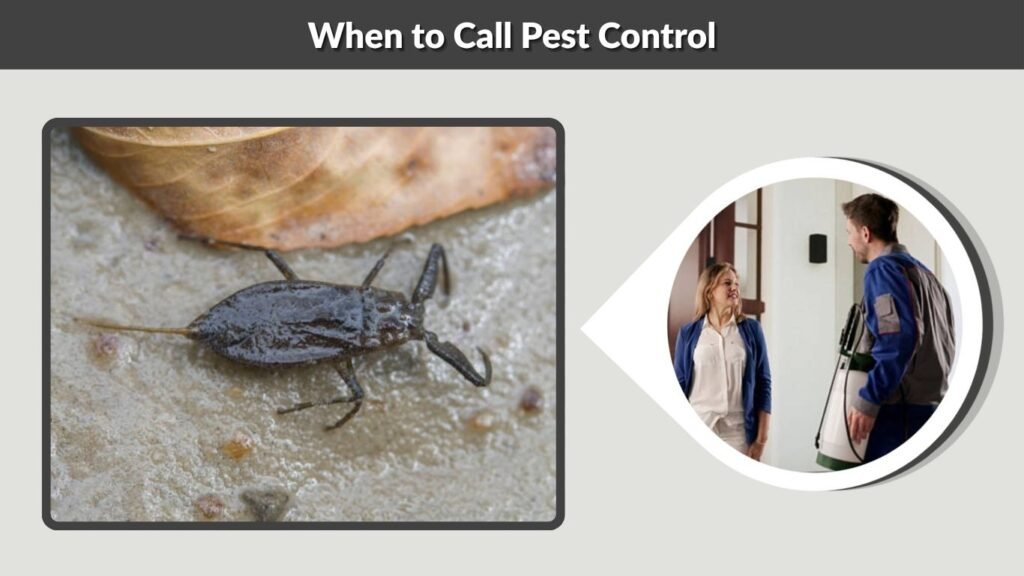
Professional help may be necessary when:
- Black water bugs appear every night
- Nymphs or egg cases are present
- Several rooms are affected
- Bugs repeatedly emerge from drains
- Baiting has not reduced activity
- The infestation affects several apartments
- The species cannot be identified
Serious indoor cockroach infestations often require professional inspection and targeted treatment.
FAQs
Are black water bugs cockroaches?
Many black water bugs found in houses are Oriental cockroaches. However, true aquatic water bugs and dark-colored beetles may also be called water bugs, especially when found near pools or ponds.
Can black water bugs fly?
Oriental cockroaches do not normally fly. Giant water bugs and many aquatic beetles can fly, often traveling at night and becoming attracted to outdoor lighting.
Why did I suddenly find a black water bug?
Heavy rain, seasonal changes, outdoor disturbance, an open drain or a new plumbing leak may cause an Oriental cockroach to enter. A true water bug may simply have flown toward a nearby light.
Does one black water bug mean an infestation?
One insect does not prove an infestation. Repeated sightings, nymphs, droppings, egg cases and nighttime activity are stronger evidence that cockroaches are living nearby.
What is the fastest way to remove black water bugs?
Vacuum or trap visible insects, repair moisture problems, clean food residue and place labeled cockroach bait near hiding areas. Remove true aquatic bugs with a container or long-handled net.
