
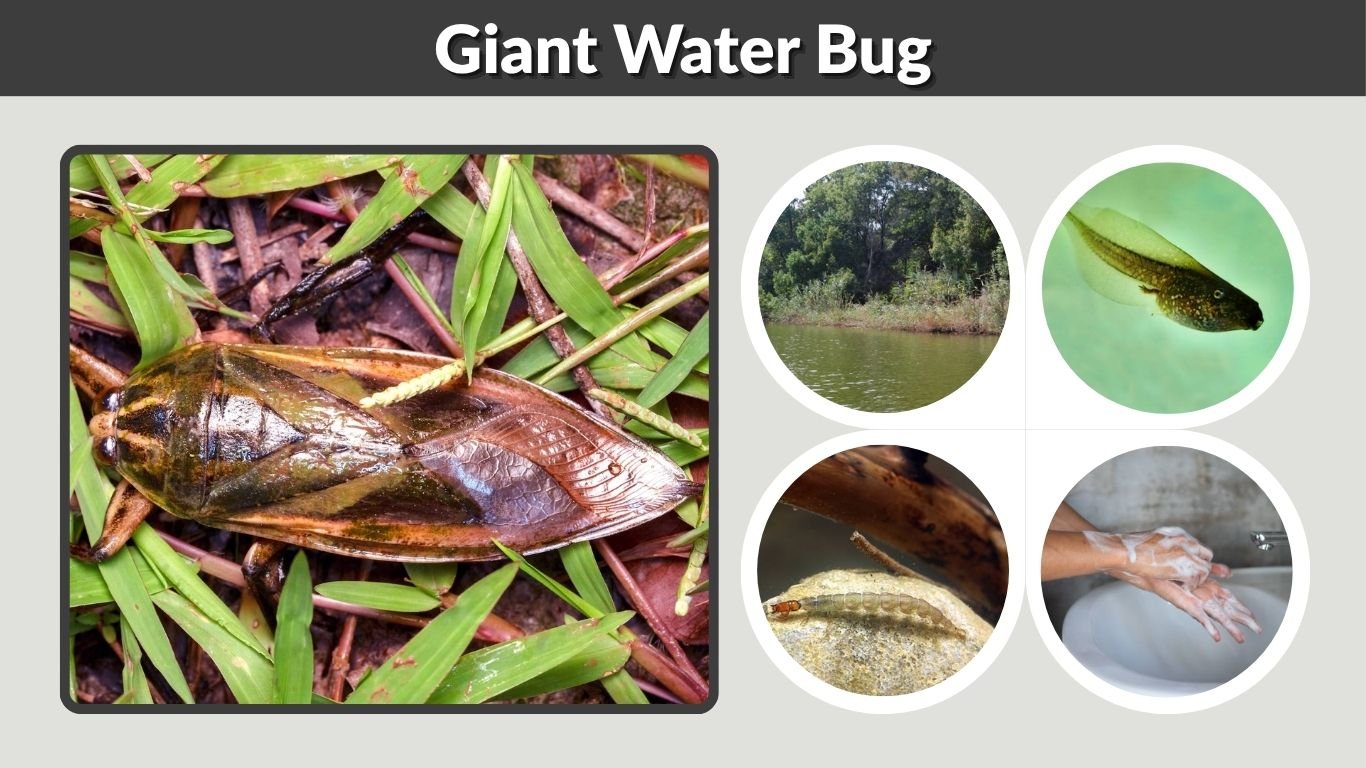
The giant water bug is a large predatory aquatic insect belonging to the family Belostomatidae. Its broad body, grasping front legs and painful defensive bite have earned it names such as “toe-biter” and “electric light bug.” Although it can look intimidating—and is sometimes mistaken for a cockroach—it normally lives in freshwater habitats and does not infest homes. Here is how to identify a giant water bug, understand its behavior and respond safely if one bites.
What Is a Giant Water Bug?
Giant water bugs are true bugs in the order Hemiptera. The family Belostomatidae includes species in genera such as Lethocerus, Belostoma and Abedus. Around 20 species occur in North America, while related species live in freshwater habitats worldwide.
The common phrase “water giant bug” usually refers to the same insect. However, the name should not be confused with water beetles, water scorpions or cockroaches commonly called household water bugs.
What Does a Giant Water Bug Look Like?
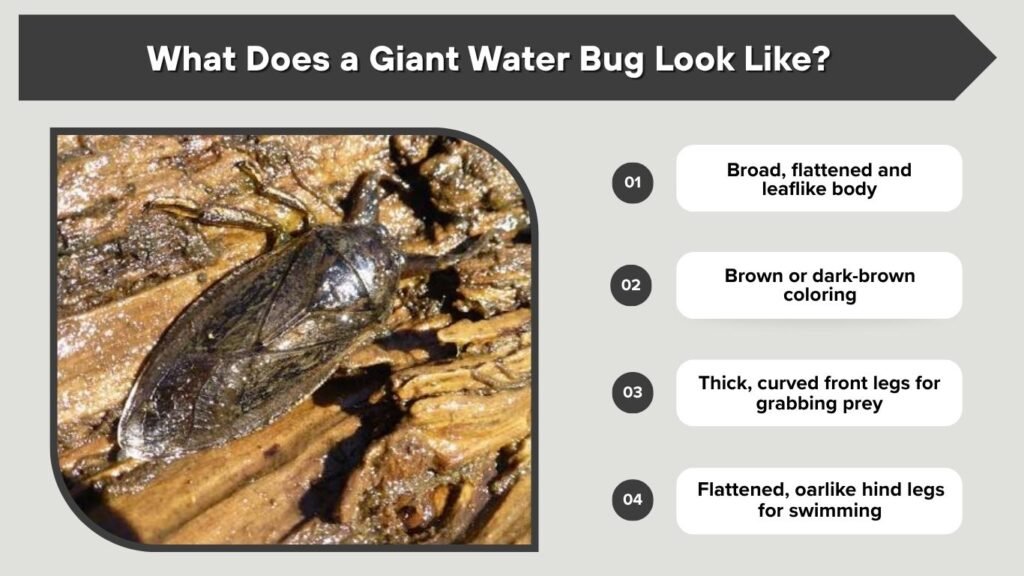
Giant water bugs have flattened, oval bodies that are usually brown, dark brown or nearly black. Their coloration allows them to blend into mud, leaves and underwater vegetation.
Identification Features
- Broad, flattened and leaflike body
- Brown or dark-brown coloring
- Thick, curved front legs for grabbing prey
- Flattened, oarlike hind legs for swimming
- Short antennae that are difficult to see
- Pointed, piercing beak beneath the head
- Wings folded flat across the back in adults
Many North American species reach approximately two inches long. However, the largest species elsewhere in the world can exceed four inches.
Giant Water Bug vs. Cockroach
A giant water bug may resemble a large cockroach at first glance, but the insects belong to different groups and behave very differently.
| Feature | Giant Water Bug | Cockroach |
| Main habitat | Ponds, marshes and slow water | Buildings, sewers and outdoor debris |
| Front legs | Thick and designed to seize prey | Slender and spiny |
| Hind legs | Flattened for swimming | Designed for running |
| Antennae | Short and partly hidden | Long and threadlike |
| Body shape | Broad and leaflike | Narrower and more rounded |
| Indoor infestation | No | Possible |
| Bite | Painful when handled | Extremely uncommon |
Finding one giant water bug near a porch light or swimming pool usually means it flew from a nearby aquatic habitat. It does not indicate the type of indoor infestation associated with cockroaches.
Where Do Giant Water Bugs Live?
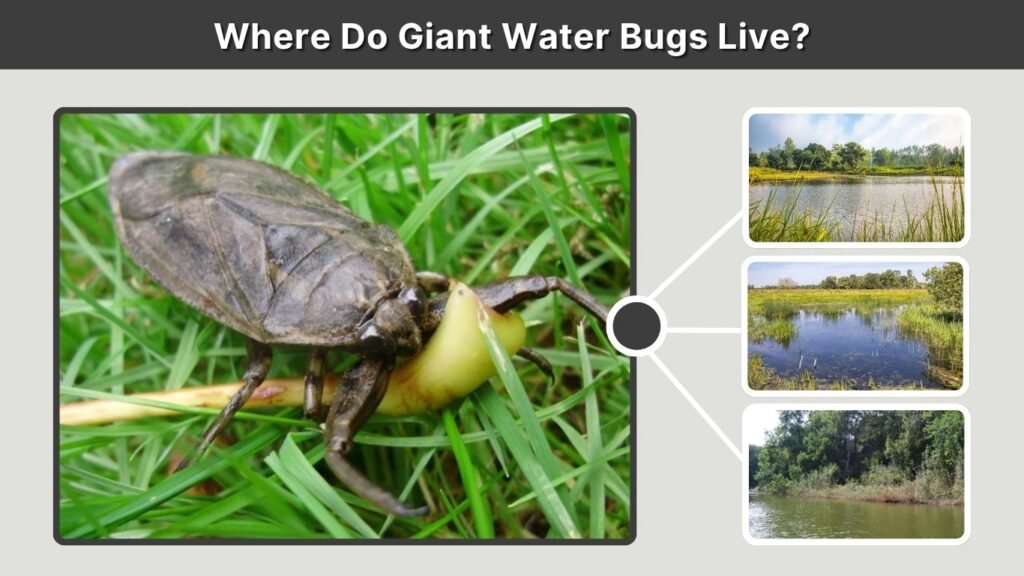
Giant water bugs inhabit ponds, freshwater marshes, lake margins, drainage areas and slow-moving sections of streams. They usually hide among submerged plants, leaf litter or debris close to the water’s surface.
These insects breathe atmospheric oxygen rather than extracting oxygen from water like fish. A structure near the end of the abdomen reaches the surface, while air may also be carried beneath the wings during a dive.
Giant Water Bugs in Florida
Florida supports several giant water bug species. University of Florida records list eight species across the genera Abedus, Belostoma and Lethocerus, including Lethocerus americanus, Lethocerus uhleri and Lethocerus annulipes.
They may also be encountered in Texas, Minnesota, Michigan, Ohio, Maine and other states where suitable freshwater habitat exists. The exact species and abundance vary by region.
What Do Giant Water Bugs Eat?
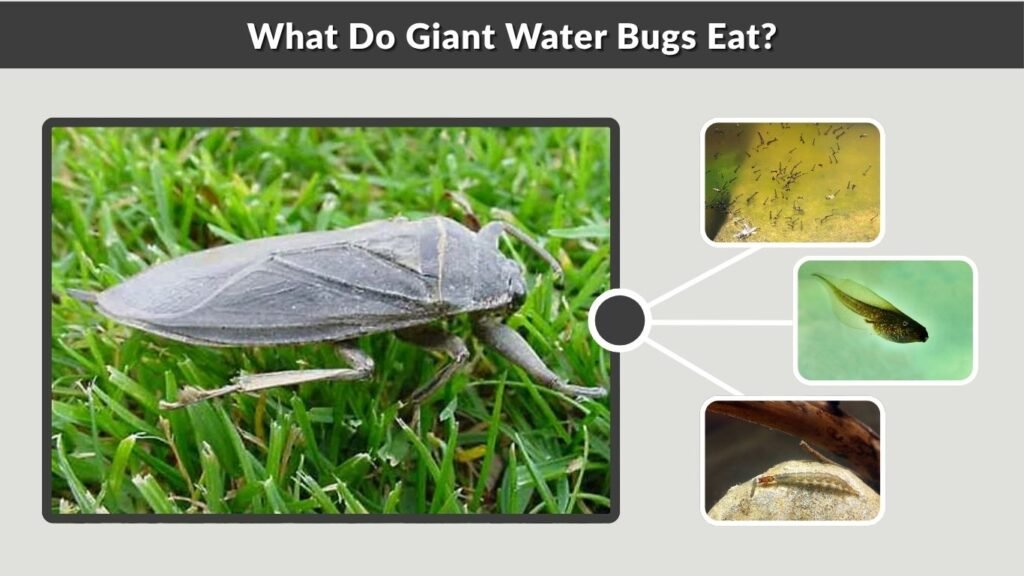
Giant water bugs are ambush predators. They remain nearly motionless while clinging to aquatic plants or resting on the bottom, then seize passing prey with their powerful front legs.
Their diet may include:
- Mosquito larvae
- Aquatic insect larvae
- Water beetles and other bugs
- Crayfish and small crustaceans
- Tadpoles and small frogs
- Small fish
- Occasionally small reptiles
After capturing an animal, the bug pierces it with its beak and introduces digestive saliva. This immobilizes the prey, breaks down its tissues and allows the bug to consume the liquefied material.
Fish, birds and other aquatic predators may eat giant water bugs. Their role as both predator and prey makes them an important part of freshwater food webs.
Do Giant Water Bugs Fly?
Adult giant water bugs have functional wings and many species are strong fliers. They often leave one body of water to locate another, particularly at night.
Artificial lights can attract them, explaining the alternative name electric light bug. A flying giant water bug may land on a driveway, porch, parking lot or swimming pool after mistaking reflected light for water.
Nymphs cannot fly. Their wings develop gradually as visible wing pads, becoming functional only after the final molt.
Giant Water Bug Life Cycle
The life cycle begins when a female deposits eggs either on vegetation above the water or on a male’s back, depending on the species.
Eggs and Parental Care
In many Belostoma species, the male carries a flat cluster of eggs on his back. He protects and aerates them until they hatch. In Lethocerus, eggs are generally placed on vegetation, where the male guards and moistens them.
Nymph Stage
The eggs may hatch after approximately one to two weeks. The emerging nymphs look like small, wingless adults and pass through five growth stages before reaching maturity. Under suitable conditions, this development may take around two months.
A giant water bug does not have a wormlike larval stage. Calling the immature insect a “giant water bug larva” is common, but nymph is the scientifically correct term.
Do Giant Water Bugs Bite?
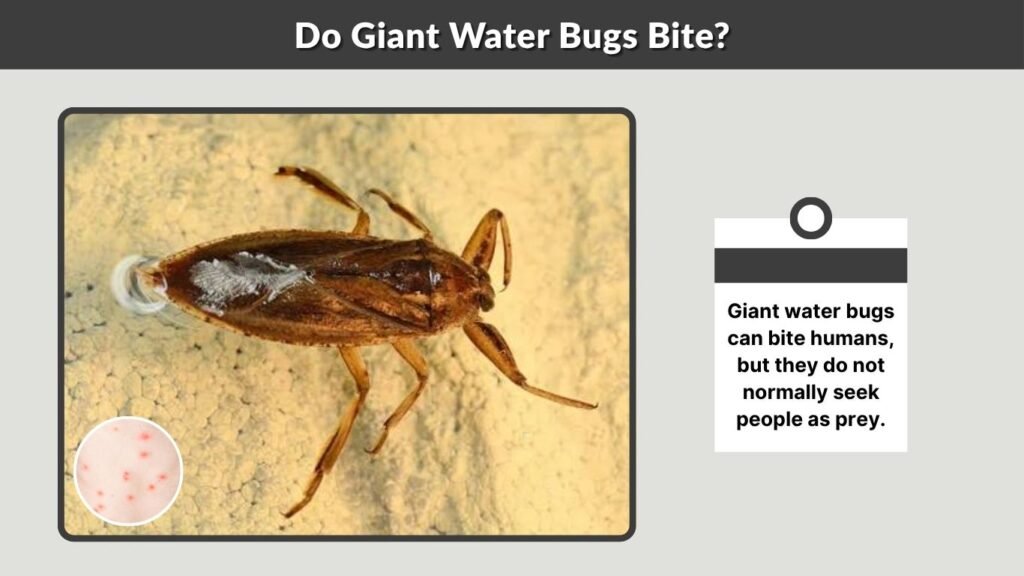
Giant water bugs can bite humans, but they do not normally seek people as prey. Most bites happen when someone handles one, steps on it while wading or traps it against bare skin.
The insect uses its short piercing beak rather than its legs to inflict the wound. Medical reports describe these bites as exceptionally painful, sometimes with localized swelling around the puncture.
Are Giant Water Bugs Dangerous?
For most people, a bite causes intense local pain rather than serious poisoning. Giant water bugs do not have a stinger, and they are not known for spreading human disease. However, any puncture can become infected, and severe allergic reactions to insect bites require urgent care.
Do not estimate the bite using a formal “pain scale,” since individual experiences differ and no universally accepted giant water bug pain rating exists.
Giant Water Bug Bite Treatment
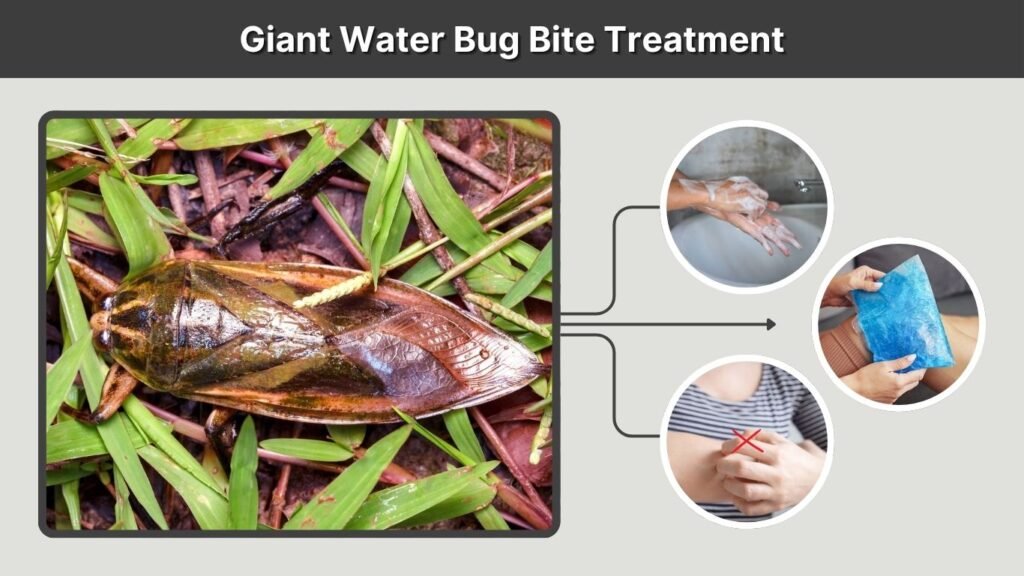
After being bitten:
- Move away from the insect and avoid handling it again.
- Wash the wound thoroughly with soap and water.
- Apply an ice pack wrapped in cloth for about 20 minutes.
- Elevate the affected hand or foot if swelling develops.
- Avoid scratching, squeezing or cutting the bite.
- Consider an appropriate over-the-counter pain reliever when medically safe for you.
Seek medical advice if pain or swelling worsens, the skin becomes hot, pus develops or symptoms do not improve. Call emergency services for breathing difficulty, fainting, confusion, difficulty swallowing, or swelling of the lips, tongue or throat.
What to Do With a Giant Water Bug in a Pool
Do not remove it with bare hands. Use a long-handled pool net and move it away from areas where people and pets are walking.
One insect in a pool does not normally mean the pool is infested. It may simply have been attracted by lights or the reflective water surface during a nighttime flight. Turning off unnecessary outdoor lights and using a pool cover can reduce future visitors.
FAQs
Why is a giant water bug called a toe-biter?
The name comes from its ability to deliver a painful defensive bite to bare feet when people accidentally step near it while wading. It does not intentionally search for human toes.
Are giant water bugs poisonous or venomous?
They introduce prey-targeted digestive saliva through a piercing beak. Although their bite can be extremely painful, it usually causes localized symptoms in humans rather than systemic poisoning.
Are giant water bugs aggressive?
They are aggressive predators toward aquatic prey but generally avoid confrontations with people. Bites usually occur when the insect is touched, trapped, stepped on or otherwise threatened.
Can giant water bugs hurt dogs?
A curious dog could receive a painful bite after mouthing or pawing at one. Keep pets away and use a net or container to move the insect without direct contact.
Are giant water bugs edible?
Some giant water bug species are traditionally eaten in parts of South and Southeast Asia. Wild insects should not be collected and prepared without reliable identification, knowledge of local regulations and safe food-handling practices.
