
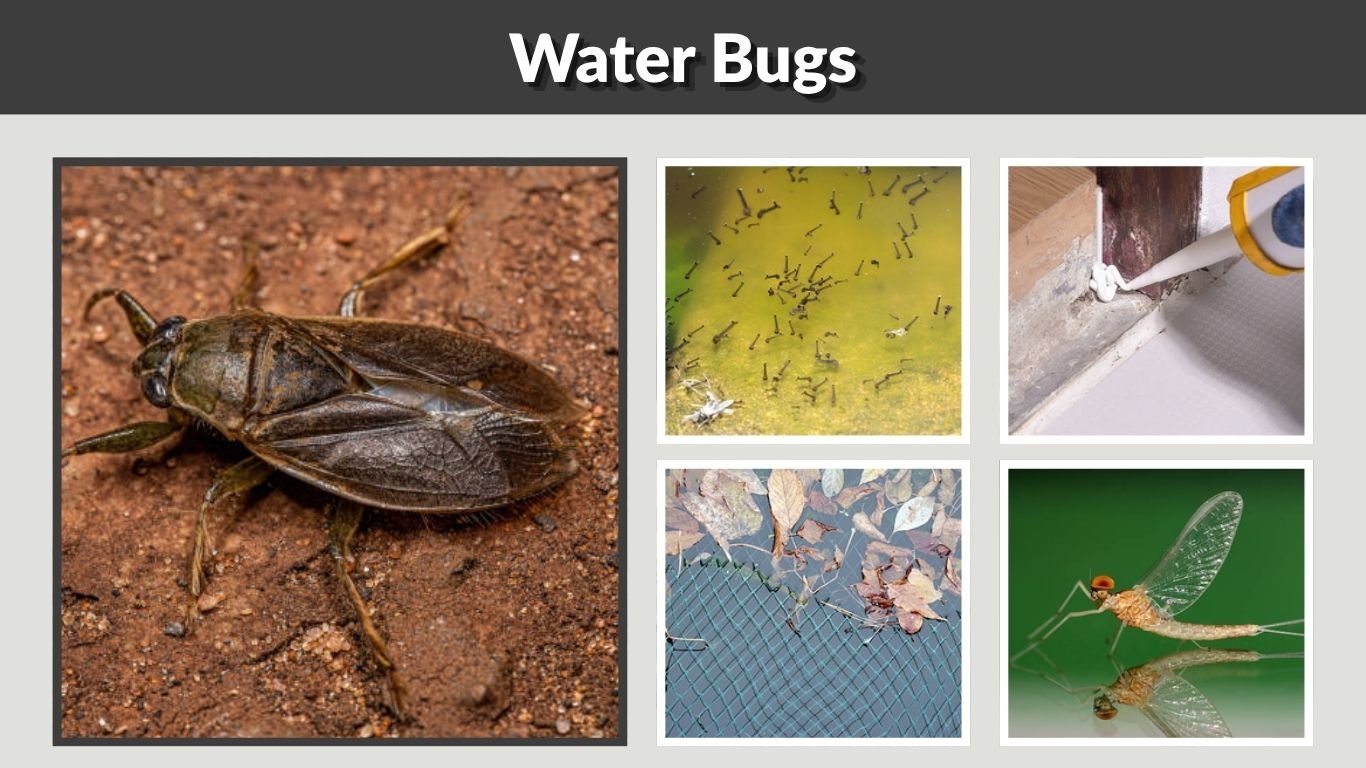
The term water bug can describe several aquatic insects, including giant water bugs, water boatmen, backswimmers, and water striders. However, people also commonly use the name for large cockroaches found near drains, basements, and other damp areas. Correct identification is important because true aquatic water bugs rarely infest homes, while cockroaches can reproduce indoors and require active control. This guide explains what water bugs look like, whether they bite or fly, and how to remove them safely.
What Is a Water Bug?
“Water bug” is a broad common name rather than the name of one specific insect. In scientific use, it generally refers to insects adapted to living on, beneath, or near freshwater. In homes, however, the term is often applied incorrectly to moisture-loving cockroaches.
True Water Bugs
True water bugs belong to the insect order Hemiptera. Most have piercing, tube-shaped mouthparts, six legs, and adaptations for swimming, walking on water, or catching aquatic prey.
The giant water bug, belonging to the family Belostomatidae, is one of the best-known examples. It has a flattened brown body, powerful front legs, and oarlike hind legs. Adults may grow to approximately two inches long.
Why Are Cockroaches Called Water Bugs?
Oriental and American cockroaches are frequently called household water bugs because they are often found in damp basements, drains, crawl spaces, sewers, and utility rooms. They are not aquatic insects and cannot live permanently underwater.
Finding several “water bugs” repeatedly in your kitchen or bathroom usually suggests cockroach activity rather than an infestation of giant water bugs. Cockroaches prefer warm, moist areas where food, shelter, and water are available.
What Does a Water Bug Look Like?
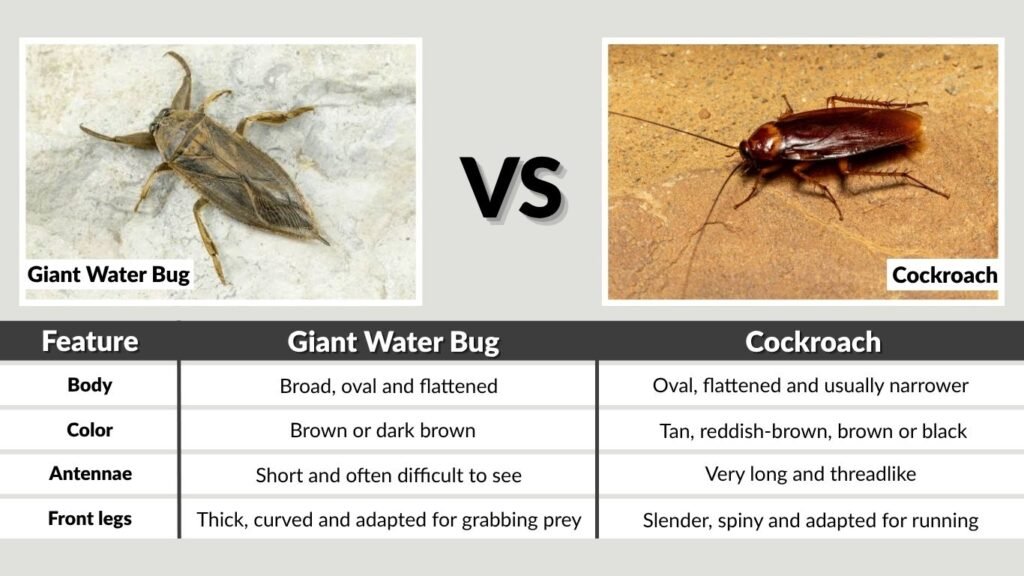
Appearance depends on which insect is being described. A giant water bug may resemble a very large cockroach from a distance, but several physical characteristics help separate them.
The following comparison summarizes the most useful differences between giant water bugs and common household cockroaches.
| Feature | Giant Water Bug | Cockroach |
| Body | Broad, oval and flattened | Oval, flattened and usually narrower |
| Color | Brown or dark brown | Tan, reddish-brown, brown or black |
| Antennae | Short and often difficult to see | Very long and threadlike |
| Front legs | Thick, curved and adapted for grabbing prey | Slender, spiny and adapted for running |
| Hind legs | Flattened and oarlike | Long, spiny running legs |
| Normal habitat | Ponds, marshes and slow-moving water | Buildings, sewers and outdoor hiding areas |
| Indoor behavior | Usually an accidental visitor | Some species reproduce and infest homes |
| Bite risk | Can deliver a painful defensive bite | Bites are extremely uncommon |
What Do Baby Water Bugs Look Like?
Immature true water bugs are called nymphs. They normally resemble smaller, wingless versions of adults. Giant water bug nymphs have developing wing pads rather than complete wings, while young water boatmen also resemble miniature adults until their final molt.
Young cockroaches are also called nymphs. They are smaller than adults, lack functional wings and may have different markings. Seeing multiple small nymphs indoors is stronger evidence of a breeding cockroach population.
Common Types of Water Bugs
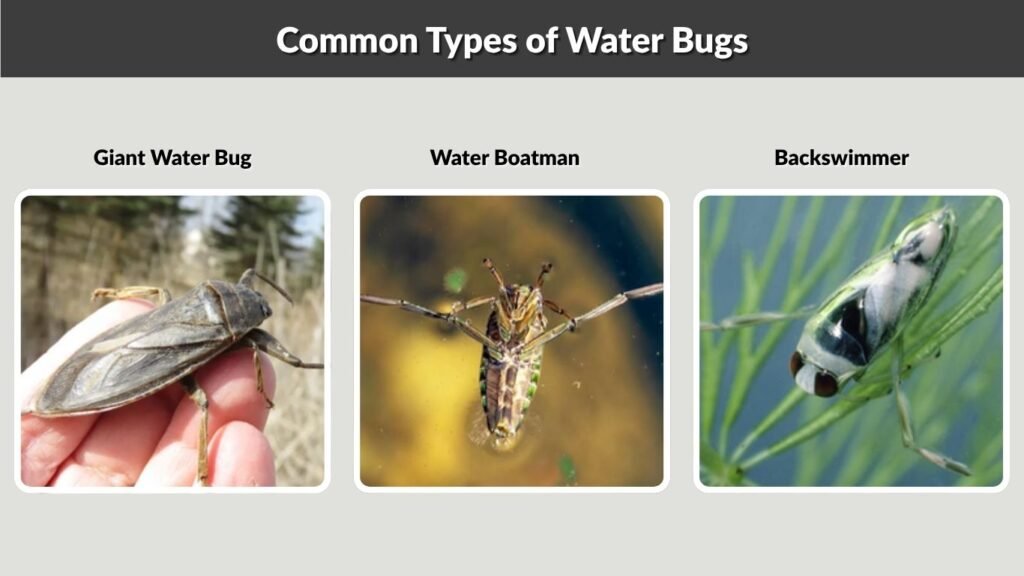
Water bugs occupy different parts of aquatic environments. Some swim underwater, others rest near submerged plants, and some move across the water’s surface.
1. Giant Water Bug
Giant water bugs are large predators with clawlike front legs. They wait among aquatic vegetation and capture insects, crayfish, small fish, tadpoles and other small animals. They are sometimes called toe-biters because they can bite when stepped on or handled.
2. Water Boatman
Water boatmen are generally less than half an inch long. Their streamlined bodies and long, hairy hind legs allow them to row through ponds and quiet streams.
Unlike many aquatic true bugs, most water boatmen are not predators. They primarily consume algae, plant material and detritus, and they are not known for biting people.
3. Backswimmer
Backswimmers resemble water boatmen but usually swim upside down with their bellies facing upward. They are predators that feed on aquatic insects, tadpoles and occasionally small fish.
A backswimmer can deliver a painful defensive bite if trapped against the skin or handled carelessly.
4. Water Strider
Water striders have narrow bodies and long, widely spread legs. Water-repellent hairs allow them to skate across the surface of ponds, streams and other calm water.
They detect vibrations produced by insects trapped on the surface and use piercing mouthparts to feed. Water striders are generally harmless to people.
What Do Water Bugs Eat?
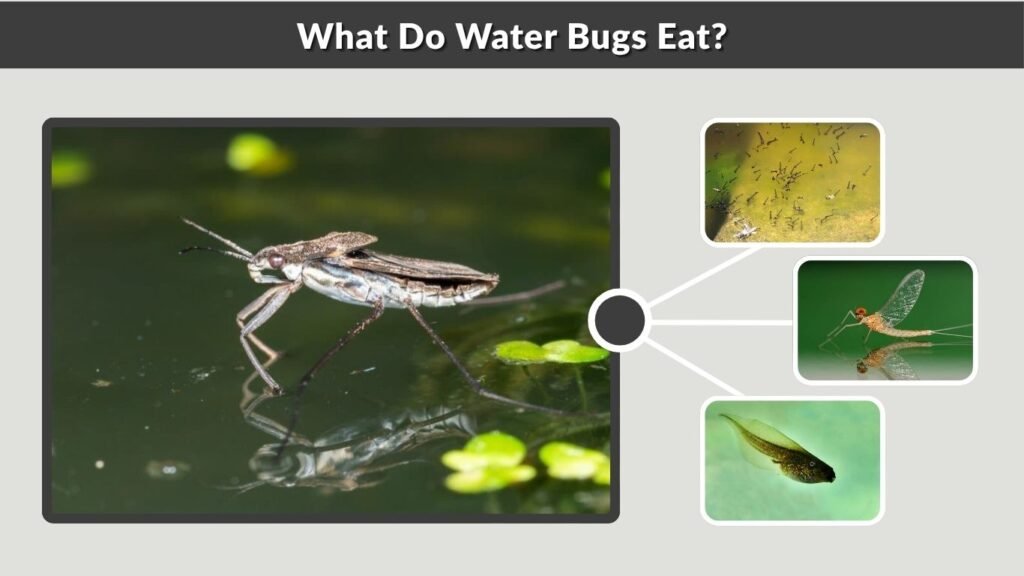
The diet varies considerably among species. Giant water bugs, backswimmers and water striders are predators. They may eat mosquito larvae, aquatic insects, small crustaceans, tadpoles or fish.
Water boatmen are different because most species feed on algae, plant juices and decaying organic material. Cockroaches mistakenly called water bugs are opportunistic scavengers that consume crumbs, grease, pet food, garbage, cardboard and other available organic matter.
Do Water Bugs Bite or Sting?
Water bugs do not possess stingers. However, some predatory species can use their piercing beaks defensively.
Giant water bugs can deliver an extremely painful bite, particularly when someone handles one or accidentally steps near it while wading. Backswimmers and water scorpions can also bite when mishandled. These insects generally bite defensively rather than actively pursuing people.
After a minor insect bite, wash the area with soap and water and apply a wrapped cold pack for short intervals. Avoid scratching the skin. Seek urgent medical help for breathing difficulty, facial or throat swelling, faintness, rapidly worsening symptoms or signs of infection.
Can Water Bugs Fly?
Many adult water bugs can fly. Giant water bugs are strong fliers and are attracted to outdoor lights, which explains why they sometimes appear on patios, driveways or near buildings. They may also land in swimming pools during nighttime flights.
Water boatmen and backswimmers can fly between bodies of water and may also be drawn toward artificial lights. Their appearance in a pool does not necessarily mean they are breeding there.
Why Are Water Bugs in the House?
A single giant water bug indoors is usually an accidental visitor. It may have flown toward a porch light and entered through an open door, damaged screen or gap around a window.
Repeated sightings of dark, cockroach-shaped insects are more concerning. Cockroaches commonly hide around refrigerators, sinks, cabinets, plumbing openings, floor drains and damp storage areas. Food residue, leaking pipes, cardboard and clutter provide the resources they need to survive.
How to Get Rid of Water Bugs
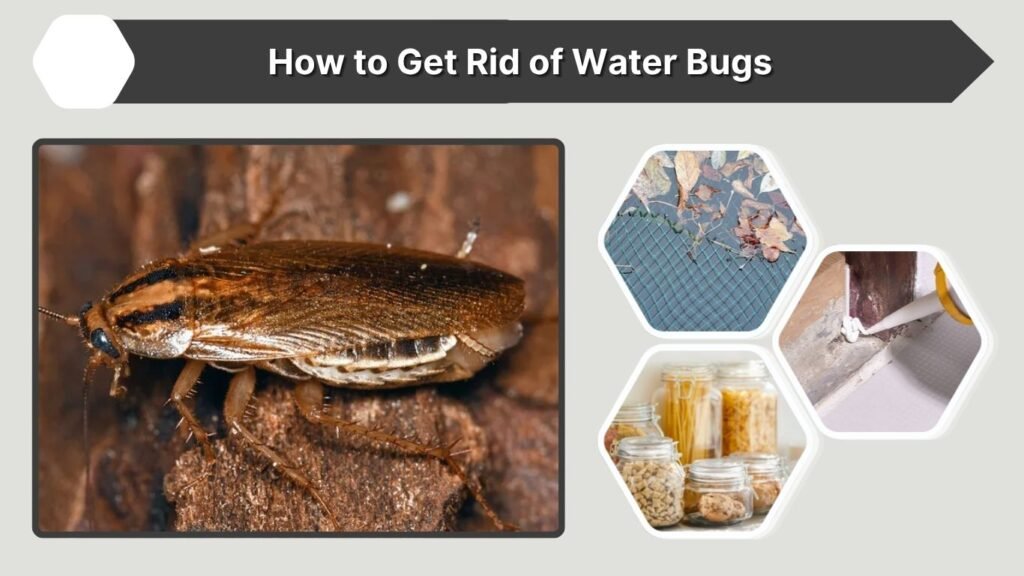
Begin by identifying whether the insect is a true aquatic water bug or a cockroach. Treating an accidental aquatic visitor as a household infestation can lead to unnecessary pesticide use.
- Remove isolated aquatic insects: Use a container, net or long-handled tool instead of picking them up with bare hands.
- Reduce outdoor lighting: Turn off unnecessary lights near doors and pools or keep doors closed when lights are operating.
- Maintain swimming pools: Remove floating insects with a pool net and keep circulation, filtration and sanitation systems functioning.
- Repair moisture problems: Fix leaking faucets, pipes and drains. Dry damp basements and improve ventilation.
- Remove food and clutter: Store food in sealed containers, clean spills, empty garbage regularly and discard unnecessary cardboard.
- Seal entry points: Caulk cracks and close gaps around pipes, wiring, windows, doors and foundations.
- Monitor for cockroaches: Place sticky traps tightly against walls near sinks, refrigerators and other suspected hiding places.
For confirmed cockroach infestations, correctly placed bait stations are generally more effective than randomly spraying exposed surfaces. Avoid aerosol foggers or bug bombs, which may not reach hiding areas and can unnecessarily expose people and pets. Severe or recurring infestations may require a licensed pest-management professional.
FAQs
Are water bugs the same as cockroaches?
True water bugs are aquatic insects and are not cockroaches. However, people frequently call Oriental or American cockroaches “water bugs” because these species prefer damp places. Long antennae and repeated indoor sightings generally point toward cockroaches.
What kills water bugs instantly?
An isolated aquatic water bug can be captured with a net or container and released away from the house. For cockroaches, crushing one insect does not eliminate the population. Sanitation, moisture control, sealing gaps and properly placed baits provide more reliable control.
Why do water bugs appear in swimming pools?
Flying aquatic insects may mistake a reflective swimming pool for a natural pond, especially at night. Giant water bugs, backswimmers and water boatmen are also attracted to artificial lights. Remove them with a net because some species can bite.
Where do water bugs come from?
True water bugs come from ponds, marshes, ditches, lakes and slow-moving streams. Cockroaches called water bugs may enter through drains, plumbing gaps, foundations, doors or transported boxes. They then hide in warm, dark and moisture-rich areas.
Are water bugs dangerous?
Most water bugs are not dangerous when left alone. Giant water bugs and backswimmers can cause painful bites when handled, trapped or stepped on. Cockroaches do not normally bite, but an indoor infestation can contaminate surfaces and contribute allergens to household dust.
