
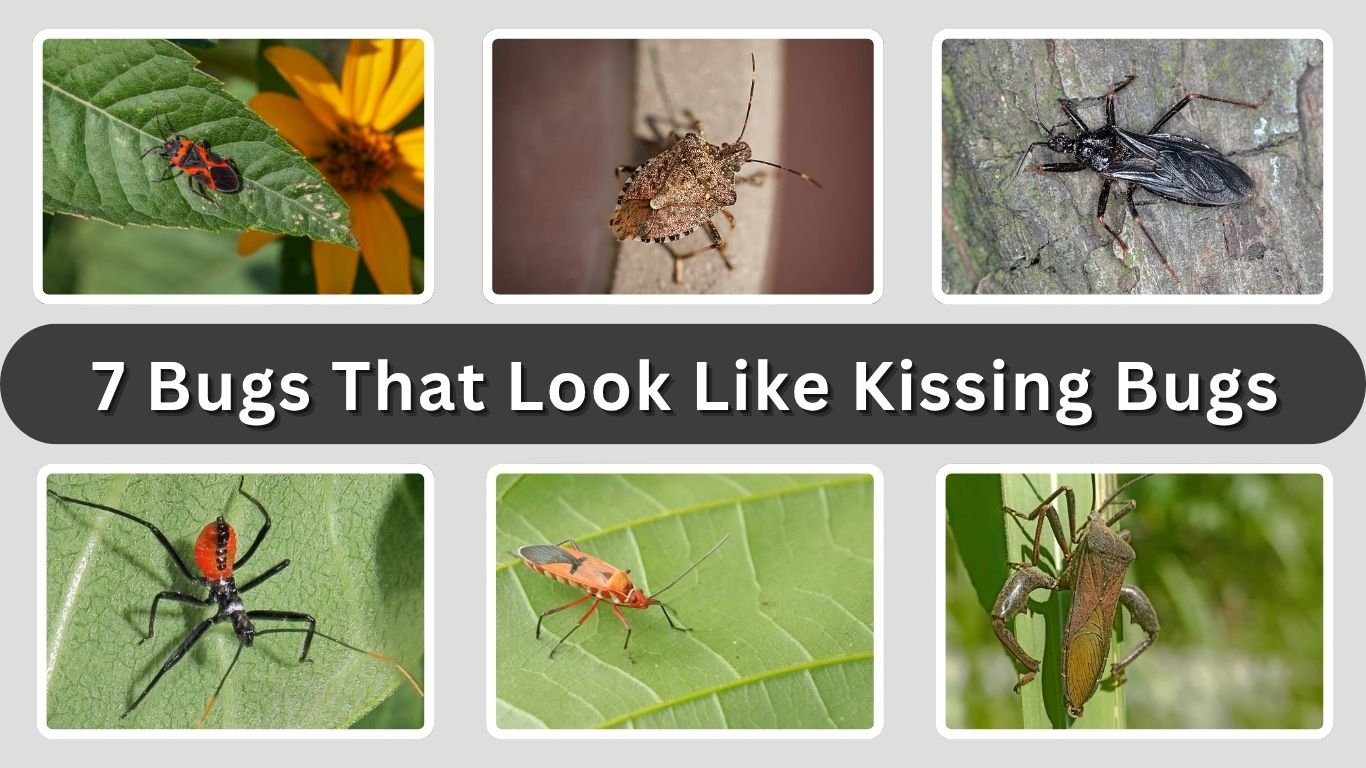
Kissing bugs are blood-feeding insects known for their narrow heads, dark bodies, and colored abdominal markings. However, several harmless or less dangerous insects share a similar shape, size, or color pattern, making identification difficult. Leaf-footed bugs, wheel bugs, western conifer seed bugs, boxelder bugs, masked hunters, milkweed bugs, and stink bugs are among the most common look-alikes. Learning the differences in head shape, leg structure, wing markings, body width, habitat, and feeding behavior can prevent unnecessary concern. This guide explains seven bugs that look like kissing bugs and highlights the key features that separate each one from a kissing bug.
1. Leaf-Footed Bug
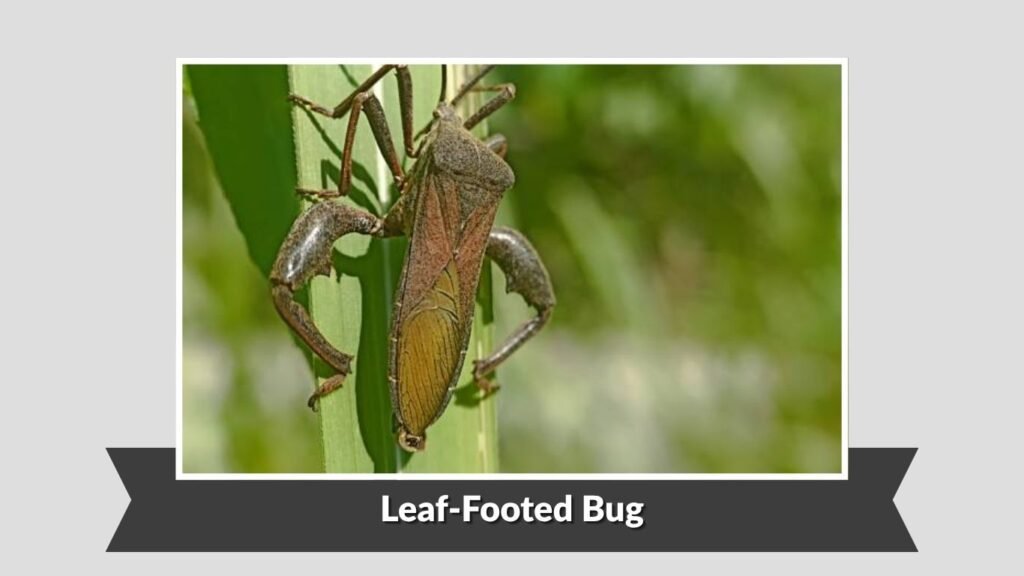
Leaf-footed bugs are among the insects most commonly mistaken for kissing bugs. Both have elongated bodies, long legs, narrow heads, and dark coloration. However, leaf-footed bugs are plant feeders and do not drink blood. They are usually found on fruits, vegetables, trees, and garden plants rather than near sleeping people or animal nests.
Identification
- Usually 0.5 to 1 inch long
- Brown, gray, or dark reddish-brown body
- Long antennae and slender legs
- Flattened, leaf-shaped sections on the hind legs
- Pale zigzag or white line across the wings in some species
- Broad shoulders and a more plant-bug-like body shape
- May release an unpleasant odor when disturbed
Why It Looks Like a Kissing Bug
Leaf-footed bugs resemble kissing bugs because both belong to the true bug group and share similar body structures. From a distance, their long heads, folded wings, and thin legs can make them difficult to separate. Some species also have reddish or orange abdominal markings. The enlarged hind legs are usually the easiest feature to check.
Leaf-Footed Bug vs. Kissing Bug
The main difference is found on the hind legs. Leaf-footed bugs often have wide, flattened expansions that look like small leaves, while kissing bugs have uniformly thin legs. Leaf-footed bugs also feed on plant juices using their piercing mouthparts. Kissing bugs feed on the blood of animals and humans and generally have a longer, more cone-shaped head.
Habitat and Behavior
Leaf-footed bugs commonly live in gardens, orchards, farms, and wooded areas. They feed on tomatoes, citrus fruits, pomegranates, nuts, seeds, and many other plants. Adults may enter houses during cooler weather while searching for shelter, but they do not usually reproduce indoors. Although they may damage crops and release an unpleasant smell, leaf-footed bugs are not considered dangerous to people.
2. Wheel Bug
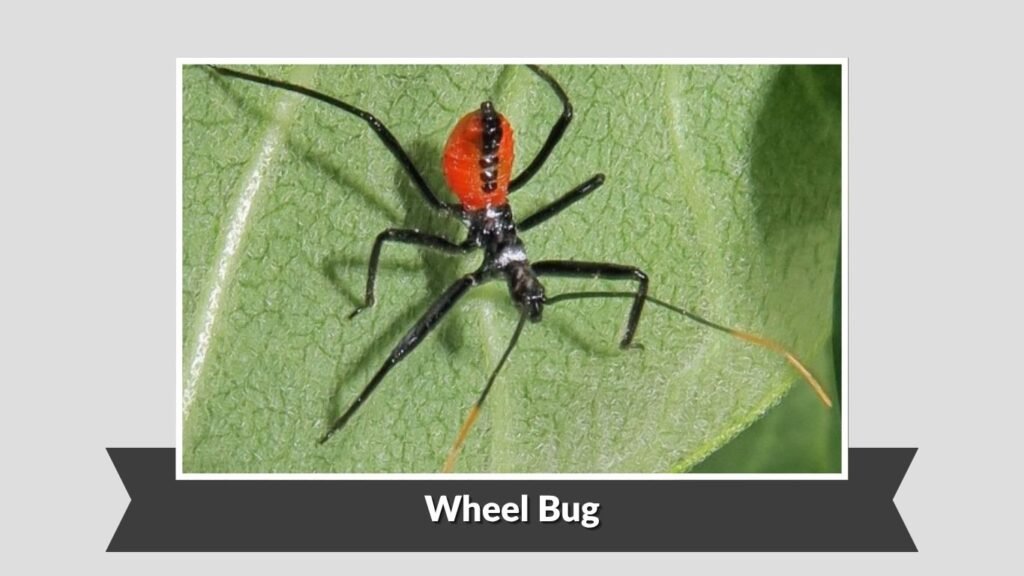
The wheel bug is a large predatory assassin bug that is often confused with a kissing bug because of its dark body, long legs, narrow head, and folded wings. However, the wheel bug has one unmistakable feature: a raised, wheel-shaped crest on its back. It feeds on other insects rather than blood and usually lives on trees, shrubs, and garden plants.
Identification
- Usually 1 to 1.5 inches long
- Gray, brown, or dark-colored body
- Distinctive cogwheel-shaped crest on the thorax
- Long, narrow head with a curved beak
- Thin antennae and long legs
- Broad wings folded flat over the abdomen
- Nymphs may have bright red abdomens and black legs
Why It Looks Like a Kissing Bug
Wheel bugs and kissing bugs belong to the assassin bug family, so they share several physical traits. Both have elongated bodies, narrow heads, piercing mouthparts, and long legs. Their dark coloration and similar size can make identification difficult from a distance. The large crest on the wheel bug’s back is the clearest distinguishing feature.
Wheel Bug vs. Kissing Bug
A wheel bug has a raised semicircular ridge that resembles a gear or cogwheel, while a kissing bug has a smooth back. Wheel bugs hunt caterpillars, beetles, stink bugs, and other insects. Kissing bugs feed on the blood of animals and people. Wheel bugs may bite defensively when handled, but they do not seek humans as food.
Habitat and Behavior
Wheel bugs are commonly found in gardens, forests, orchards, and areas with shrubs or trees. They move slowly across leaves and branches while searching for prey. Their sharp beak injects saliva that immobilizes insects before feeding. Wheel bugs are beneficial predators because they help control garden pests. However, they should not be picked up with bare hands because their defensive bite can be intensely painful.
3. Western Conifer Seed Bug
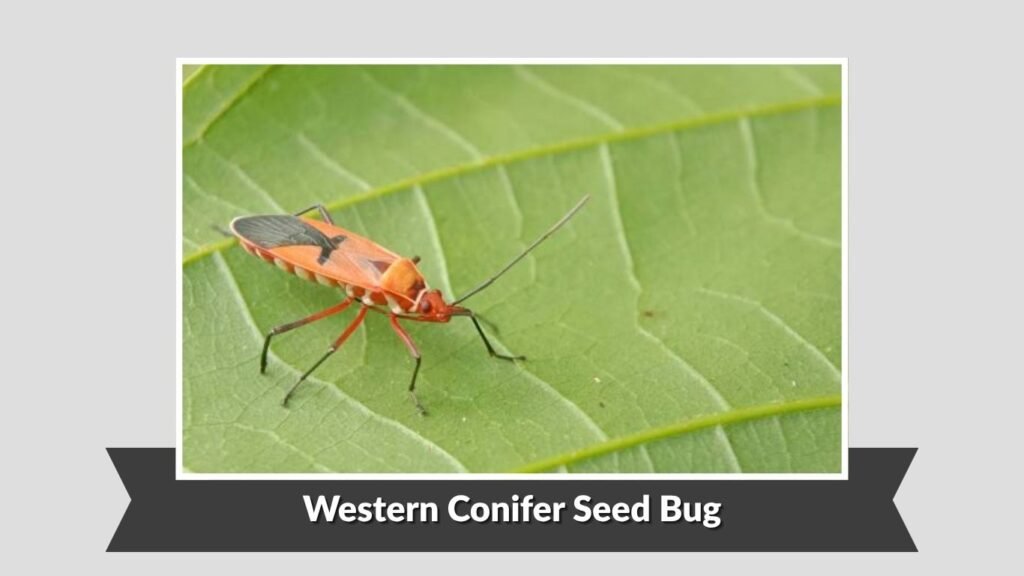
The western conifer seed bug is another insect commonly mistaken for a kissing bug. It has an elongated brown body, long antennae, folded wings, and expanded hind legs. However, it is a plant-feeding insect that consumes sap from conifer seeds. It may enter homes in large numbers during cooler months but does not feed on people or transmit Chagas disease.
Identification
- Usually 0.6 to 0.8 inch long
- Brown or reddish-brown body
- Long antennae with pale markings
- Flattened, leaf-shaped sections on the hind legs
- Pale zigzag line across the center of the wings
- Narrow head and broad shoulders
- May release a strong odor when disturbed
Why It Looks Like a Kissing Bug
The western conifer seed bug resembles a kissing bug because both insects have long bodies, thin antennae, and dark folded wings. Their similar size and brown coloration can cause confusion when one is found indoors. The seed bug’s pale zigzag wing marking and expanded hind legs are the most useful features for separating the two.
Western Conifer Seed Bug vs. Kissing Bug
Western conifer seed bugs have broad, flattened areas on their hind legs, while kissing bugs have uniformly slender legs. Seed bugs also commonly display a light-colored zigzag line across their wings. They feed on pine, fir, spruce, and other conifer seeds. Kissing bugs lack the zigzag marking and obtain blood meals from animals or humans.
Habitat and Behavior
Western conifer seed bugs live around pine trees, forests, gardens, and landscaped areas containing conifers. During autumn, adults often enter houses through cracks around doors, windows, roofs, and vents while searching for warm winter shelter. They may gather near sunny windows or walls. Although their presence can be annoying, they do not damage furniture, infest stored food, or bite people under normal circumstances.
4. Boxelder Bug
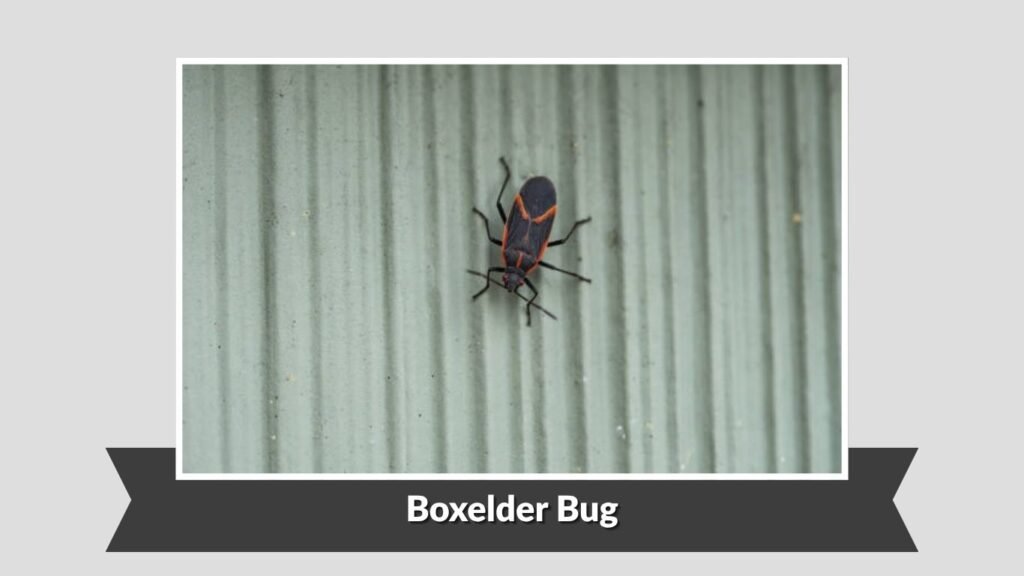
Boxelder bugs are small black-and-red insects that are sometimes confused with kissing bugs. Both may enter homes, have folded wings, and display reddish markings. However, boxelder bugs are smaller, have shorter heads, and feed on plant juices rather than blood. They are generally harmless to people and pets.
Identification
- Usually about 0.4 to 0.5 inch long
- Black or dark gray body
- Thin red or orange lines along the wings and thorax
- Oval, slightly flattened body shape
- Red abdomen visible beneath the wings
- Long antennae and six slender legs
- Young nymphs are mostly bright red with dark markings
Why It Looks Like a Kissing Bug
Boxelder bugs may resemble kissing bugs because both have dark bodies with red or orange coloring. They are also commonly found around windows, walls, doors, and indoor hiding places. From a distance, their long antennae and folded wings can create confusion. However, boxelder bugs are noticeably smaller and do not have the long, cone-shaped head of a kissing bug.
Boxelder Bug vs. Kissing Bug
Boxelder bugs have narrow red lines across their black wings, while kissing bugs usually have colored bands or spots along the outer edge of the abdomen. A boxelder bug’s head is short and rounded. A kissing bug has a longer, narrower head that extends forward. Boxelder bugs drink plant sap, whereas kissing bugs feed on blood.
Habitat and Behavior
Boxelder bugs commonly live near boxelder, maple, and ash trees. They feed mainly on developing seeds, leaves, and plant juices. During autumn, large numbers may gather on sunny exterior walls before entering cracks and gaps to spend winter indoors. They do not reproduce extensively inside homes or damage furniture. When crushed, however, they may produce an unpleasant odor and leave reddish stains on walls, curtains, or fabrics.
5. Masked Hunter
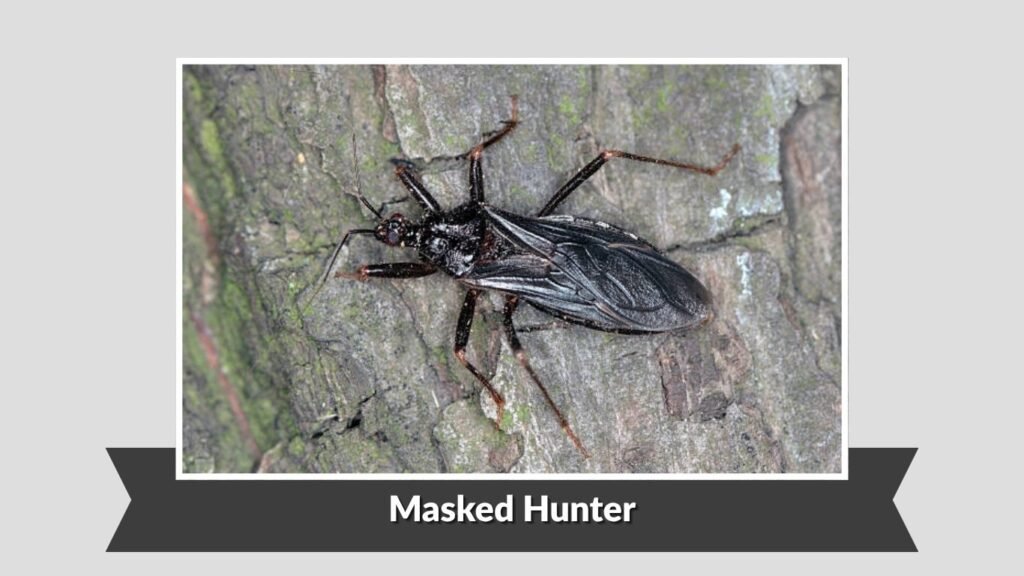
The masked hunter is a predatory assassin bug that can be mistaken for a kissing bug because of its dark body, narrow head, long legs, and piercing mouthpart. Adult masked hunters are usually black or dark brown, while their nymphs cover themselves with dust and debris for camouflage. They feed on other insects rather than blood.
Identification
- Usually about 0.6 to 0.9 inch long
- Black or very dark brown adult body
- Long, narrow head and curved piercing beak
- Slender antennae and legs
- Wings folded flat across the back
- Nymphs appear gray and dusty because debris sticks to their bodies
- Usually lack bright abdominal bands
Why It Looks Like a Kissing Bug
Masked hunters and kissing bugs belong to the assassin bug family, giving them similar heads, mouthparts, legs, and body shapes. Their dark coloration can make them especially difficult to distinguish indoors. However, masked hunters usually lack the red, orange, or yellow markings commonly visible along the sides of a kissing bug’s abdomen.
Masked Hunter vs. Kissing Bug
Masked hunters prey on bed bugs, flies, moth larvae, and other small insects. Kissing bugs feed on the blood of mammals, birds, and humans. Adult masked hunters are often uniformly dark, while kissing bugs commonly have contrasting abdominal markings. Dust-covered nymphs are another strong clue that the insect is a masked hunter.
Habitat and Behavior
Masked hunters live in houses, barns, warehouses, bird nests, and other places where insect prey is available. They hide in cracks, behind furniture, and near stored materials during the day. Although they do not normally seek humans, they can deliver a painful defensive bite when trapped against the skin or handled. Their presence may also indicate that other insects are living nearby.
6. Milkweed Bug
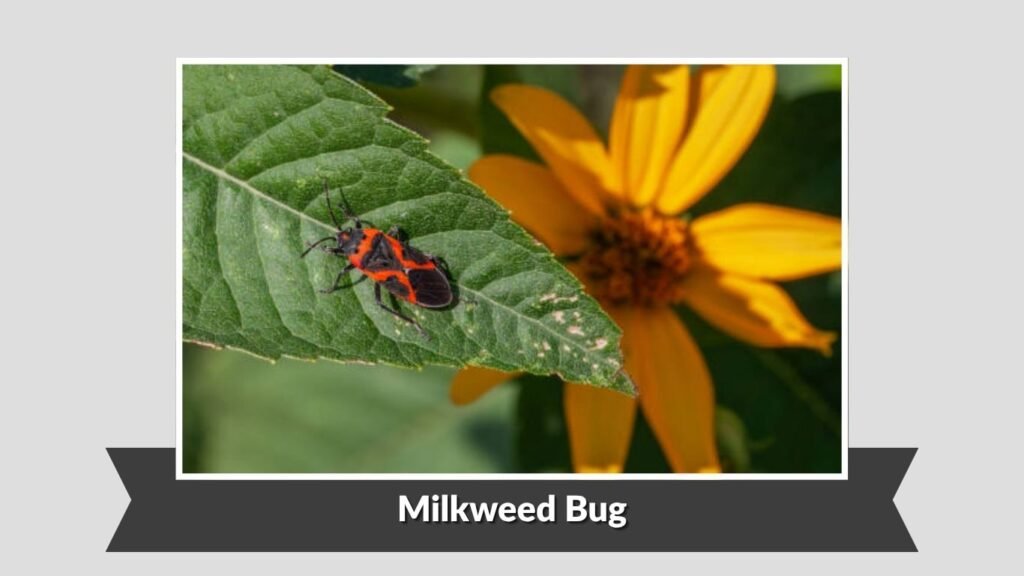
Milkweed bugs are brightly colored plant-feeding insects that may be confused with kissing bugs because of their black-and-orange bodies, long antennae, and folded wings. However, milkweed bugs feed mainly on milkweed seeds and plant juices. They do not drink blood, transmit Chagas disease, or normally bite humans.
Identification
- Usually about 0.4 to 0.7 inch long
- Bright orange, red, and black body
- Black diamond, band, or X-shaped pattern across the wings
- Shorter and broader head than a kissing bug
- Long black antennae and slender legs
- Oval or elongated body
- Nymphs are bright orange-red with developing black markings
Why It Looks Like a Kissing Bug
Milkweed bugs resemble kissing bugs because both may have dark wings combined with orange or red markings. Their elongated bodies, visible antennae, and similar size can make them look alike from a distance. However, milkweed bugs are usually brighter and have bold markings across the center of their backs rather than along the abdominal edges.
Milkweed Bug vs. Kissing Bug
Milkweed bugs usually have vivid orange-and-black patterns arranged across their wings. Kissing bugs are generally darker and often display red, orange, or yellow bands along the sides of the abdomen. A milkweed bug also has a shorter head, while a kissing bug has a long, narrow, cone-shaped head. Their diets are completely different: milkweed bugs consume seeds and plant fluids, while kissing bugs feed on blood.
Habitat and Behavior
Milkweed bugs are commonly found on milkweed plants in gardens, meadows, roadsides, and open fields. They gather around seed pods and use their piercing mouthparts to drink fluids from developing or mature seeds. Large groups may appear during warm weather. Although they can reduce seed production on milkweed plants, they usually cause little serious damage and are harmless to people and pets.
7. Stink Bug
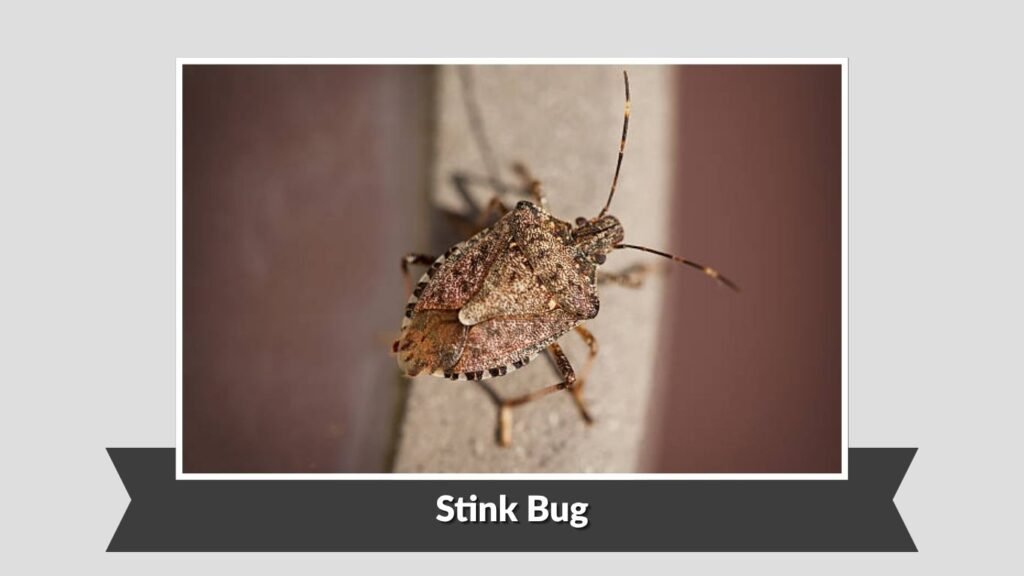
Stink bugs are broad, shield-shaped insects that may be confused with kissing bugs because both have dark bodies, folded wings, long antennae, and piercing mouthparts. However, stink bugs primarily feed on plants and are much wider through the shoulders. They are best known for releasing a strong, unpleasant odor when disturbed or crushed.
Identification
- Usually about 0.5 to 0.7 inch long
- Broad, shield-shaped body
- Brown, green, gray, or mottled coloration
- Shorter and wider head than a kissing bug
- Long antennae, sometimes with pale bands
- Triangular plate visible in the center of the back
- Produces a noticeable odor when threatened
Why It Looks Like a Kissing Bug
Stink bugs and kissing bugs are both true bugs, so they share folded wings, segmented antennae, and piercing mouthparts. Brown stink bug species may look especially similar when seen indoors or from a distance. Their dark coloring and visible abdominal edges can cause confusion, but their overall body shapes are noticeably different when viewed from above.
Stink Bug vs. Kissing Bug
A stink bug has a wide, shield-like body and a relatively short head. A kissing bug is more elongated and has a narrow, cone-shaped head that projects forward. Stink bugs usually feed on fruits, vegetables, seeds, and stems, while kissing bugs consume blood. Stink bugs may release a strong smell, whereas kissing bugs are not known for producing the same defensive odor.
Habitat and Behavior
Stink bugs commonly live in gardens, orchards, farms, fields, and wooded areas. They may feed on tomatoes, apples, peaches, beans, corn, and ornamental plants. During autumn, adults often enter homes through cracks around windows, doors, roofs, and siding to find winter shelter. They do not usually bite people, reproduce extensively indoors, or transmit Chagas disease, but large indoor gatherings can become a nuisance.
FAQs
What bug is most commonly mistaken for a kissing bug?
Leaf-footed bugs are among the most common kissing bug look-alikes. Both have elongated bodies, long antennae, and folded wings. However, leaf-footed bugs often have widened hind legs and feed on plants, while kissing bugs have slender legs and feed on blood.
How can you tell a kissing bug from a stink bug?
A kissing bug has an elongated body and a narrow, cone-shaped head. A stink bug has a broad, shield-shaped body and a shorter head. Stink bugs also release a strong odor when disturbed, while kissing bugs are mainly recognized by colored markings along their abdomen.
Do bugs that look like kissing bugs bite humans?
Some look-alikes, including wheel bugs and masked hunters, can deliver painful defensive bites when handled or trapped against the skin. Leaf-footed bugs, milkweed bugs, boxelder bugs, and stink bugs generally do not bite people and mainly feed on plants or seeds.
Are all black and orange bugs kissing bugs?
No. Many harmless insects have black and orange markings, including milkweed bugs, boxelder bugs, and some leaf-footed bugs. A true kissing bug usually has a long, cone-shaped head, slender legs, and red, orange, or yellow markings along the outer edges of its abdomen.
What should you do if you find a suspected kissing bug?
Avoid touching or crushing the insect with bare hands. Use gloves, forceps, or a container to collect it safely. Take clear photographs of its head, back, legs, and abdominal markings, then contact a local health department, extension office, or entomology specialist for identification.
