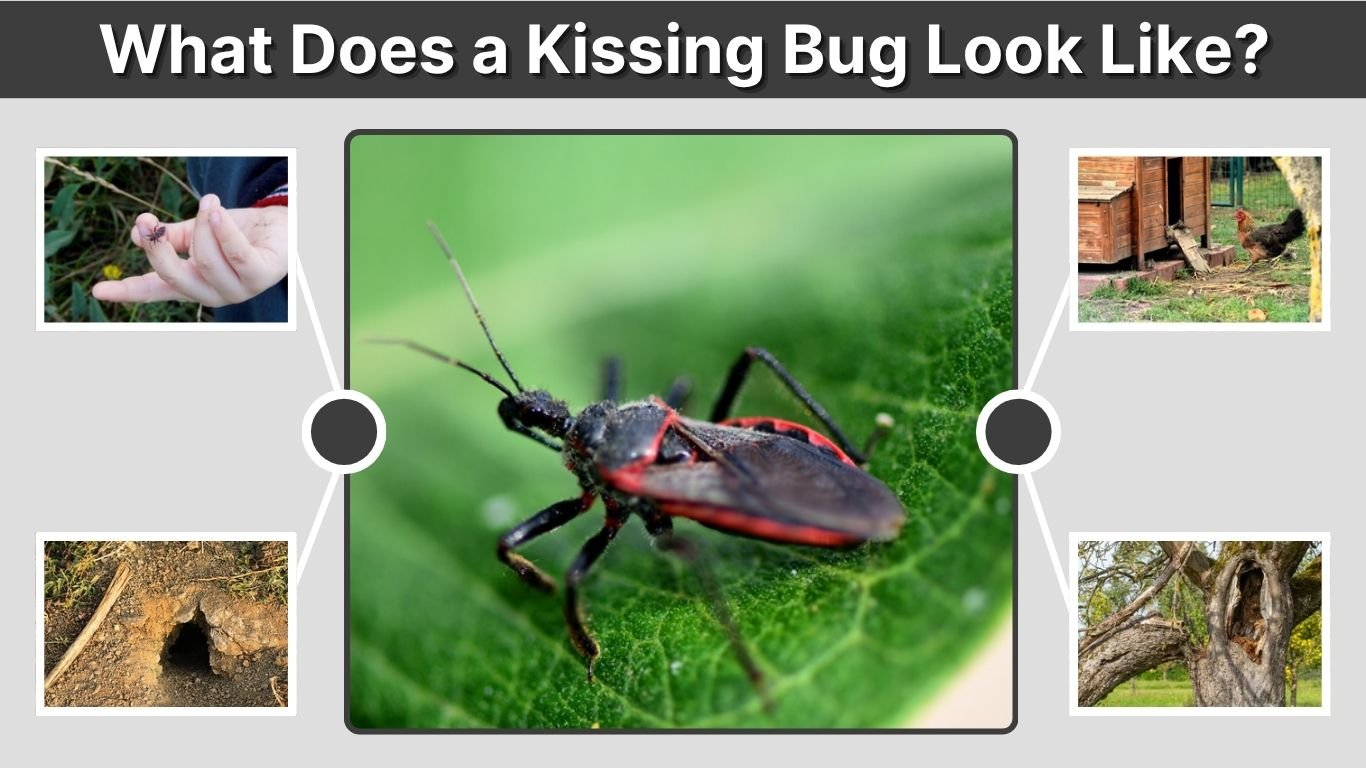
A kissing bug usually has a flattened, oval body, a long cone-shaped head, thin antennae, and slender legs. Most species are black or dark brown with red, orange, or yellow markings along the outer edge of the abdomen. Adults are generally between half an inch and more than one inch long. Because leaf-footed bugs, wheel bugs, and other assassin bugs can look similar, identification should be based on several physical features rather than color alone. Pictures of the insect’s head, legs, back, and abdominal markings are especially useful.
What Is a Kissing Bug?
Kissing bugs are blood-feeding insects belonging to the triatomine group of the assassin bug family. They are also called triatomine bugs, conenose bugs, or bloodsucking conenose bugs.
Unlike most assassin bugs, which hunt other insects, kissing bugs feed on the blood of mammals, birds, reptiles, and occasionally humans. They are mainly active at dusk and during the night.
What Does a Kissing Bug Look Like?
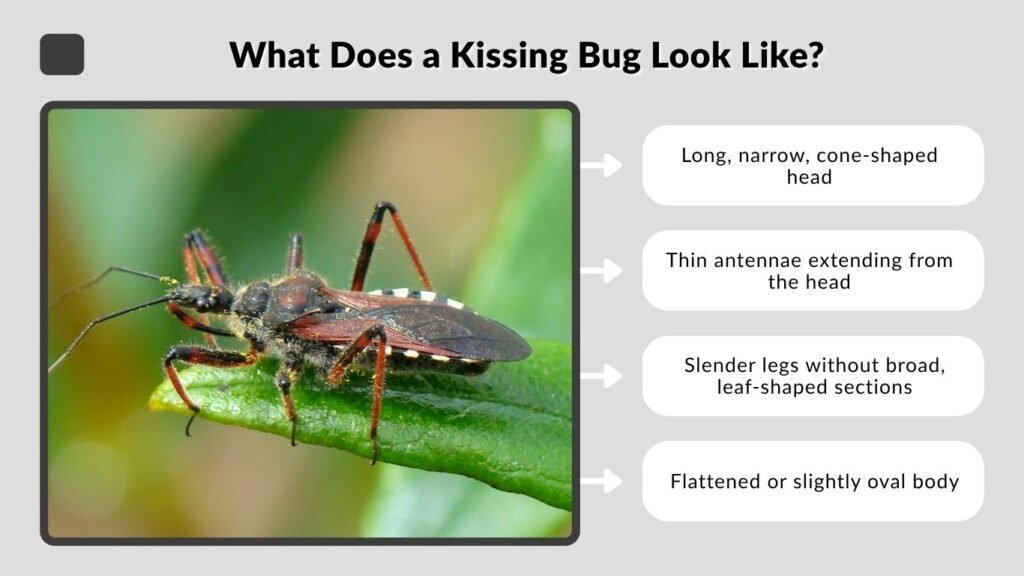
Although appearance varies by species and life stage, true kissing bugs share several recognizable characteristics.
Kissing Bug Identification Features
Look for the following combination of features:
- Long, narrow, cone-shaped head
- Thin antennae extending from the head
- Slender legs without broad, leaf-shaped sections
- Flattened or slightly oval body
- Dark brown or black overall coloration
- Red, orange, yellow, or cream markings along the abdomen
- Pointed feeding tube folded beneath the head
- Wings lying flat across the back in adults
The head is one of the most important identification features. It projects forward and is noticeably narrower than the thorax behind it. The eyes appear on the sides of the head, while the mouthpart rests underneath.
Kissing Bug Body Shape
A kissing bug’s body is elongated and relatively flat when it has not recently fed. The abdomen may become wider and more swollen after a blood meal.
Adult wings overlap across the back and cover most of the abdomen. However, the colored outer edges of the abdomen often remain visible beside the wings. These exposed edges may display separate bars or a banded pattern.
How Big Is a Kissing Bug?
Adult kissing bugs usually measure approximately 0.5 to more than 1 inch long, or about 13–33 millimeters. Some common adults are comparable in length to a U.S. penny, although size varies considerably among species.
| Life stage | Typical appearance |
| Egg | Tiny, pale, oval or barrel-shaped |
| Early nymph | Very small, wingless, with a rounded abdomen |
| Late nymph | Larger and wider but still without complete wings |
| Adult | Approximately 0.5–1.3 inches with fully developed wings |
Size alone cannot confirm identification. Several leaf-footed bugs, stink bugs, and predatory assassin bugs grow to a similar length.
What Color Is a Kissing Bug?
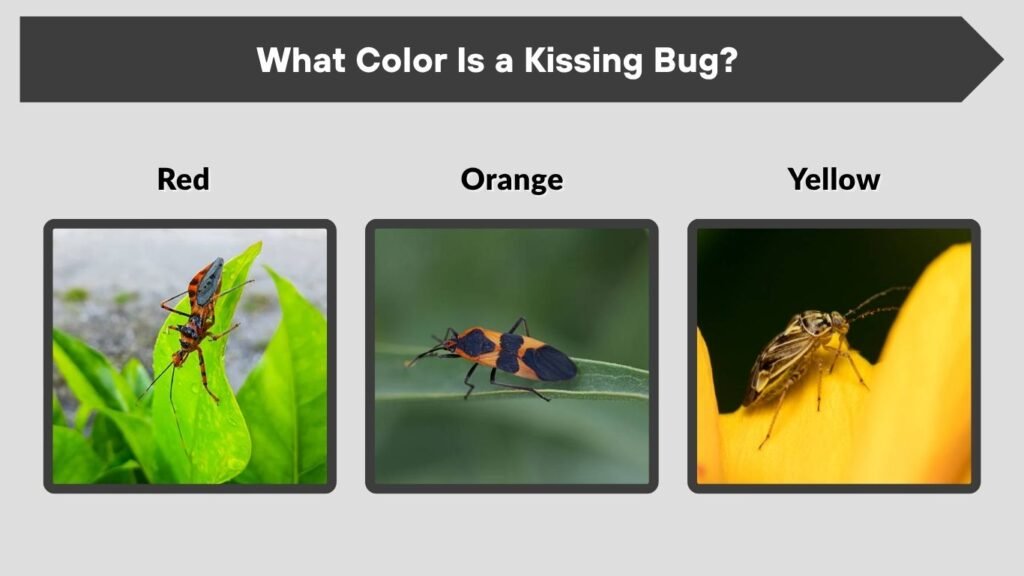
Most kissing bugs found in the United States are predominantly black, charcoal, or dark brown. Contrasting markings frequently occur along the abdomen’s outer margin and may be:
- Red
- Orange
- Yellow
- Tan
- Cream
The exact colors and patterns depend on the species. For example, some have clearly separated orange bars, while others have narrow yellow markings or only faintly colored borders. One species, Triatoma protracta, may appear almost completely dark and lack the obvious striped pattern seen in many kissing bug pictures.
Kissing Bug Pictures: What to Examine
When comparing an insect with kissing bug pictures, examine more than its general color.
Look at the Head
A kissing bug has a long head that narrows toward the front. From above, the head looks somewhat cone-shaped and is clearly separated from the wider thorax.
A short, broad head may indicate a stink bug, while a heavy curved beak and thicker front legs may suggest a predatory assassin bug.
Check the Hind Legs
Kissing bugs have long but relatively thin legs. They do not have wide, flattened, or leaf-shaped expansions on their hind legs.
Broad hind legs are a strong indication that the insect is a leaf-footed bug rather than a kissing bug.
Examine the Back
A true kissing bug does not have a large cogwheel-shaped ridge on its back. An insect with a raised semicircular structure resembling a gear is a wheel bug.
Wheel bugs are predatory assassin bugs that may deliver painful defensive bites, but they are not blood-feeding kissing bugs.
Check the Abdominal Edge
The abdomen frequently has red, orange, or yellow markings visible along both sides of the folded wings. These markings can be useful, but they should be considered together with the head and leg structure.
What Does a Baby Kissing Bug Look Like?
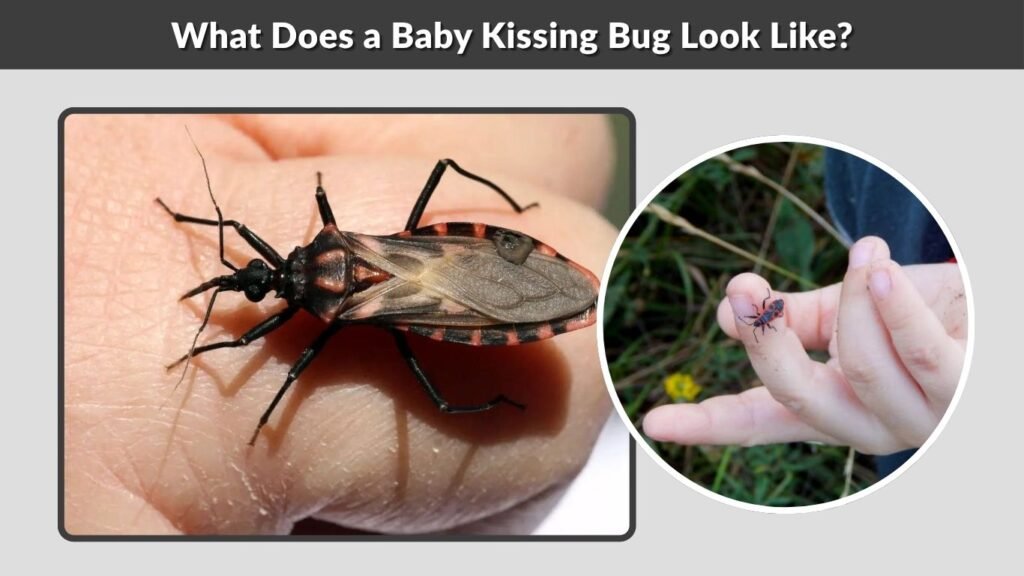
Young kissing bugs are called nymphs. They look somewhat like miniature adults but do not have fully developed wings.
A nymph generally has:
- A narrow head
- Thin antennae and legs
- A rounded or pear-shaped abdomen
- Visible abdominal segments
- Dark brown, black, reddish, or mottled coloration
Young nymphs can be extremely small. They grow through five nymphal stages, becoming progressively larger before reaching adulthood. After feeding, the abdomen may expand and look darker or reddish because of the blood inside it.
What Do Kissing Bug Eggs Look Like?
Kissing bug eggs are tiny, smooth, and oval or barrel-shaped. They are commonly pale white, cream, pinkish, or light tan, although they may darken as the developing insect approaches hatching.
Females usually deposit eggs in protected places where young bugs will have access to animal hosts. Because the eggs are small and lack uniquely obvious markings, professional identification may be necessary. Kissing bugs hatch from eggs and pass through five juvenile stages before becoming winged adults.
Kissing Bug vs. Common Look-Alikes
Many suspected kissing bugs turn out to be plant-feeding or predatory insects.
| Look-alike insect | How it differs from a kissing bug |
| Leaf-footed bug | Often has broad or leaf-shaped hind legs |
| Wheel bug | Has a raised, gear-like ridge on its back |
| Stink bug | Usually has a broader, shield-shaped body and shorter head |
| Boxelder bug | Smaller, with thin red lines across the wings |
| Western conifer seed bug | Has expanded hind legs and often a pale zigzag wing marking |
| Masked hunter | Usually uniformly dark without a colored abdominal border |
| Milkweed bug | Brighter orange and black with a shorter head |
Spikes on the back or broad, flat hind legs usually indicate that the insect is not a kissing bug.
Where Are Kissing Bugs Usually Found?
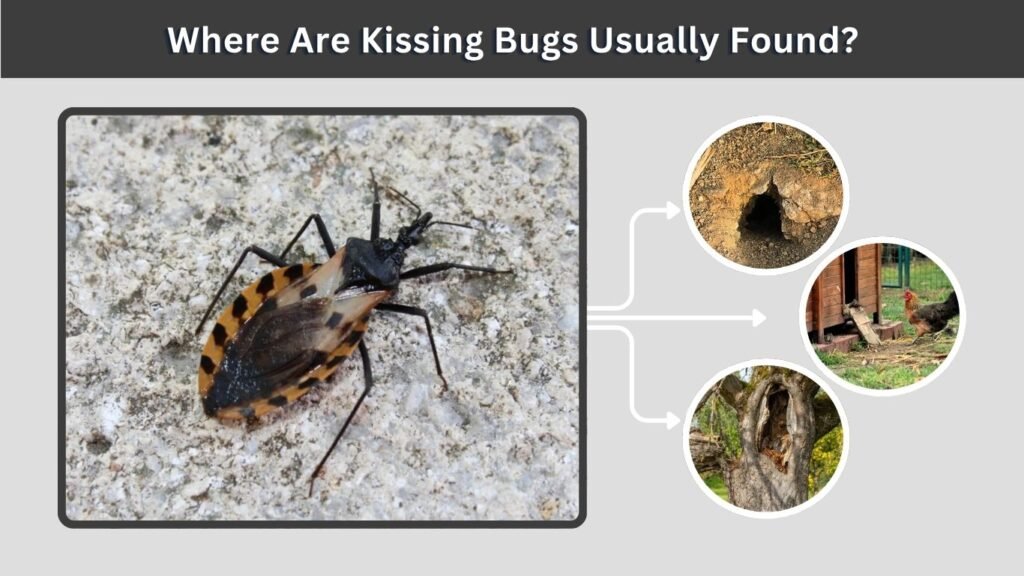
Kissing bugs usually live outdoors in sheltered places associated with wild or domestic animals. Typical hiding locations include:
- Rodent nests and animal burrows
- Chicken coops
- Outdoor kennels
- Woodpiles and rock piles
- Hollow trees
- Brush and yard debris
- Cracks in animal shelters
Adults may fly toward outdoor lights and enter buildings through gaps around doors, windows, vents, roofs, or damaged screens. They are usually hidden during daylight and become active after dark.
Is a Kissing Bug Dangerous?
Some kissing bugs carry Trypanosoma cruzi, the parasite responsible for Chagas disease. The parasite is not normally injected through the bite. Transmission can occur when feces from an infected bug enter broken skin, the mouth, or the eyes.
Finding a kissing bug does not mean that a person has been infected. However, the insect should be handled cautiously and preserved for identification.
What to Do If You Find a Suspected Kissing Bug
Do not crush or collect it with bare hands. Place a container or plastic bag over the insect, use gloves or forceps to move it, and seal the specimen inside.
Take clear pictures showing:
- The entire insect from above
- The head and antennae
- The abdominal markings
- The hind legs
- An object beside it for size comparison
A local health department, university extension service, or entomology specialist may be able to confirm its identity.
FAQs
Do kissing bugs have wings?
Adult kissing bugs have fully developed wings that lie flat across the back. Nymphs are wingless, although older nymphs may develop visible wing pads before becoming adults.
Are all black bugs with orange markings kissing bugs?
No. Boxelder bugs, milkweed bugs, leaf-footed bugs, and several assassin bugs can have similar colors. The long cone-shaped head, thin legs, and marked abdominal edge provide stronger evidence.
Do kissing bugs look like stink bugs?
They can look similar from a distance. Stink bugs normally have broader shield-shaped bodies and shorter heads. Kissing bugs are more elongated and possess noticeably narrow heads.
Can kissing bugs fly?
Adults can fly and may be attracted to artificial lights at night. Nymphs cannot fly because they do not have developed wings.
What is the easiest way to identify a kissing bug?
Check the insect for a long cone-shaped head, thin antennae, slender legs, a dark flattened body, and colored markings around the abdomen. A clear photograph or preserved specimen provides the most reliable identification.