
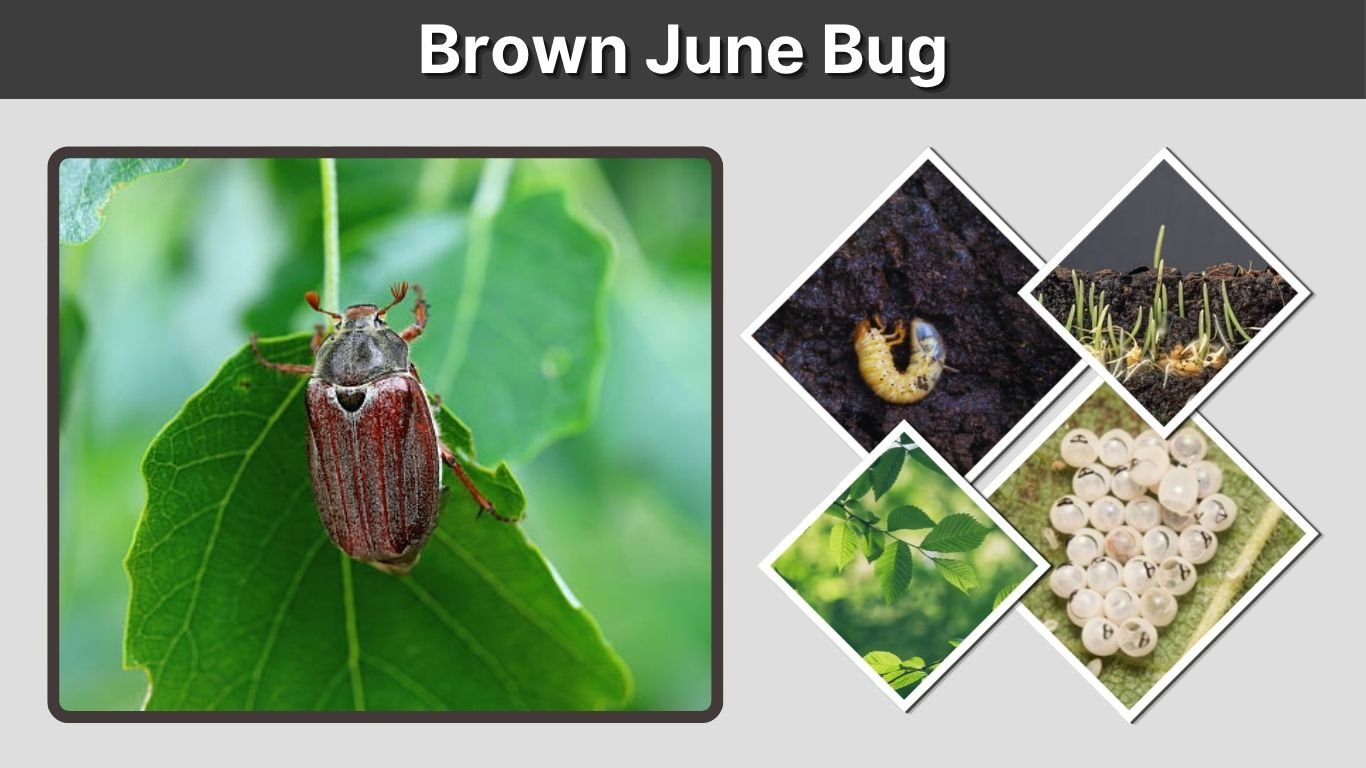
A brown June bug is a type of scarab beetle often seen flying around porch lights in late spring and early summer. These beetles are usually reddish-brown, tan, or dark brown, with a hard oval body and clumsy flight. They are not dangerous to people, but their larvae, called white grubs, can damage lawns and plant roots. Brown June bugs are mostly a nuisance indoors and around outdoor lights.
What Is a Brown June Bug?
A brown June bug is usually a May beetle or June beetle, commonly linked with the genus Phyllophaga in North America. Texas A&M describes these beetles as reddish-brown adults, while Wisconsin Horticulture notes that May/June beetles can range from reddish-brown to almost black.
Brown June Bug Identification
You can identify a brown June bug by looking at its shape, color, size, and behavior.
- Oval, hard-shelled beetle body
- Reddish-brown, light brown, or dark brown color
- Usually about ½ to 1 inch long
- Spiny legs that cling to screens and clothing
- Active mostly after dusk
- Strong attraction to outdoor lights
- Clumsy flying and frequent bumping into windows
Wisconsin Horticulture says adult May/June beetles are active after dusk in late May and early June and are attracted to lights at night.
Are June Bugs Brown or Green?
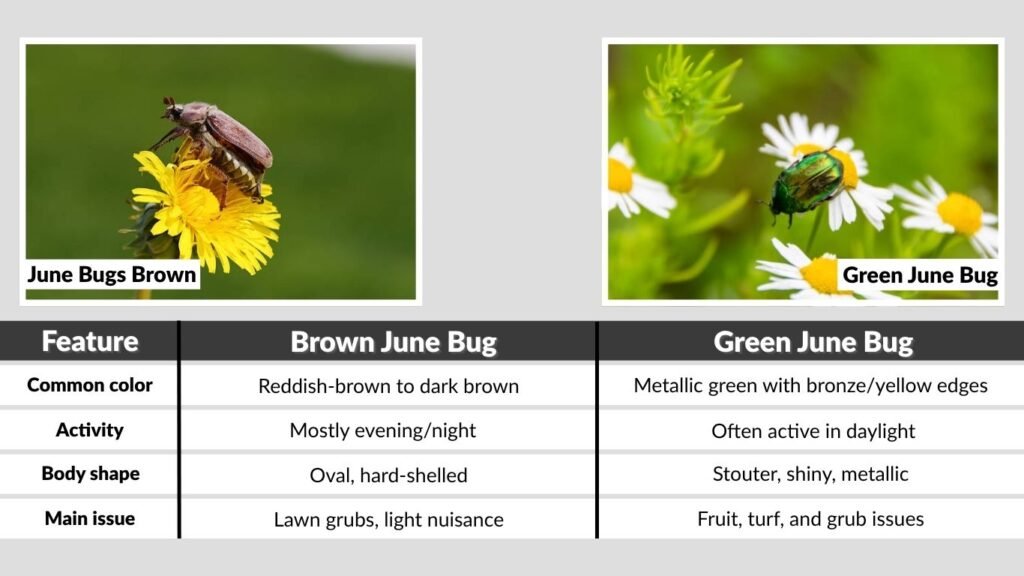
June bugs can be brown or green because “June bug” is a common name used for several scarab beetles. The classic brown June bug is usually a May/June beetle, while the green June bug is a different beetle with a metallic green body.
| Feature | Brown June Bug | Green June Bug |
| Common color | Reddish-brown to dark brown | Metallic green with bronze/yellow edges |
| Activity | Mostly evening/night | Often active in daylight |
| Body shape | Oval, hard-shelled | Stouter, shiny, metallic |
| Main issue | Lawn grubs, light nuisance | Fruit, turf, and grub issues |
| Human danger | Not dangerous | Not dangerous |
Brown June Bug vs Green June Bug
The easiest difference is color. Brown June bugs are usually dull brown, reddish-brown, or tan. Green June beetles are metallic green and nearly 1 inch long, with bronze to yellow margins, according to NC State Extension.
Do Brown June Bugs Turn Green?
No, brown June bugs do not turn green. Brown and green June bugs are usually different beetles. A brown beetle may look lighter or darker depending on age, lighting, or dust on the body, but it does not transform into a green June bug.
Do Brown June Bugs Bite?
Brown June bugs do not normally bite humans. They do not feed on blood, and they do not sting. If one lands on your skin, its spiny legs may feel scratchy or prickly, which can make people think it is biting.
Do Brown June Bugs Sting?
No, brown June bugs do not sting. They are beetles, not bees or wasps. They do not have venom or a stinger.
Why Do They Feel Like They Bite?
Their legs are made for gripping soil, plants, and surfaces. When a June bug grabs your shirt, hair, or skin, it can feel like a tiny pinch. This is not an aggressive bite.
Why Are Brown June Bugs Flying Around My House?
Brown June bugs often fly around homes because they are attracted to lights. Porch lights, garage lights, window lights, and patio lamps can bring them close to doors and screens.
Brown June Bug in House
A brown June bug inside the house is usually an accident. It may fly through an open door, damaged screen, or gap around a window. It is not trying to infest your home like ants or cockroaches.
How to Keep Them Out
Try these simple steps:
- Turn off unnecessary outdoor lights at night
- Use yellow bug bulbs or lower-intensity lighting
- Repair torn window and door screens
- Keep doors closed during evening hours
- Seal gaps around windows, vents, and garage doors
Brown June Bug Life Cycle
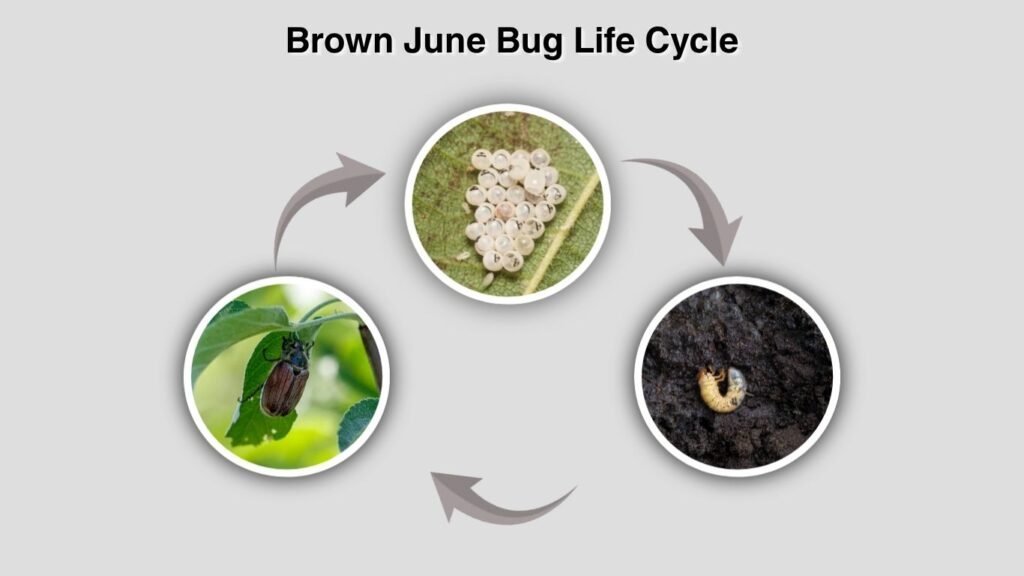
Brown June bugs go through complete metamorphosis: egg, larva, pupa, and adult. The larvae live underground as white grubs. Iowa State Extension notes that May/June beetle larvae are C-shaped white grubs, and true white grubs may take three years to develop from egg to adult.
Eggs
Female beetles lay eggs in soil. These eggs hatch into small white grubs that begin feeding below the surface.
Larvae
The larval stage is the most damaging stage. Wisconsin Horticulture explains that May/June beetle white grubs feed on roots and can disrupt water and nutrient movement in plants.
Adults
Adult brown June bugs emerge from the soil, mate, fly around lights, feed on some leaves, and lay eggs to begin the cycle again.
What Do Brown June Bugs Eat?
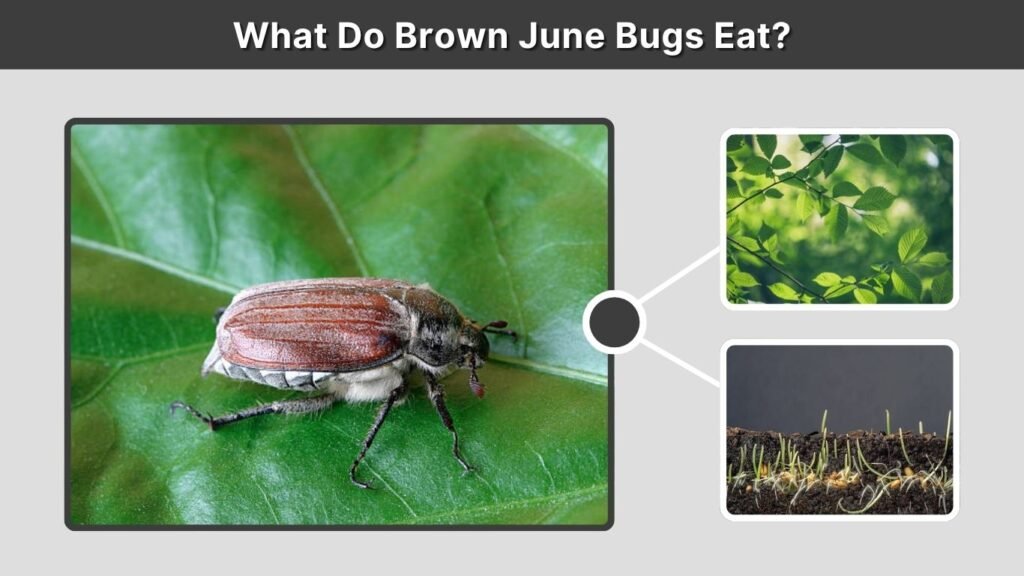
Adult brown June bugs may feed on leaves of trees, shrubs, and other plants. However, the underground grubs are usually the bigger concern because they feed on roots.
| Life Stage | What It Eats | Main Problem |
| Adult beetle | Leaves, tree foliage, plant material | Minor leaf damage, nuisance flights |
| Larva/grub | Grass roots, plant roots | Lawn damage and weak plants |
Signs of Brown June Bug Larvae
Look for these lawn and garden symptoms:
- Brown or yellow lawn patches
- Grass that pulls up easily
- Wilting plants despite watering
- Birds, skunks, or raccoons digging in the lawn
- C-shaped white grubs in soil
How to Get Rid of Brown June Bugs
You usually do not need to kill every adult June bug. A few beetles around lights are normal in late spring and early summer. Control is more important when grubs are damaging the lawn.
Reduce Adult Beetles
Turn off bright outdoor lights, remove beetles from screens, and keep doors closed at night. Since adults are attracted to lights, reducing light sources is often the easiest first step.
Manage Grubs in the Lawn
If you suspect grub damage, dig a small section of turf and check the soil. White grubs are cream-colored, C-shaped larvae with brown heads. For heavy infestations, contact a local extension office or lawn professional for region-specific treatment timing.
Brown June Bug Spiritual Meaning
Some people connect a brown June bug with persistence, seasonal change, grounding, or transformation because beetles emerge from the soil and go through a life cycle. This is a cultural or personal interpretation, not a scientific meaning.
FAQs
Is a brown June bug dangerous?
No, a brown June bug is not dangerous to people. It does not sting, spread venom, or attack humans. The adult beetle is mostly a nuisance around lights, while its underground grub stage can be more harmful to lawns and plant roots.
Do brown June bugs bite humans?
Brown June bugs do not normally bite humans. If one lands on you, its spiny legs may feel scratchy or pinch-like. That feeling is usually from the beetle clinging to your skin or clothing, not from a true bite.
Why are brown June bugs in my house?
Brown June bugs usually enter homes by accident. They are attracted to lights and may fly through open doors, windows, or torn screens at night. They do not usually breed indoors or infest houses like common household pests.
What is the difference between brown and green June bugs?
Brown June bugs are usually reddish-brown or dark brown May/June beetles. Green June bugs are metallic green scarab beetles with bronze or yellowish edges. They are related beetles, but they are not the same insect.
What kills brown June bug larvae?
Brown June bug larvae are white grubs in the soil. Control depends on location, season, grub species, and infestation level. The best step is to confirm grubs first, then follow local extension guidance for safe and properly timed lawn treatment.
