
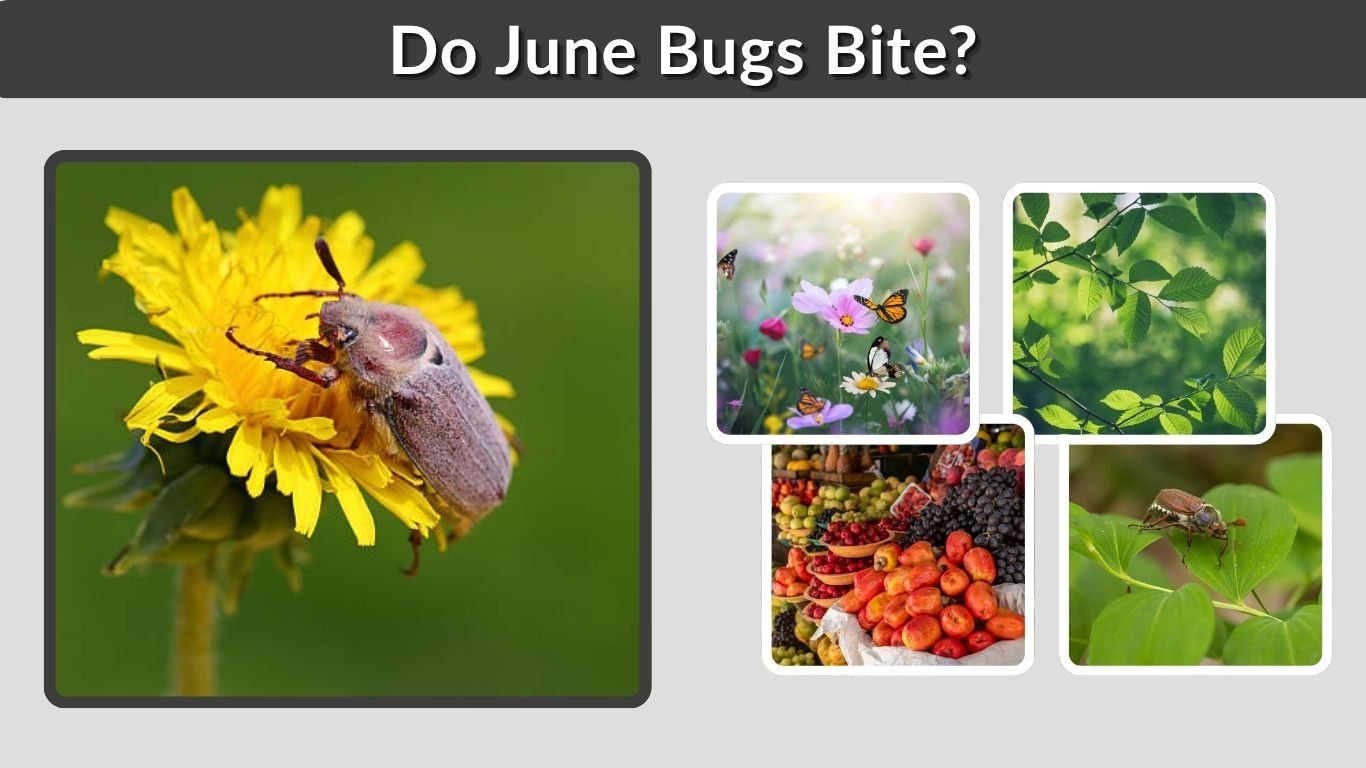
June bugs may look scary when they fly into porch lights or bump against windows, but they are not dangerous to people. The simple answer is: June bugs do not bite, sting, or attack humans. These beetles can feel creepy because of their hard bodies, spiny legs, and clumsy flying, but they are mostly harmless nuisance insects. The bigger problem is usually their larvae, called white grubs, which can damage lawns and plant roots.
Do June Bugs Bite Humans?
June bugs do not bite humans in the way mosquitoes, fleas, or biting flies do. They do not feed on blood, and they do not have a stinger. WebMD notes that June bugs do not bite, sting, or otherwise harm humans.
Why People Think June Bugs Bite
Some people think a June bug is biting when it lands on their skin. What they usually feel is the beetle’s legs grabbing onto clothing, hair, or skin. Their legs may feel scratchy because they are built for gripping and digging.
Can a June Bug Pinch You?
A June bug may give a very light pinch-like feeling if handled roughly, but it is not a true bite. It is not trying to feed on you or defend itself aggressively. Most of the time, it simply wants to escape.
Do June Bugs Bite or Sting?
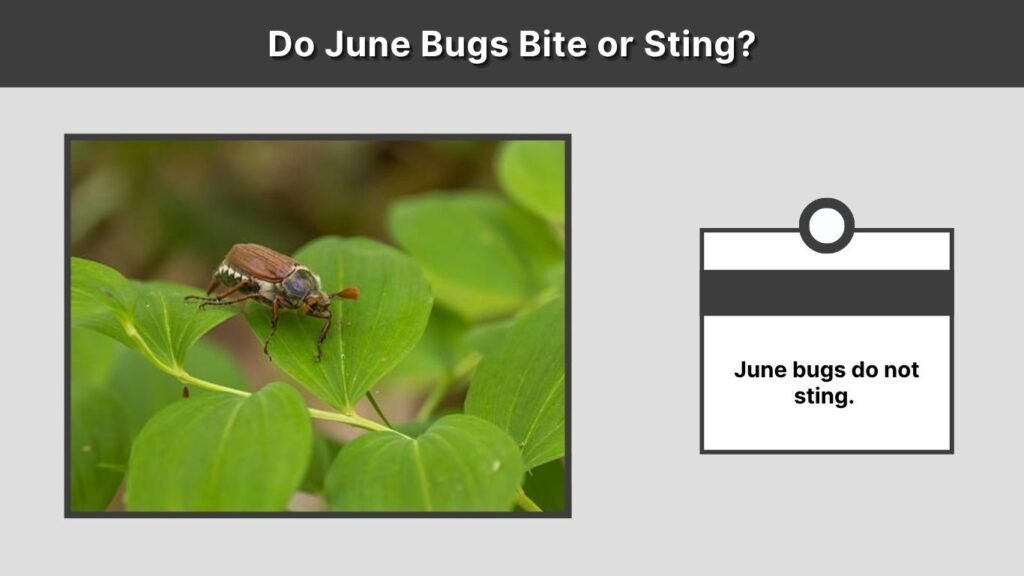
June bugs do not sting. They are beetles, not wasps, bees, or hornets. They do not have venom, and they do not inject anything into the skin.
| Question | Answer |
| Do June bugs bite humans? | No, not normally |
| Do June bugs sting? | No |
| Are June bugs venomous? | No |
| Do June bugs spread disease? | Not commonly |
| Are they dangerous to pets? | Usually no |
Do Brown June Bugs Bite?
Brown June bugs, often called May beetles or June beetles, are not harmful to humans. They may fly toward lights and bump into people, but they do not bite for food.
Do Green June Bugs Bite?
Green June beetles also do not bite people. North Carolina State Extension describes green June beetles as attractive and harmless to humans.
Why Do June Bugs Fly at People?
June bugs are clumsy fliers. They are often active around evening and nighttime, and many are attracted to lights. Michigan State University notes that May or June beetle adults are active just before and after sunset and are attracted to lights.
They Are Attracted to Porch Lights
June bugs may gather around:
- Porch lights
- Garage lights
- Patio lamps
- Streetlights
- Window lights
- Screen doors
They Do Not Chase People
June bugs may seem like they are chasing you, but they are not. They fly poorly and often crash into walls, doors, windows, and people by accident.
Are June Bugs Dangerous?
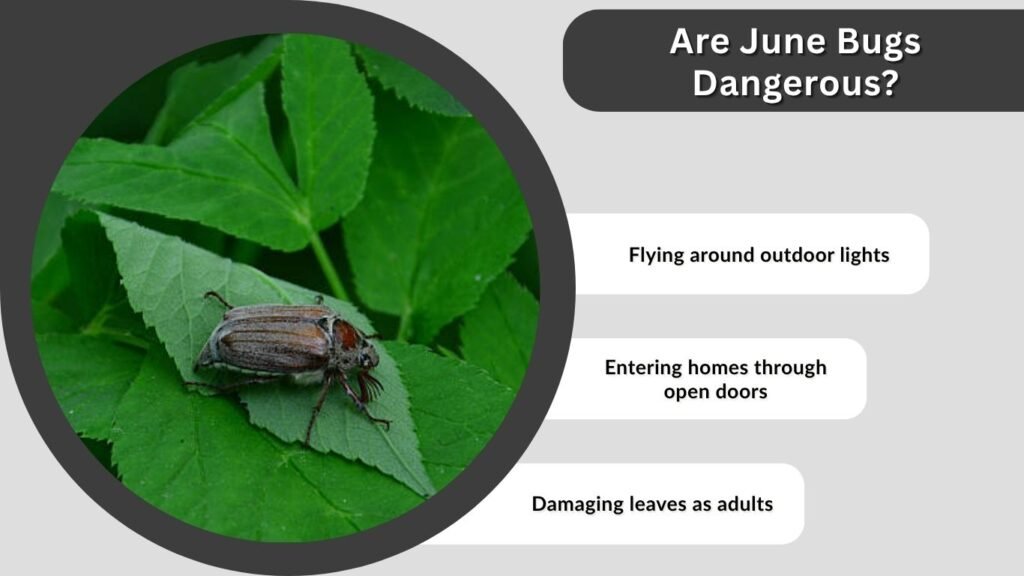
June bugs are not dangerous to humans, but they can be annoying. They may get inside homes, land in hair, crawl on screens, or gather near lights.
Main Problems Caused by June Bugs
June bugs may cause problems such as:
- Flying around outdoor lights
- Entering homes through open doors
- Damaging leaves as adults
- Producing grubs that feed on roots
- Creating lawn damage in heavy infestations
The adult beetles are mostly a nuisance, but their grub stage can be more damaging. University of Maine Extension explains that May/June beetle larvae feed on plant roots and can sometimes severely damage turf roots.
Do June Bugs Bite Dogs or Cats?
June bugs do not bite dogs or cats. A pet may chase, paw at, or eat them because the beetles move and make buzzing sounds. The bug itself is not a biting threat.
What If a Dog Eats a June Bug?
Eating one June bug is usually not a major concern, but eating many beetles may upset a pet’s stomach because of the hard shells. If a dog vomits repeatedly, acts weak, refuses food, or seems sick after eating insects, contact a veterinarian.
What Do June Bugs Eat?
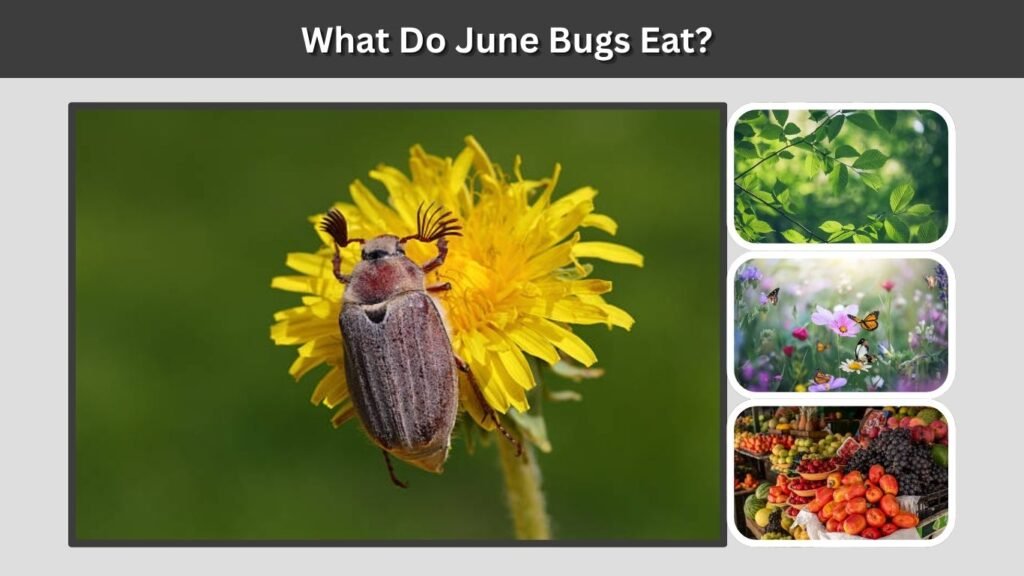
Adult June bugs usually feed on plant material, while larvae feed underground. Wisconsin Horticulture explains that May/June beetle grubs feed on plant roots, and adults emerge in late May and early June.
Adult June Bugs
Adults may feed on:
- Tree leaves
- Shrub leaves
- Flowers
- Fruit
- Garden plants
June Bug Grubs
Grubs live in soil and feed on:
- Grass roots
- Plant roots
- Organic matter
- Turfgrass roots
How to Keep June Bugs Away
You do not need to panic if you see June bugs around your home. Simple prevention can reduce them near doors, windows, and outdoor sitting areas.
Reduce Outdoor Lights
Since June bugs are attracted to light, turn off unnecessary porch lights at night. You can also use yellow outdoor bulbs, motion lights, or lower-intensity lighting.
Seal Entry Points
Keep doors closed in the evening and repair torn screens. Check gaps around windows, door frames, vents, and garage doors.
Manage Lawn Grubs
If you see dead patches in your lawn, skunks digging, or turf lifting easily like loose carpet, white grubs may be present. Proper lawn care and targeted grub control may help, but treatment works best after correct identification.
FAQs
Do June bugs bite people?
No, June bugs do not bite people. They may crawl on skin or cling with their legs, which can feel scratchy or uncomfortable. However, they do not feed on blood, inject venom, or attack humans like biting insects do.
Do June bugs sting or have venom?
June bugs do not sting and are not venomous. They are beetles, not bees or wasps. Their hard body and buzzing flight can make them seem intimidating, but they do not have a stinger or venom gland.
Do green June bugs bite?
Green June bugs do not bite humans. They may fly close to people or land on clothing, but they are considered harmless to humans. Their larvae can be more troublesome in lawns or gardens because they live in soil.
Do June bugs bite dogs?
June bugs do not bite dogs. Dogs may chase or eat them, especially at night when the beetles are active around lights. One or two usually cause little concern, but eating many hard-shelled beetles may lead to stomach upset.
Why do June bugs fly into people?
June bugs are attracted to lights and are not strong, controlled fliers. When they bump into people, windows, or doors, it is usually accidental. They are not chasing or attacking; they are simply flying clumsily around light sources.
