
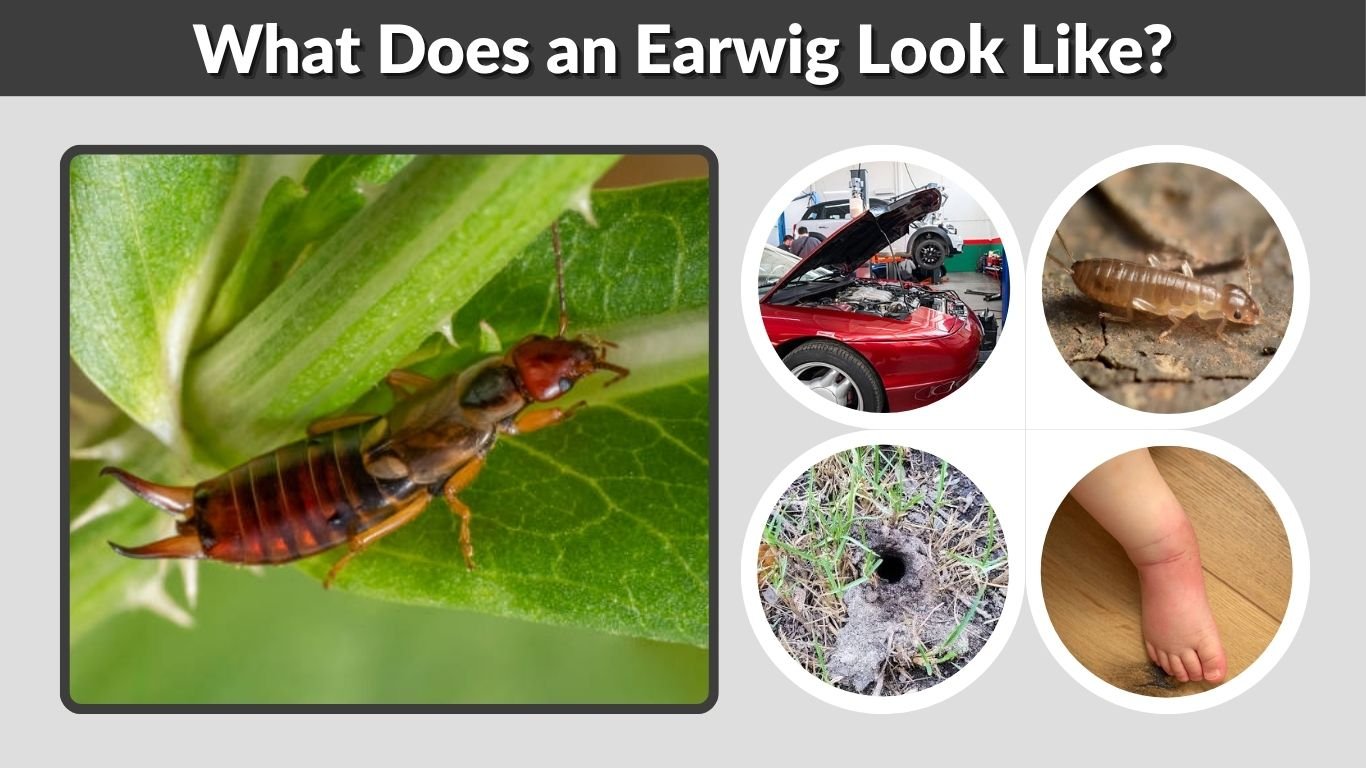
Earwigs are easy to recognize once you know their main features. They have long, flat bodies, thin antennae, six legs, and a pair of forceps-like pincers at the end of the abdomen. Most earwigs are brown, reddish-brown, or dark brown, and they often run quickly when disturbed. Although their pincers look scary, earwigs are not dangerous to people and usually hide in dark, moist places.
What Does an Earwig Look Like?
An earwig is a small, narrow insect with a flattened body and a noticeable pair of pincers on its rear end. These pincers are called cerci, and they are the easiest way to identify an earwig.
Common earwig features include:
- Long, flat body
- Brown to dark brown color
- Six legs
- Long, thin antennae
- Small head
- Chewing mouthparts
- Short wing covers
- Pincers at the back
- Fast movement when disturbed
Most common earwigs are about ½ to 1 inch long, though size can vary by species.
Earwig Identification Table
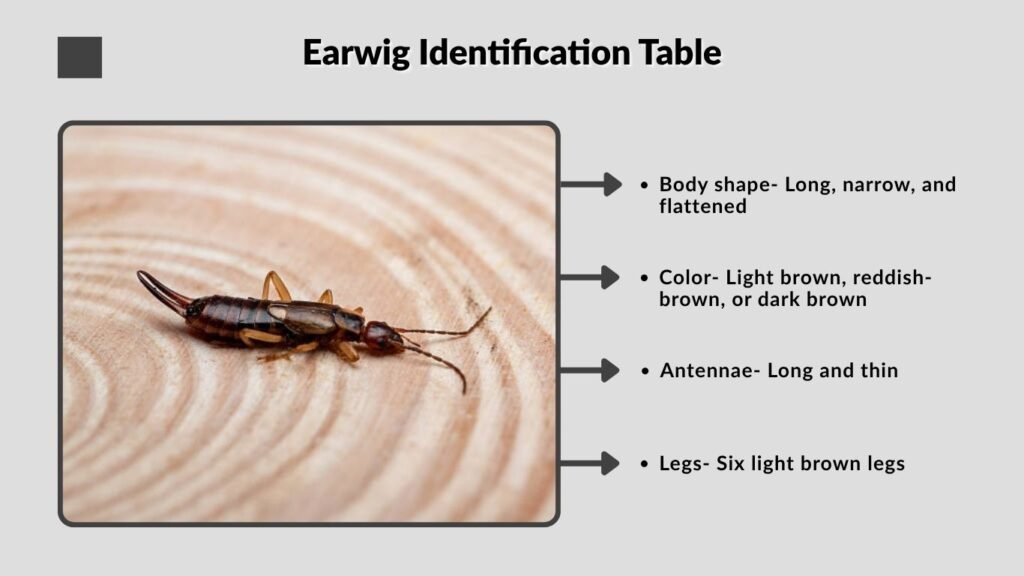
| Feature | What It Looks Like |
| Body shape | Long, narrow, and flattened |
| Color | Light brown, reddish-brown, or dark brown |
| Antennae | Long and thin |
| Legs | Six light brown legs |
| Wings | Short wing covers; some species can fly |
| Rear end | Forceps-like pincers |
| Movement | Fast, crawling, and secretive |
| Habitat | Dark, moist cracks, mulch, leaves, and debris |
What Does an Earwig Bug Look Like Up Close?
Up close, an earwig looks like a small armored insect. Its body is divided into a head, thorax, and abdomen. The abdomen is flexible and ends with the pincers. The antennae are usually long and segmented, helping the earwig sense its surroundings.
The body may look shiny or slightly leathery. Some earwigs have short wings, but they rarely fly. When disturbed, they may raise their pincers and move quickly toward a hiding place.
What Do Earwig Pincers Look Like?
Earwig pincers look like tiny forceps or curved claws at the back of the body. They may look dangerous, but they are mainly used for defense, mating, folding wings, and handling food.
Male and female pincers can look different:
| Earwig Type | Pincer Shape |
| Male earwig | More curved, wider, and stronger-looking |
| Female earwig | Straighter, narrower, and less curved |
| Young earwig | Smaller, lighter, and less developed |
The pincers are one of the clearest signs that the insect is an earwig.
What Does an Earwig Bite Look Like?
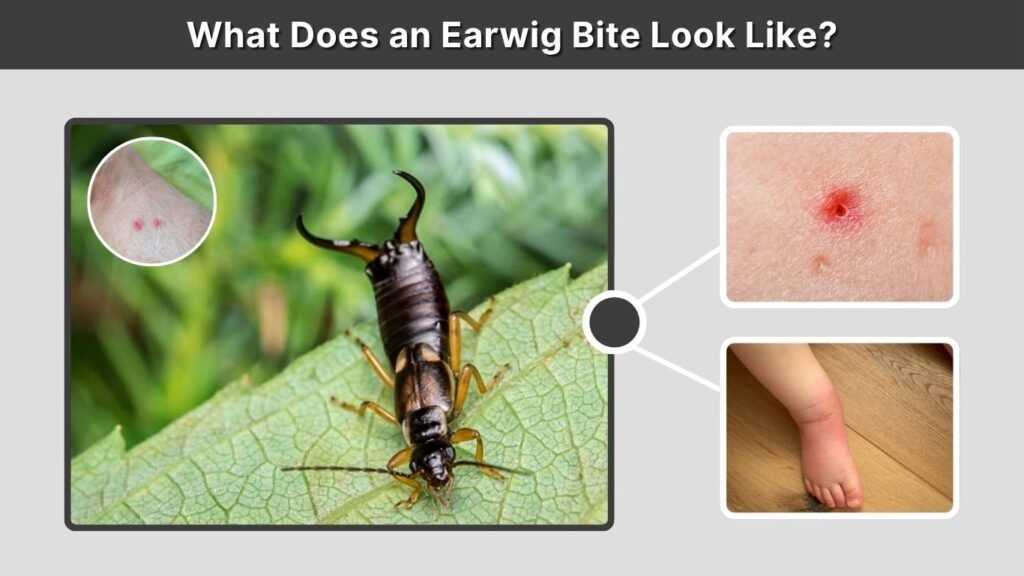
Earwigs do not usually bite humans. They may pinch with their pincers if handled or trapped against the skin. An earwig pinch may leave a small red mark, mild swelling, or two tiny pressure points.
An earwig pinch may look like:
- A small red spot
- Slight swelling
- Mild skin irritation
- Two tiny marks from the pincers
- Minor tenderness
Earwigs are considered harmless to people, and their pinches are usually not serious.
What Does an Earwig Pinch Look Like?
An earwig pinch usually looks less severe than a true insect bite. It may appear as a small red area where the pincers pressed into the skin. In most cases, there is no deep wound, no spreading rash, and no venom reaction.
You should wash the area with soap and water if the skin is broken. If swelling, pain, pus, or spreading redness develops, it is better to contact a medical professional because the issue may be infection or another insect bite.
What Does an Earwig Bite Look Like on a Human?
On human skin, an earwig “bite” is usually a pinch mark. It may look similar to a tiny scratch, small red bump, or light irritation. Earwigs do not inject venom and are not known for biting people like mosquitoes, fleas, or bed bugs.
Possible signs include:
- Mild redness
- Small raised bump
- Light itching
- Temporary tenderness
- Two tiny pincer marks
If you see multiple itchy bites in a line or cluster, another pest may be responsible.
What Does an Earwig Nymph Look Like?
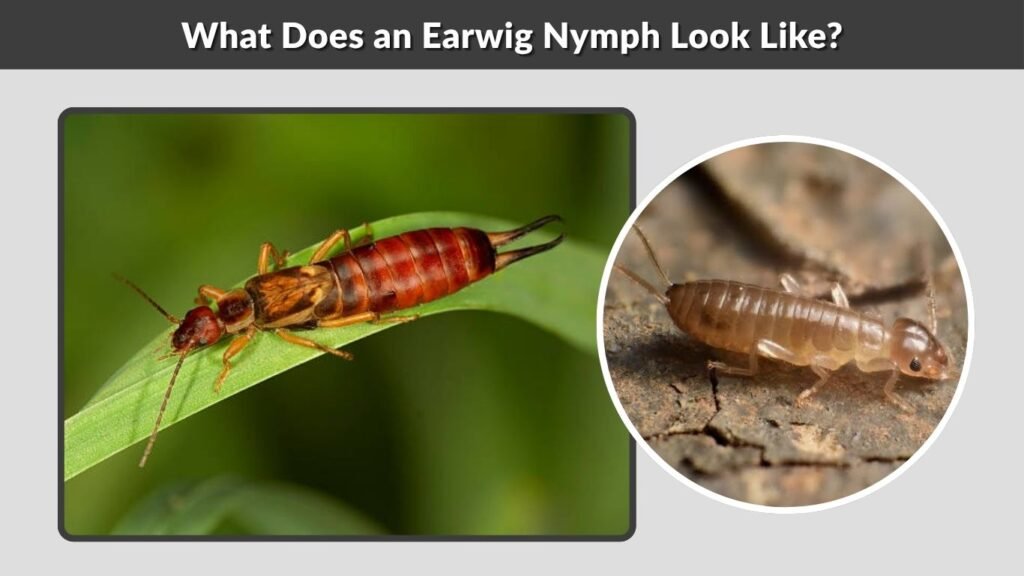
An earwig nymph looks like a smaller, lighter version of an adult earwig. Nymphs do not have fully developed wings, and their pincers are smaller. They may be pale brown, grayish, or light tan when young.
Earwig nymphs usually have:
- Small, slender bodies
- Pale or light brown color
- Tiny pincers
- Long antennae
- Six legs
- No fully developed wings
As they grow, they molt several times and gradually become darker and more adult-like.
What Do Earwig Eggs Look Like?
Earwig eggs are small, round to oval, and usually white or pale cream. They are often found in clusters in hidden, moist places. Female earwigs are unusual because they care for their eggs and early young, which is not common among many insects.
Earwig eggs may be found:
- In soil chambers
- Under logs
- Beneath stones
- Under mulch
- In cracks or damp crevices
- Near protected nesting areas
You may not see earwig eggs often because they are usually hidden underground or under cover.
What Does an Earwig Nest Look Like?
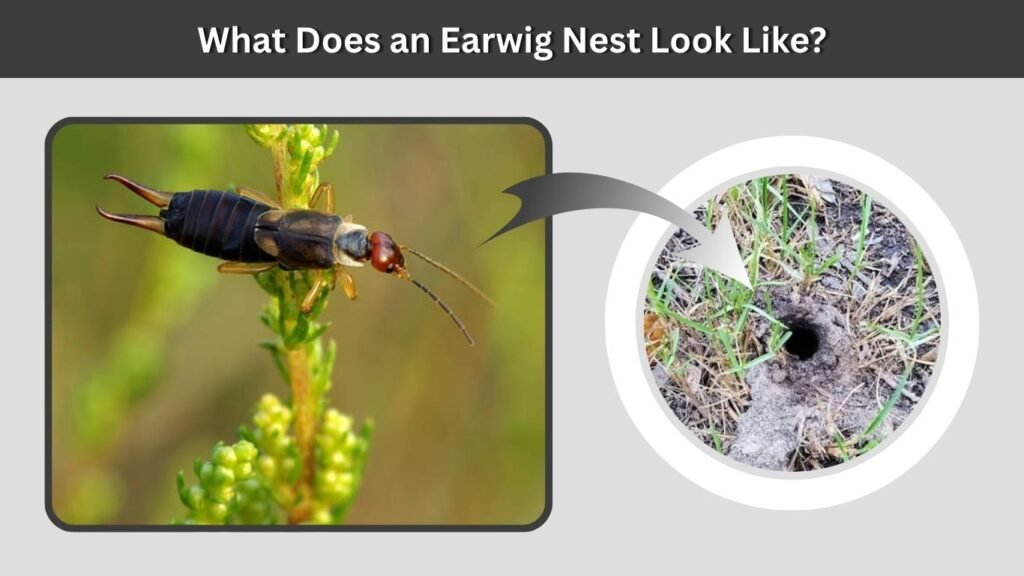
An earwig nest is not like a wasp nest or ant mound. It is usually a hidden, damp chamber or small protected space where the female keeps her eggs. It may be found under soil, mulch, stones, boards, or garden debris.
An earwig nest may look like:
- A small hidden soil pocket
- A cluster of pale eggs
- A female earwig nearby
- Damp, dark surroundings
- Young nymphs gathered together
If you lift a stone, board, or pot and see several earwigs, eggs, or tiny nymphs, you may have found a nesting area.
What Does an Earwig Infestation Look Like?
An earwig infestation usually means you are seeing many earwigs in damp areas, indoors or outdoors. In the garden, you may also notice plant damage that appears overnight.
Signs of an earwig infestation include:
- Many earwigs under pots, mulch, boards, or stones
- Earwigs entering bathrooms, basements, kitchens, or laundry rooms
- Ragged holes in leaves and flowers
- Earwigs hiding in fruit or vegetables
- Activity at night
- Moist areas around the home
Earwigs often gather where there is moisture, shelter, and food.
Earwig vs Similar Bugs
Some insects may look like earwigs at first, but the pincers make earwigs easier to identify.
| Bug | How It Differs From Earwigs |
| Silverfish | No pincers; has three tail-like bristles |
| Cockroach nymph | Wider body; no rear pincers |
| Rove beetle | May raise abdomen but has no forceps-like pincers |
| Termite | Pale body; no rear pincers |
| Centipede | Many legs, not six |
If the insect has a long body, six legs, antennae, and rear pincers, it is probably an earwig.
Where You Usually See Earwigs
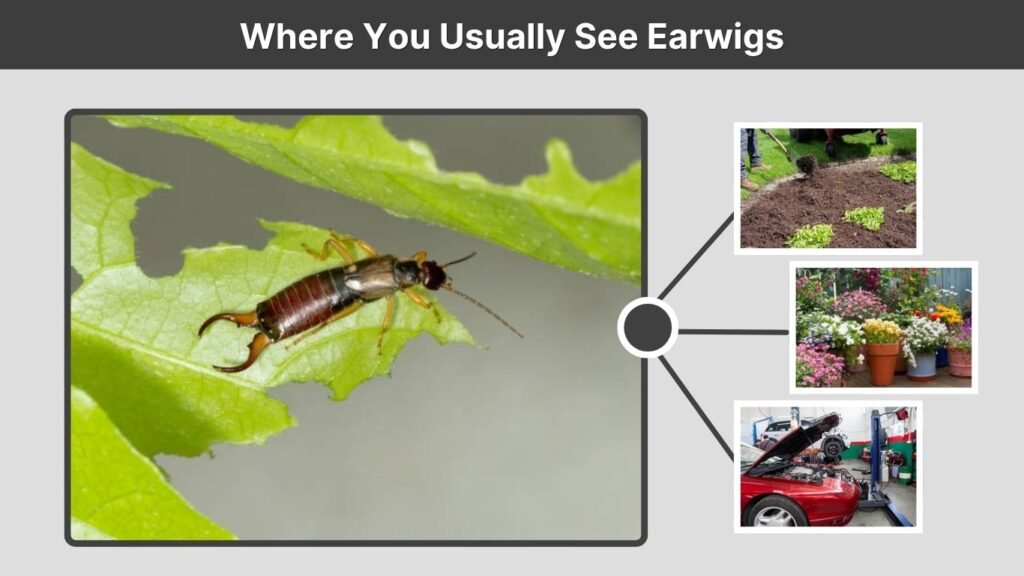
Earwigs prefer dark, cool, and moist hiding places. Outdoors, they are common in gardens, mulch, flower beds, compost areas, and under objects. Indoors, they may enter accidentally while looking for moisture or shelter.
Common hiding places include:
- Mulch
- Leaf litter
- Flowerpots
- Cracks in soil
- Under stones
- Under boards
- Damp basements
- Bathrooms
- Garages
- Door frames and window gaps
They are mostly active at night and usually hide during the day.
FAQs
What is an earwig and what does it look like?
An earwig is a small insect with a long, flat body, six legs, thin antennae, and pincers at the end of its abdomen. Most are brown or dark brown and hide in damp, dark places during the day.
What does an earwig bite look like?
An earwig bite is usually a pinch mark, not a true bite. It may look like a small red spot, mild swelling, or two tiny pressure marks. Earwigs are not venomous and are generally harmless to humans.
What does an earwig egg look like?
Earwig eggs are tiny, pale, round to oval eggs usually found in hidden, moist areas. They may appear in small clusters inside soil chambers, under stones, beneath mulch, or in protected cracks where the female guards them.
What does an earwig nymph look like?
An earwig nymph looks like a tiny adult earwig. It has a long body, six legs, antennae, and small pincers. Nymphs are usually lighter in color and do not have fully developed wings.
What does an earwig infestation look like?
An earwig infestation may look like many earwigs hiding under mulch, pots, stones, boards, or damp indoor areas. In gardens, you may also see ragged holes in leaves, damaged flowers, and nighttime insect activity.
