
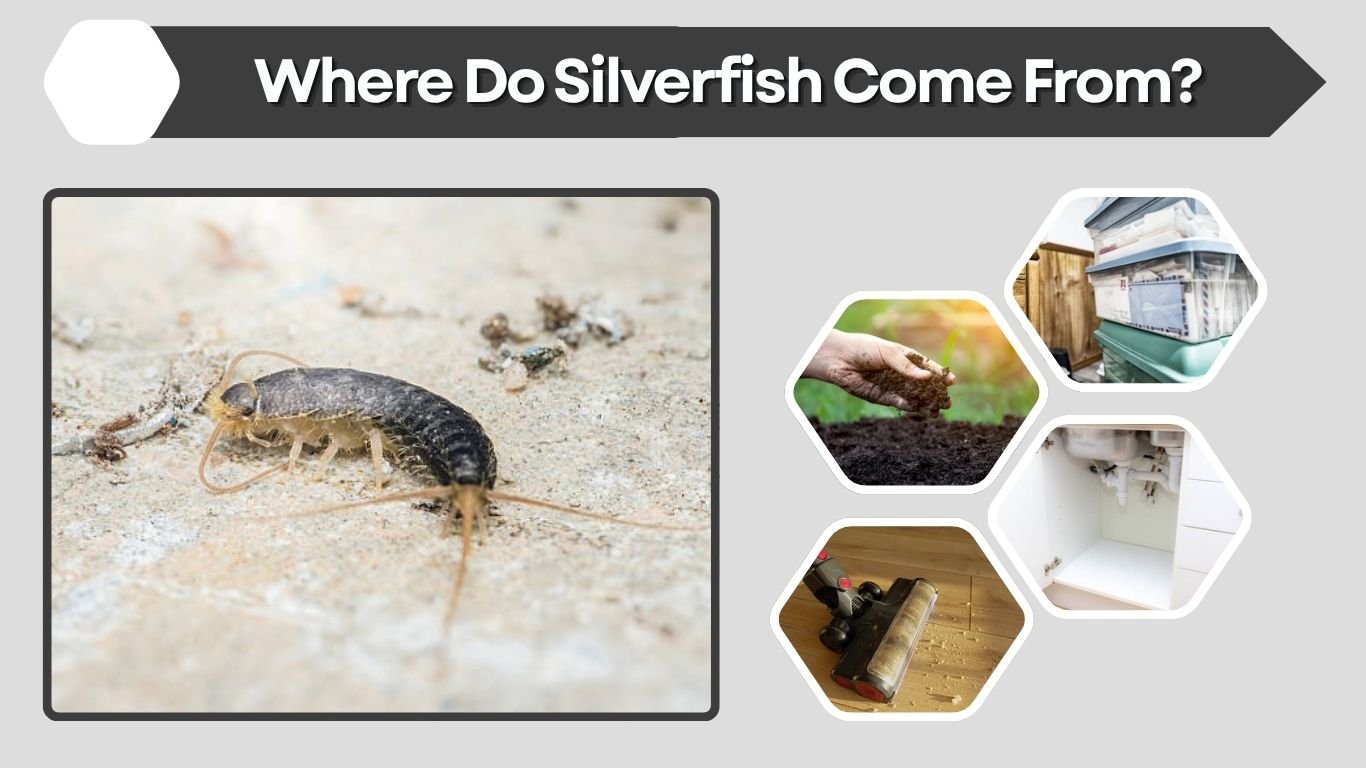
Silverfish usually come from dark, damp, hidden places inside or around a building. They may enter homes through cracks, gaps, vents, plumbing openings, cardboard boxes, old books, stored papers, or secondhand items. Once inside, they hide in bathrooms, basements, kitchens, laundry rooms, attics, closets, and wall voids. Silverfish are not a sign of dirt alone, but they often appear where moisture, clutter, paper, glue, starch, and hiding places are available.
What Are Silverfish?
Silverfish are small, wingless insects with flat bodies, long antennae, and three tail-like bristles at the back. Their bodies often look silver, gray, or brownish, and they move quickly when exposed to light. Because they are nocturnal, people usually see them at night on bathroom floors, kitchen walls, basement corners, or near storage boxes.
Silverfish do not bite people, do not sting, and are not known for spreading serious disease. However, they can damage books, paper, wallpaper, cardboard, clothes, stored food, and other household items.
Where Do Silverfish Come From?
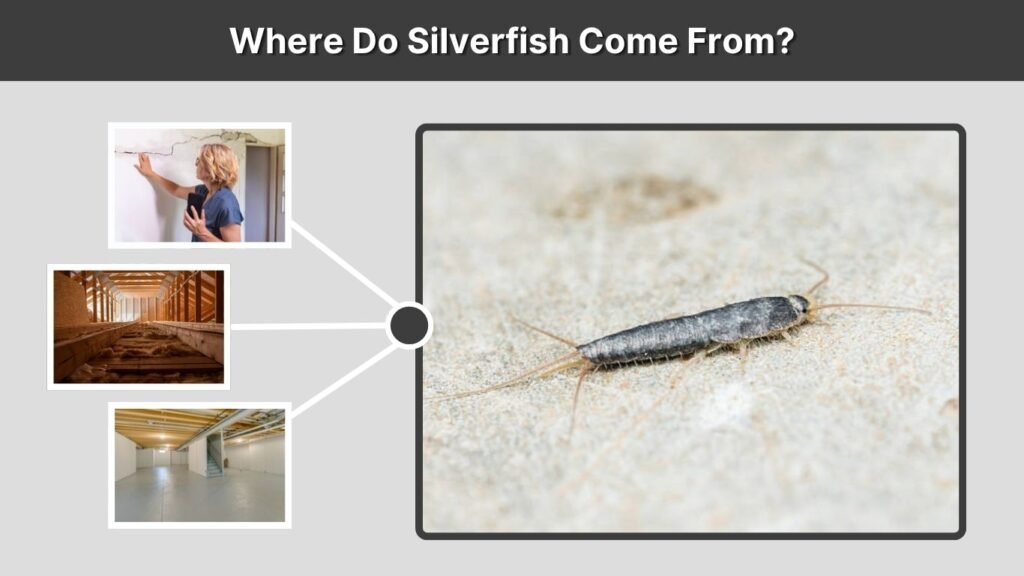
Silverfish come from damp, protected environments where they can find food and shelter. They may already be living inside wall voids, basements, attics, or crawl spaces before you notice them. They can also enter from outside through small openings.
Silverfish commonly come from:
- Wall cracks
- Baseboard gaps
- Plumbing openings
- Attics
- Basements
- Crawl spaces
- Bathrooms
- Kitchens
- Laundry rooms
- Storage boxes
- Old books
- Cardboard packages
- Secondhand furniture
- Damp paper items
They are very good at hiding, so the silverfish you see may be only a small sign of a larger hidden population.
How Do Silverfish Get in Your House?
Silverfish can enter a house in several ways. They are small and flat, so they can squeeze through narrow gaps around doors, windows, pipes, vents, and foundations. They may also be carried inside with items that were stored in damp places.
Entry Points Around the Home
Silverfish often enter through tiny openings. Even a clean home can get silverfish if there are moisture problems and small access points.
Common entry points include:
- Cracks in foundation walls
- Gaps under doors
- Spaces around window frames
- Openings around pipes
- Dryer vents
- Bathroom vents
- Attic vents
- Gaps around baseboards
- Wall voids
- Utility openings
Sealing these areas can help reduce silverfish movement.
Items That Bring Silverfish Inside
Sometimes silverfish do not walk in from outside. They are accidentally carried into homes through stored items.
They may hide in:
- Cardboard boxes
- Old books
- Paper bags
- Stored documents
- Secondhand furniture
- Moving boxes
- Old clothing
- Wallpaper rolls
- Pantry packages
- Storage bins from basements or garages
This is why silverfish may appear after moving, unpacking storage boxes, buying used books, or bringing old furniture indoors.
Why Do Silverfish Appear in Bathrooms?
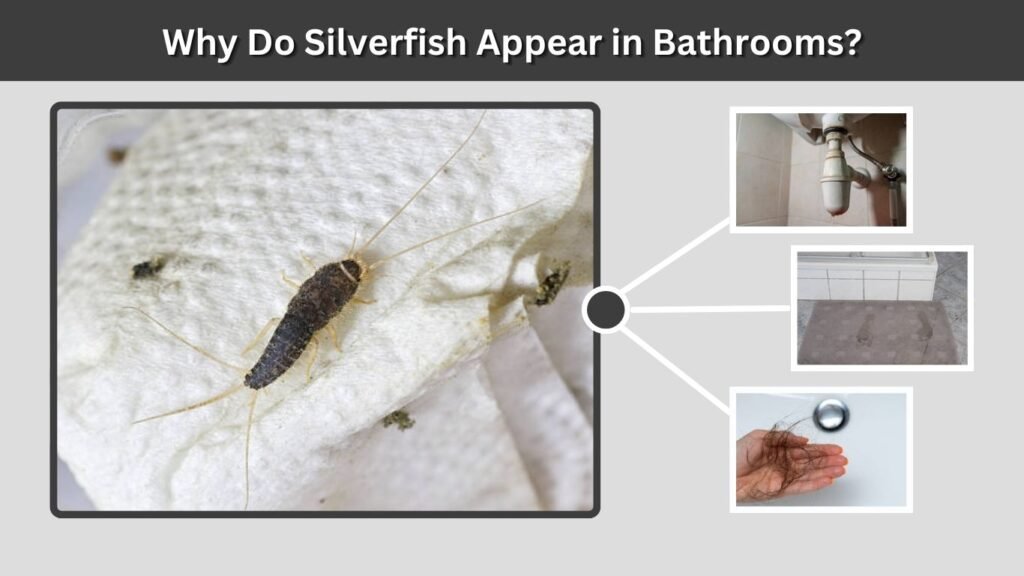
Bathrooms are one of the most common places to find silverfish because they provide moisture, warmth, darkness, and food. A silverfish on the bathroom floor may have come from under the sink, behind the toilet, around pipe gaps, inside wall cracks, or from a nearby damp area.
Bathroom Conditions That Attract Silverfish
Silverfish like bathrooms because they may find:
- High humidity
- Condensation
- Leaky pipes
- Damp bath mats
- Wet floors
- Hair
- Dead skin
- Dust
- Mold
- Toilet paper
- Cardboard packaging
- Wallpaper glue
- Dark cracks and corners
If you keep seeing silverfish in the bathroom at night, the room may be staying too damp.
Why Do Silverfish Come Out at Night?
Silverfish come out at night because they are nocturnal. They avoid light and hide during the day in cracks, wall gaps, under cabinets, behind baseboards, and inside clutter. When the room is dark and quiet, they come out to search for food and moisture.
Seeing One Silverfish at Night
Seeing one silverfish does not always mean a serious infestation. But repeated sightings are a warning sign. If you see them often in the same area, they are probably hiding nearby during the day.
You should inspect more carefully if:
- You see silverfish several times a week.
- You find baby silverfish.
- You see them in multiple rooms.
- You notice paper or clothing damage.
- You find shed skins or droppings.
- Your home has damp areas or leaks.
What Causes Silverfish in the House?
Silverfish are caused by a combination of moisture, food, shelter, and access. They do not appear from nowhere. They move into places where conditions help them survive.
Main Causes of Silverfish
The most common causes include:
- High indoor humidity
- Plumbing leaks
- Damp basements
- Poor bathroom ventilation
- Cluttered closets
- Cardboard storage
- Old books and papers
- Food crumbs
- Wallpaper paste
- Open pantry goods
- Cracks and gaps
- Damp laundry
- Poor airflow
A home with lots of paper clutter and moisture is more likely to have silverfish.
Where Do Silverfish Nest?
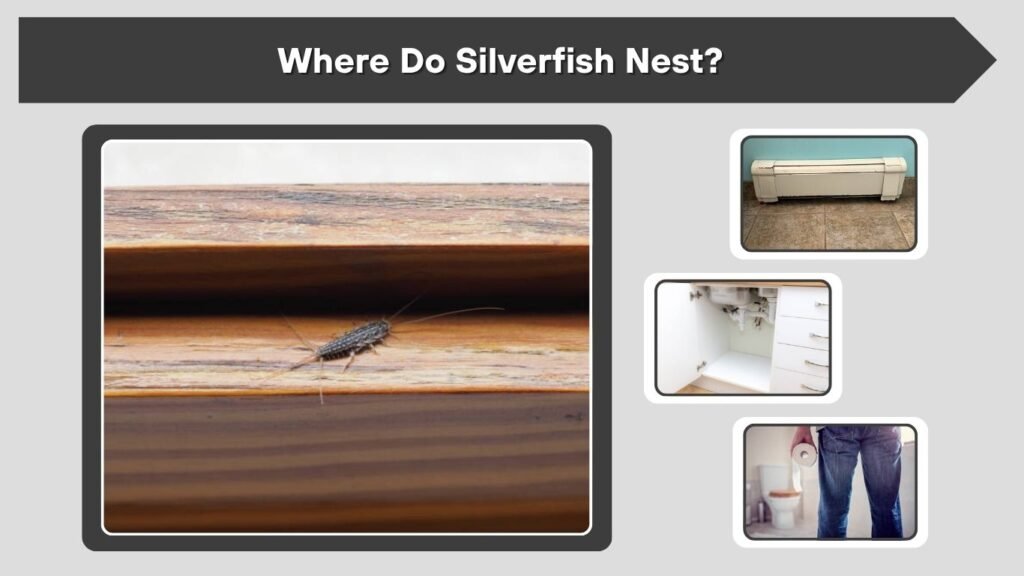
Silverfish do not build nests like ants, wasps, or termites. Instead, they hide and gather in suitable areas. They lay eggs in cracks and crevices where it is dark, humid, and protected.
Common Silverfish Hiding Places
Silverfish may hide in:
- Behind baseboards
- Under sinks
- Behind toilets
- Inside wall voids
- In bathroom cabinets
- In laundry rooms
- Under cardboard boxes
- Inside bookshelves
- Behind wallpaper
- In closet corners
- In attic insulation areas
- Around water pipes
- In basement cracks
Because they hide so well, you may only see them when they accidentally run across open floors or walls.
Where Do Baby Silverfish Come From?
Baby silverfish come from eggs laid by adult silverfish. The eggs are usually hidden in cracks, gaps, dust, paper clutter, or damp protected areas. Baby silverfish look like smaller versions of adults, but they are lighter in color at first.
What Baby Silverfish Mean
Seeing baby silverfish can mean adults are breeding nearby. This is a stronger sign of an infestation than seeing one adult. If you find tiny silverfish in a bathroom, closet, or basement, inspect the area for moisture and hiding places.
Do Silverfish Come from Drains?
Silverfish may appear in sinks, tubs, or near drains, but they usually do not live inside drains like drain flies. They may fall into sinks or bathtubs and become trapped because smooth surfaces are difficult for them to climb.
Why Silverfish Are Near Drains
Silverfish may be near drains because these areas are moist. They may come from nearby cracks, plumbing gaps, under cabinets, or wall voids. If you see them in the sink, check under the sink and around pipe openings rather than assuming they came from inside the drain.
Do Silverfish Come from Outside?
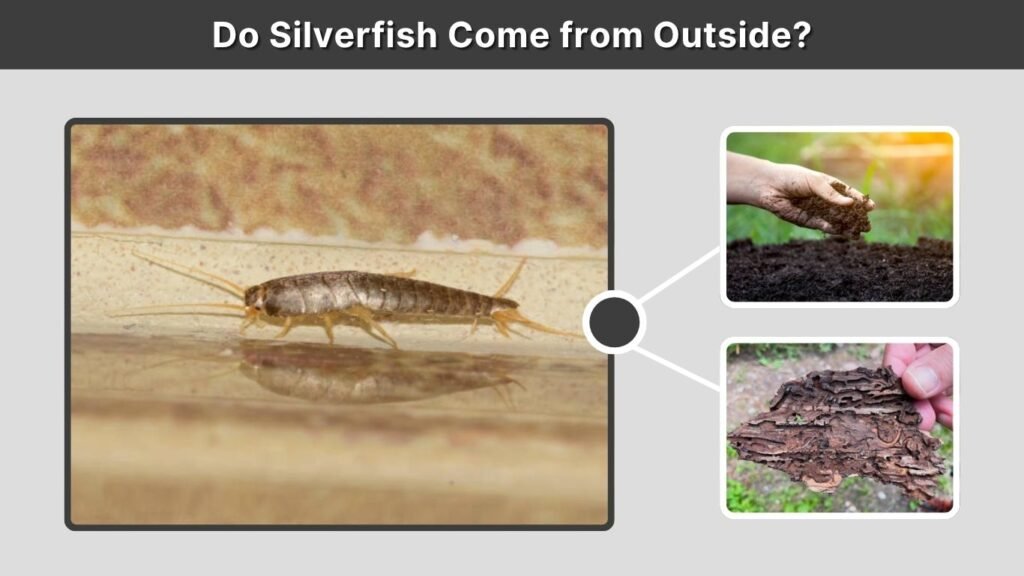
Yes, silverfish can come from outside, especially if the outdoor area is damp and close to the home. They may live under leaf litter, mulch, stones, bark, logs, or near foundations. From there, they can enter through cracks and gaps.
Outdoor Conditions That Attract Silverfish
Silverfish may be found outside in:
- Mulch beds
- Leaf piles
- Damp soil
- Under stones
- Under bark
- Wood piles
- Foundation cracks
- Outdoor storage boxes
- Compost areas
Keeping the area around the home dry and clean can reduce entry.
Do Silverfish Come from Dirty Homes?
Silverfish are not always a sign of a dirty home. They are more strongly linked to moisture and hidden food sources. A clean bathroom with poor ventilation can still attract silverfish. However, clutter, crumbs, paper piles, and cardboard storage can make infestations worse.
Clean Homes Can Still Have Silverfish
Even clean homes may have silverfish if there are:
- Hidden leaks
- Humid bathrooms
- Damp basements
- Stored books
- Cardboard boxes
- Wall cracks
- Poor airflow
- Moisture behind walls
Cleaning helps, but moisture control is usually the most important step.
Silverfish in Apartments
Silverfish are common in apartments because plumbing, walls, vents, laundry areas, and storage spaces may be shared. They can move between units through pipe gaps, wall voids, and utility openings.
Where Silverfish Come From in Apartments
In apartments, silverfish may come from:
- Neighboring units
- Shared bathrooms
- Plumbing walls
- Laundry rooms
- Basement storage
- Hallway utility spaces
- Cracks around pipes
- Old building materials
If many tenants are seeing silverfish, building-wide moisture or pest control may be needed.
How to Find Where Silverfish Are Coming From
To find the source, inspect the areas where you see them most often. Silverfish usually stay close to moisture and food.
Inspection Checklist
Check these places first:
- Under bathroom sinks
- Around pipe openings
- Behind toilets
- Behind baseboards
- Inside closets
- Under storage boxes
- Behind bookshelves
- In basement corners
- Around laundry areas
- Under kitchen cabinets
- Near wallpaper damage
- Around cardboard storage
Use sticky traps along walls and corners to identify where activity is highest.
How to Stop Silverfish from Coming Back
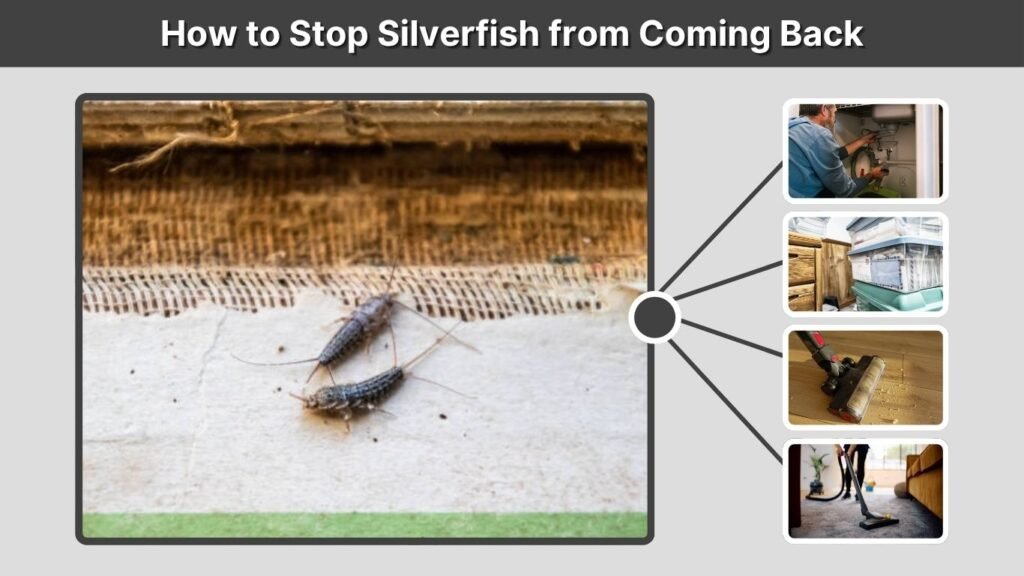
The best way to stop silverfish is to remove the conditions that attract them. Killing the insects you see is not enough if moisture and food sources remain.
Prevention Steps
Use these steps to keep silverfish away:
- Fix water leaks.
- Use bathroom exhaust fans.
- Reduce indoor humidity.
- Store paper in sealed bins.
- Replace cardboard boxes with plastic containers.
- Vacuum baseboards and closets.
- Clean crumbs and dust.
- Seal cracks and pipe gaps.
- Keep clothes dry before storage.
- Remove old papers and clutter.
- Store pantry food in airtight containers.
- Improve basement and attic ventilation.
Best Long-Term Solution
The best long-term solution is moisture control. Silverfish need humid hiding places to thrive. A dry, clean, sealed home is much less attractive to them.
FAQs
Where do silverfish come from?
Silverfish come from damp, dark, hidden places such as bathrooms, basements, attics, crawl spaces, wall voids, storage boxes, old books, cardboard, and cracks around plumbing.
Why do I suddenly have silverfish?
You may suddenly see silverfish because humidity increased, a leak developed, stored boxes were moved, weather changed, or hidden silverfish came out at night looking for food and moisture.
Do silverfish come from drains?
Silverfish may appear near drains, but they usually do not live inside drains. They often come from nearby cracks, plumbing gaps, under sinks, or wall voids.
Does one silverfish mean infestation?
One silverfish does not always mean an infestation. However, repeated sightings, baby silverfish, shed skins, droppings, or damage to paper and clothes may indicate a larger problem.
How do you stop silverfish from coming into your house?
Seal cracks, fix leaks, lower humidity, remove cardboard clutter, store food and paper in sealed containers, vacuum regularly, and keep bathrooms, basements, and closets dry.
