
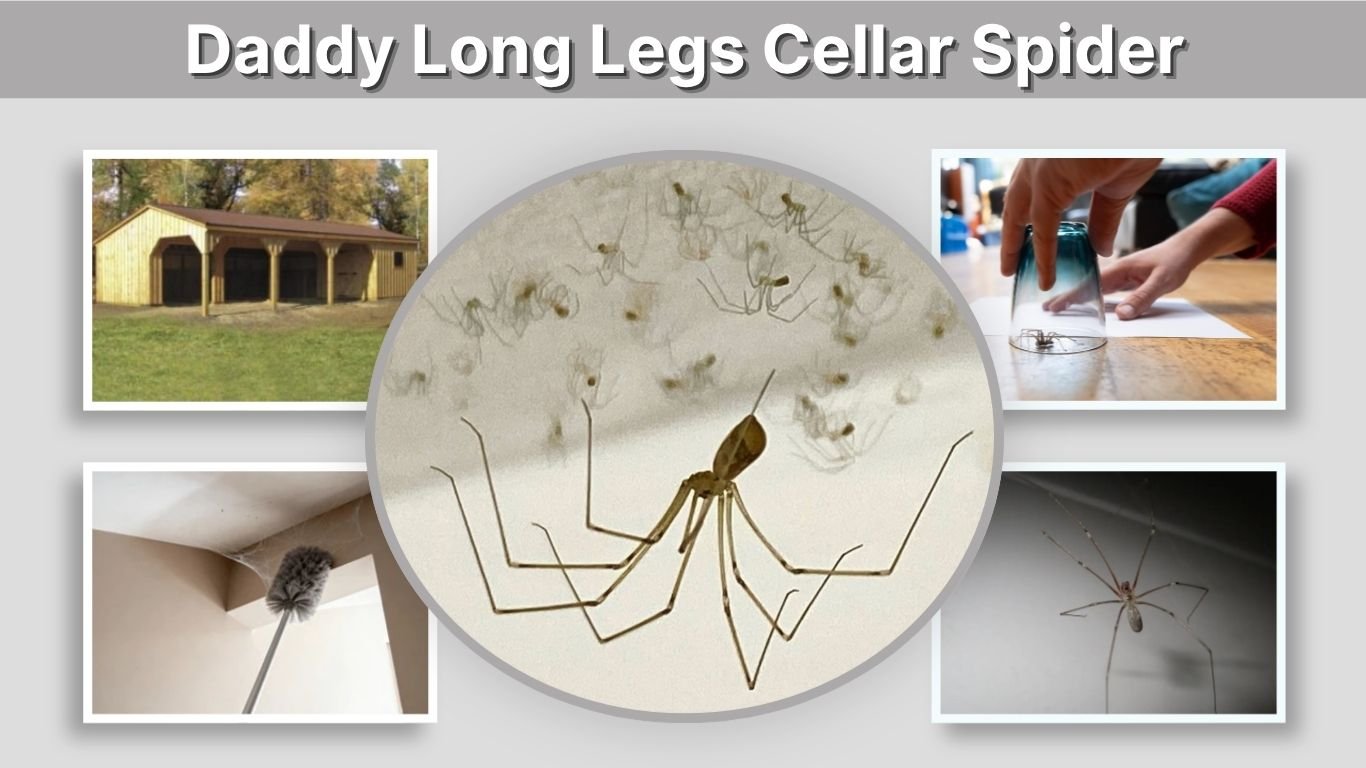
The name “daddy long legs cellar spider” can confuse many homeowners because it is often used for more than one long-legged creature. In many places, people call cellar spiders “daddy long legs” because of their thin, delicate legs and habit of living indoors. However, the same name may also refer to harvestmen, which are not true spiders.
What Is a Daddy Long Legs Cellar Spider?
A daddy long legs cellar spider usually refers to a true spider from the family Pholcidae. These spiders are commonly found in basements, cellars, garages, sheds, bathrooms, and quiet corners of homes. They have small bodies, very long legs, and a light, fragile appearance.
Cellar spiders are known for hanging upside down in loose, messy webs. Their webs are usually built in corners, under ceilings, behind furniture, or in areas that are not cleaned often. Because their legs are so long and thin, many people mistake them for other creatures also called daddy long legs.
The important point is that a cellar spider is a real spider. It has two main body parts, produces silk, builds webs, and uses venom to catch prey. Even though this may sound alarming, cellar spiders are not considered dangerous to humans.
Why Are Cellar Spiders Called Daddy Long Legs?
The nickname comes from their appearance. Cellar spiders have unusually long legs compared with their small bodies. When they hang in a web, their legs spread out in a way that makes them easy to recognize.
However, “daddy long legs” is not a scientific name. It is a common name used differently in different regions. This is why people often get confused when comparing a daddy long legs and a cellar spider.
The name may refer to:
- Cellar spiders, which are true spiders
- Harvestmen, which are arachnids but not spiders
- Crane flies, which are insects with long legs
- Other small, long-legged creatures seen around homes or gardens
Because the same name is used for different animals, the best way to identify the creature is by looking at its body shape, web-building behavior, and where it lives.
Daddy Long Legs Cellar Spider Identification
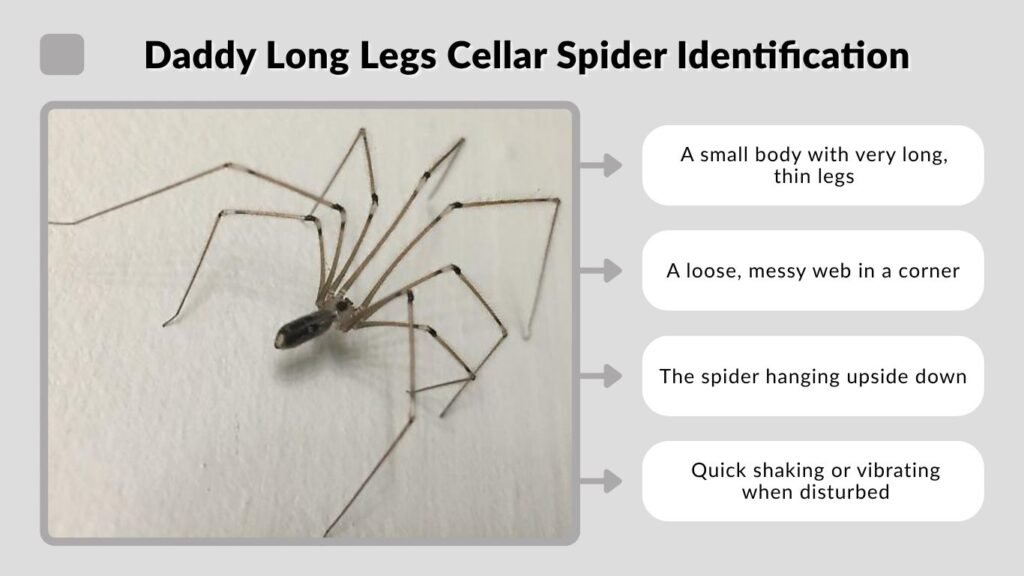
Cellar spiders are easy to identify once you know what to look for. They are usually pale yellow, gray, brown, or almost translucent. Their bodies are small, but their legs may be several times longer than the body.
They often stay in one place for long periods. You may see them in the same ceiling corner for days or weeks, waiting for small insects to get trapped in their web. If disturbed, they may shake or vibrate quickly.
Key Signs of a Cellar Spider
You are likely looking at a cellar spider if you notice:
- A small body with very long, thin legs
- A loose, messy web in a corner
- The spider hanging upside down
- Quick shaking or vibrating when disturbed
- A location such as a basement, garage, bathroom, or ceiling corner
These spiders do not chase people, damage furniture, or infest food. They usually stay close to their webs and avoid direct contact with humans.
Daddy Long Legs Cellar Spider vs Harvestman
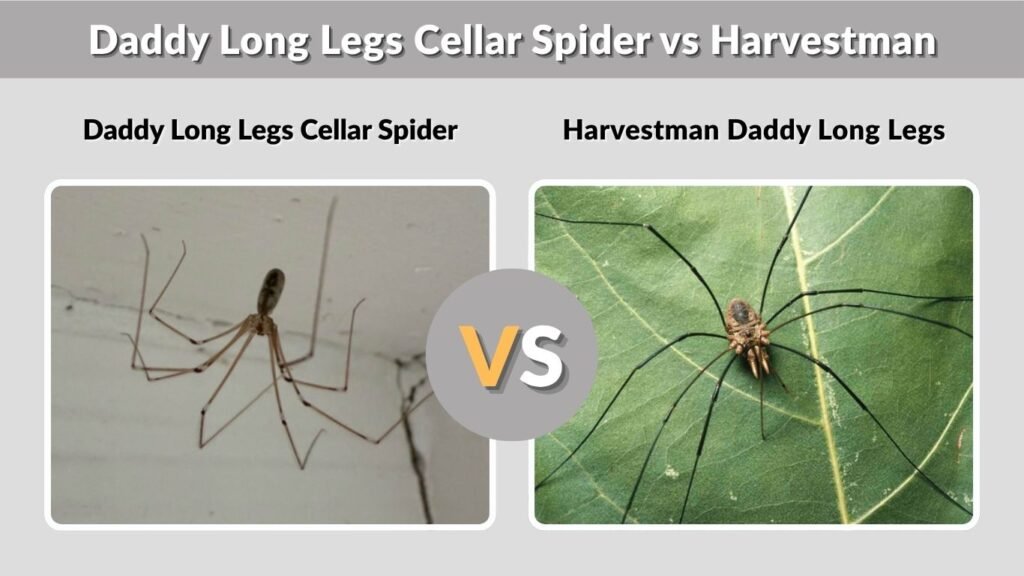
The biggest confusion comes from harvestmen. In many areas, harvestmen are also called daddy long legs. They look similar because they have long legs, but they are not the same as cellar spiders.
Harvestmen belong to the order Opiliones. They are arachnids, but they are not true spiders. Their bodies look like one rounded piece, while spiders have two main body sections. Harvestmen also do not make webs and do not have venom glands.
| Feature | Daddy Long Legs Cellar Spider | Harvestman Daddy Long Legs |
|---|---|---|
| Scientific group | True spider | Arachnid, not a true spider |
| Body shape | Two main body parts | One rounded body section |
| Web-making | Builds messy webs | Does not make webs |
| Venom | Has venom for prey | No venom glands |
| Common location | Indoor corners, basements, garages | Gardens, leaf litter, outdoor walls |
| Risk to humans | Harmless | Harmless |
This difference matters because many myths about daddy long legs come from mixing up these two animals.
Are Daddy Long Legs Cellar Spiders Dangerous?
Daddy long legs cellar spiders are not dangerous to people. They do have venom, but their venom is meant for small prey such as flies, mosquitoes, ants, moths, and other tiny insects. They are not aggressive and do not seek out humans.
Most cellar spider bites are extremely rare. Even if a bite happens, it is usually mild and not medically serious for healthy adults. These spiders prefer to escape or remain hidden rather than defend themselves.
Why People Fear Them
People often fear cellar spiders because:
- Their long legs make them look unusual
- They hang in dark corners
- Their messy webs can seem unpleasant
- Myths make them sound more dangerous than they are
In reality, they are one of the more harmless spiders found in homes. Their appearance may be unsettling, but they are usually beneficial.
The Venom Myth Explained
One of the most common myths says daddy long legs are the most venomous spiders in the world but cannot bite humans because their fangs are too small. This claim is false.
The myth is confusing because the name daddy long legs can refer to different animals. Harvestmen do not have venom glands at all, so they cannot be the most venomous. Cellar spiders do have venom, but it is not known to be dangerously toxic to humans.
Cellar spiders can bite small prey, but they are not considered a medical threat. Their venom helps them survive as predators, not harm people.
Where Do Cellar Spiders Live?
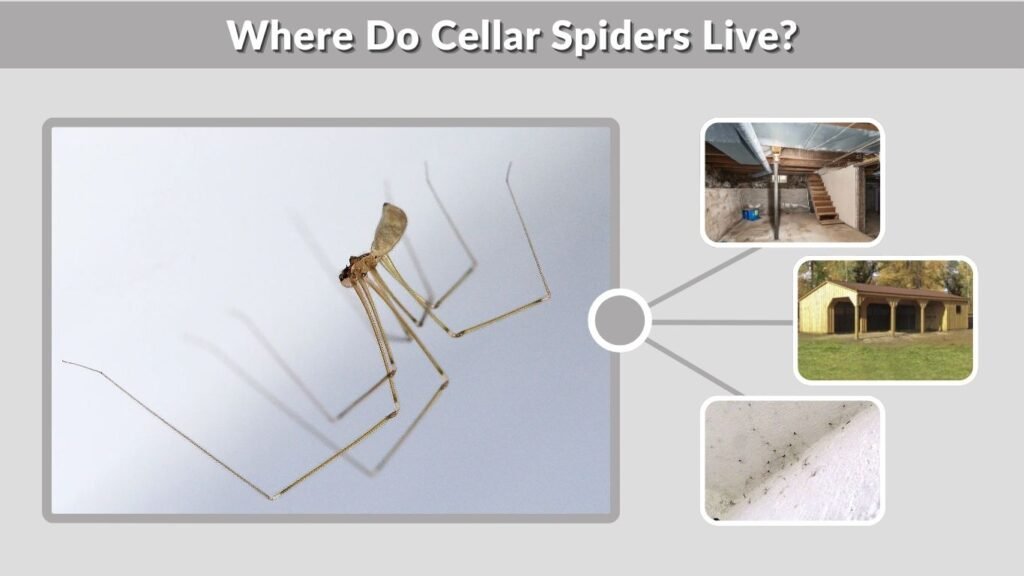
Cellar spiders prefer quiet, sheltered spaces. They like areas where they can build webs without being disturbed. This is why they are common in basements and storage rooms.
Common Indoor Locations
You may find daddy long legs cellar spiders in:
- Basement corners
- Garage ceilings
- Bathroom corners
- Closets and storage areas
- Sheds and barns
- Behind furniture
- Under stairways
They are more common in areas with insects. If your home has many small flying bugs, cellar spiders may stay because food is available.
What Do Daddy Long Legs Cellar Spiders Eat?
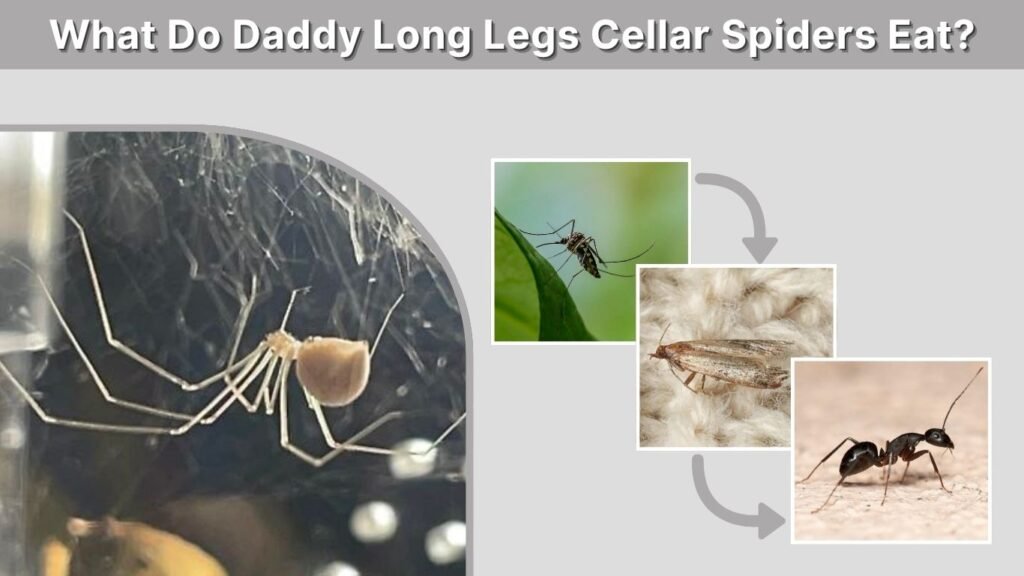
Cellar spiders are natural pest controllers. They catch small insects in their tangled webs and feed on them. Some cellar spiders may even catch other spiders, including species larger than themselves.
Their diet may include flies, mosquitoes, moths, gnats, ants, beetles, and small household pests. This makes them useful in garages, basements, and other areas where insects gather.
How They Catch Prey
Cellar spiders use their messy webs as traps. When an insect touches the web, the spider senses movement and moves toward it. The spider then wraps the prey in silk and uses venom to control it.
Because their webs are not neat or beautiful, people often remove them quickly. However, these webs are effective for catching unwanted insects.
Should You Remove Cellar Spiders?
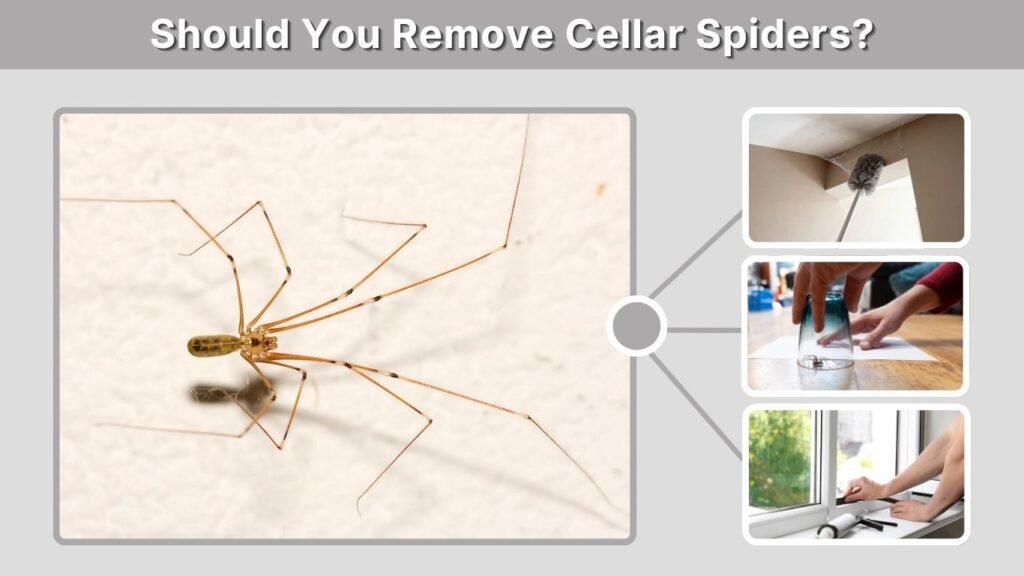
You do not have to remove cellar spiders unless their webs bother you. They are harmless and can help reduce other pests in the home. Still, some people prefer to keep living spaces free from spider webs.
If you want to reduce their presence, use gentle and simple methods instead of harsh chemicals.
Safe Removal Tips
Try these steps:
- Remove old webs with a broom or vacuum
- Capture the spider with a cup and paper
- Release it outside near a sheltered area
- Seal gaps around windows and doors
- Reduce indoor insects by keeping areas clean
- Use screens on windows and vents
Avoid crushing them if possible. They are not harmful and can be relocated easily.
How to Prevent Too Many Cellar Spiders
A few cellar spiders in a basement or garage are normal. However, if you see many of them, your home may have enough insects to support their population. Reducing their food source can help reduce the number of spiders naturally.
Keep storage areas clean, remove clutter, and vacuum corners regularly. Fix moisture problems because damp areas often attract insects. Outdoor lights can also bring flying insects close to doors and windows, which may indirectly attract spiders.
You can also check for cracks, gaps, and openings around your home. Sealing these entry points helps limit both insects and spiders.
Are Cellar Spiders Good for the Home?
In many ways, cellar spiders are helpful. They catch insects that people often find more annoying than spiders. A cellar spider in a basement corner may quietly reduce flies, mosquitoes, and gnats.
They do not damage wood, clothing, food, or walls. Their main drawback is the messy webbing they leave behind. If you can tolerate a few webs in less-used areas, these spiders can be part of a natural pest-control system.
For people who dislike spiders, gentle removal is the best option. There is usually no need for pesticides.
FAQs
Is a cellar spider the same as a daddy long legs?
Sometimes, yes. In many places, cellar spiders are called daddy long legs because they have very long, thin legs. However, the name daddy long legs can also refer to harvestmen or crane flies. A cellar spider is a true spider that builds webs, while a harvestman does not.
Can daddy long legs cellar spiders bite humans?
Daddy long legs cellar spiders can technically bite, but bites are very rare. They are not aggressive and usually avoid people. Their venom is designed for small insects, not humans. If a bite happens, it is usually mild and not considered dangerous for most healthy people.
Why do cellar spiders shake in their webs?
Cellar spiders shake or vibrate when they feel threatened. This movement may confuse predators and make the spider harder to see clearly. It can look strange, but it is a defensive behavior. The spider is not preparing to attack; it is usually trying to protect itself.
Do cellar spiders help control pests?
Yes, cellar spiders can help control small household pests. They catch flies, mosquitoes, gnats, moths, ants, and even other spiders in their webs. Their messy webs may look unpleasant, but they are useful traps. In garages and basements, they often work as natural pest control.
Should I kill daddy long legs cellar spiders?
There is usually no need to kill them. Daddy long legs cellar spiders are harmless and can be helpful because they eat small insects. If you do not want them indoors, gently remove them with a cup and paper, clean old webs, and seal entry points around your home.
