
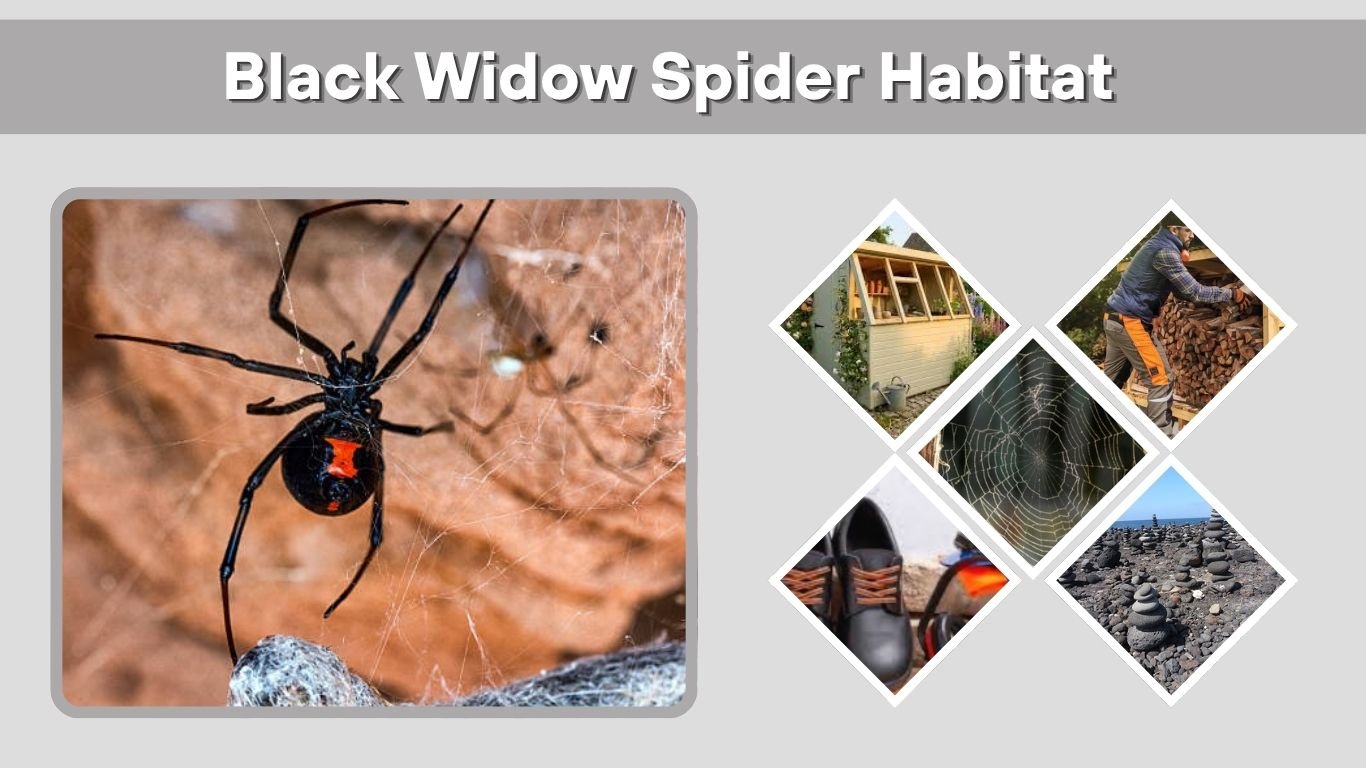
The black widow spider habitat is usually dark, dry, sheltered, and quiet. These spiders often live close to the ground in places where insects are available and disturbance is low. Outdoors, they may hide under rocks, logs, woodpiles, and debris. Around homes, they are often found in garages, sheds, crawl spaces, corners, cluttered storage areas, and other protected spaces.
What Is the Habitat of a Black Widow Spider?
A black widow spider’s habitat is any place that gives it shelter, web support, prey, and protection from frequent disturbance. Unlike wandering spiders that actively roam for food, black widows usually build irregular, tangled webs and wait for insects to become trapped.
The habitat of a black widow spider can be natural or human-made. In nature, they use rocks, logs, low vegetation, animal burrows, and protected ground-level spaces. Around people, they adapt well to storage areas, outdoor furniture, utility boxes, garages, sheds, barns, and cluttered corners.
Black widows are not usually found in bright, open, high-traffic places. They prefer hidden spots where their webs can remain undisturbed.
Black Widow Spider Natural Habitat
The black widow spider natural habitat includes dry, protected areas close to the ground. These places offer enough cover for the spider and enough insects for feeding. Their webs are usually placed where several surfaces are available for attachment, such as between rocks, boards, branches, boxes, or wall corners.
Common Natural Habitats
Black widows may live in:
- Rock piles and stone walls
- Fallen logs and tree stumps
- Woodpiles and bark crevices
- Tall grass near protected objects
- Brush piles and leaf litter
- Animal burrows or abandoned holes
- Desert shrubs and dry ground cover
- Low vegetation near sheltered spaces
These spiders are especially successful in warm regions, but they can survive in many environments as long as they find protection, prey, and a stable web site.
Why They Prefer Hidden Places
Black widows are shy spiders that usually avoid people. Their habitat preference is linked to survival. Hidden spaces protect them from predators, weather, and accidental web destruction. A quiet corner also gives the spider time to build a strong web and capture prey.
Their webs are not neat circles like orb-weaver webs. Instead, they are messy, sticky, and irregular. This type of web works well in corners, crevices, and cluttered spaces.
Black Widow Spider Habitat Around Homes
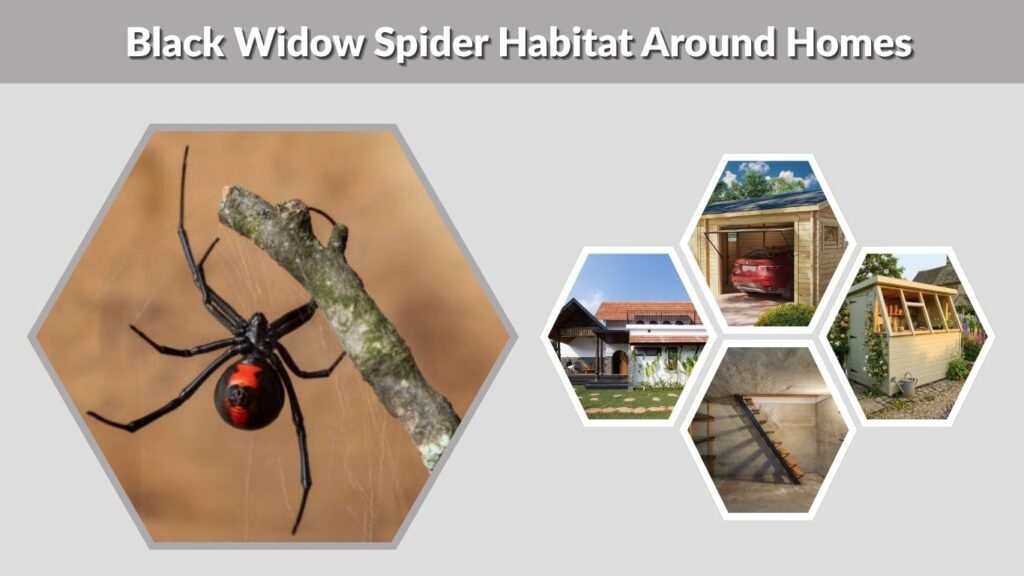
Many people search for black widow spider habitat because they want to know where these spiders may hide near a house. Around homes, black widows often choose dark and undisturbed places that are rarely cleaned or moved.
They are more common outside than inside, but they can enter buildings or live in attached structures if conditions are suitable. Garages, basements, sheds, and crawl spaces can provide ideal habitat because they are dry, sheltered, and full of hiding spots.
Common Hiding Places Near Homes
Black widows may be found in:
- Garages and storage rooms
- Sheds, barns, and workshops
- Crawl spaces and basements
- Woodpiles and stacked lumber
- Outdoor furniture and cushions
- Trash bins and recycling areas
- Meter boxes and utility boxes
- Under decks and porches
- Around flowerpots and garden tools
- Corners with cardboard boxes or clutter
The risk is higher when people reach into dark places without looking. Bites often happen when a spider is pressed against the skin, such as when someone grabs an object, puts on stored gloves, or moves outdoor materials.
Black Widow Spider Habitat Range
The black widow spider habitat range depends on the species. In North America, the best-known species include the southern black widow, western black widow, and northern black widow. Their ranges overlap in some places, but each is more common in certain regions.
| Type of Black Widow | Common Range | Typical Habitat Notes |
| Southern black widow | Southeastern and parts of central United States | Woodpiles, sheds, debris, low sheltered areas |
| Western black widow | Western United States and parts of Mexico | Dry areas, deserts, garages, outdoor clutter |
| Northern black widow | Northeastern and parts of eastern North America | Wooded edges, stone walls, sheds, protected outdoor sites |
| Redback spider | Australia and nearby regions | Urban areas, dry shelter, outdoor structures |
| False widow spiders | Parts of Europe, North America, and other regions | Buildings, crevices, sheds, and indoor corners |
A black widow spider habitat map may show broad distribution, but local conditions matter more than state borders. Even in a region where black widows are common, they are usually concentrated in quiet, sheltered microhabitats.
Black Widow Spider Habitat in the US
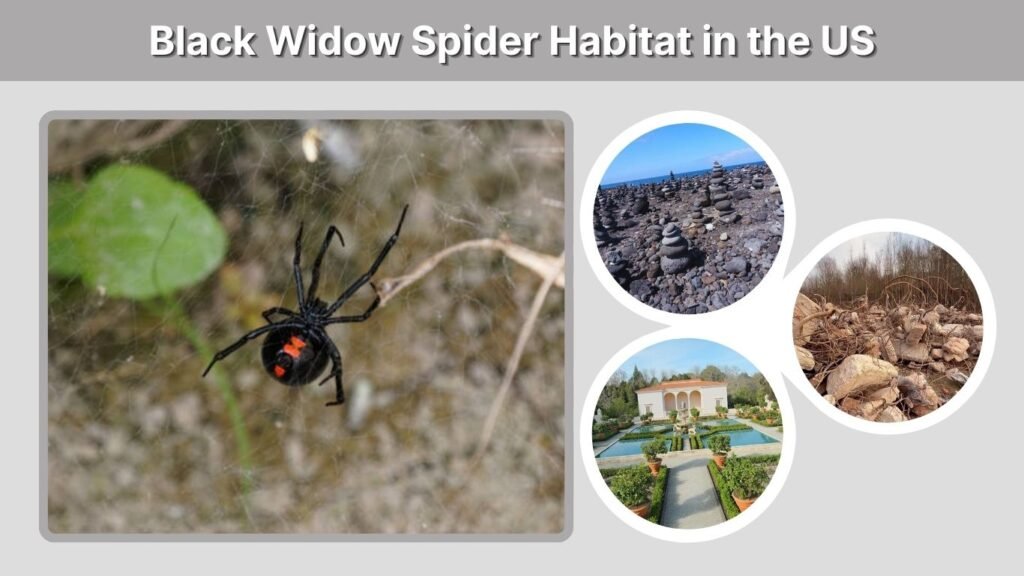
Black widow spiders live in many parts of the United States. They are especially common in warmer areas, but they are not limited to deserts or the South. Different species occupy different regions, including the Southeast, West, Southwest, and parts of the North.
Southern Black Widow Spider Habitat
The southern black widow spider habitat is often associated with the southeastern United States. It commonly uses outdoor clutter, woodpiles, sheds, barns, crawl spaces, and protected corners near the ground. It may also live in gardens, stone piles, and debris fields.
This species often benefits from human structures because buildings create many dry, sheltered spaces. A messy storage area can imitate the natural shelter of logs, rocks, and burrows.
Western Black Widow Spider Habitat
The western black widow spider habitat includes the western and southwestern United States. It is often found in dry, warm areas, including desert environments. However, it also lives near homes, gardens, garages, fences, and outdoor storage areas.
In California and nearby western states, black widows are often associated with ground-level hiding places, utility boxes, patio furniture, and cluttered outdoor spaces. Their habitat is usually close to insects and protected from frequent disturbance.
Northern Black Widow Spider Habitat
The northern black widow spider habitat is more common in parts of the northeastern and eastern United States, with some range extending into nearby regions. It may live in woodlands, stone walls, stumps, sheds, and undisturbed outdoor areas.
Because northern climates can be colder, protected shelters are especially important. These spiders may use hidden spaces that provide warmth, cover, and prey.
Black Widow Spider Habitat Outside the US
Black widow relatives are found in several parts of the world. The name “black widow” is often used for spiders in the genus Latrodectus, but different regions may have different species.
In Australia, the redback spider is a close relative and is sometimes described as an Australian black widow. It commonly lives around homes, sheds, outdoor toilets, gardens, and dry sheltered places. In South Africa, widow spiders are also present, although local names and species can vary.
In the UK, true black widows are not usually considered native, but false widow spiders are more commonly discussed. False widows belong to a different genus and may resemble black widows, but their habitat and medical importance are different.
Black Widow Spider Habitat Facts
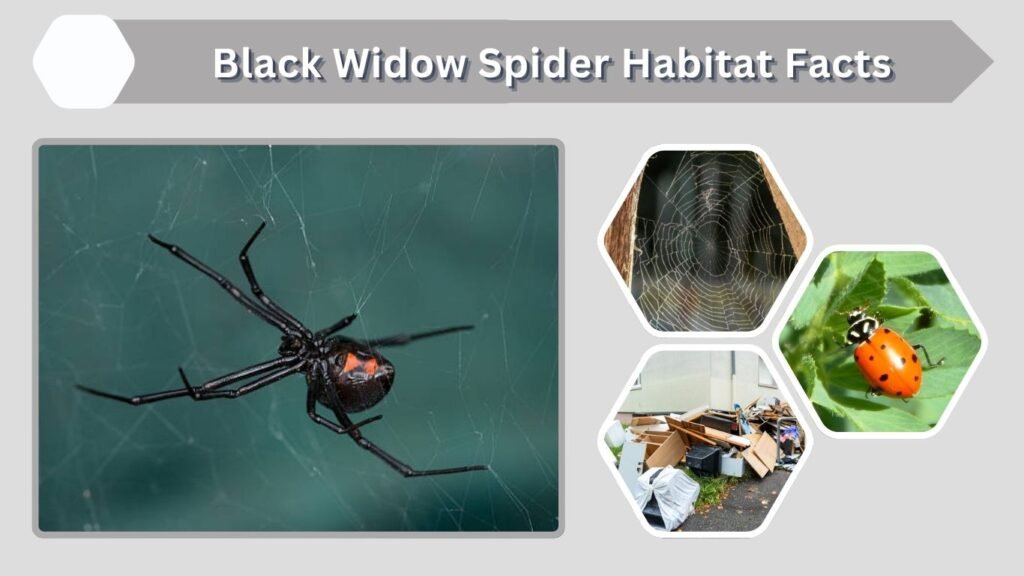
Black widow habitat facts help explain why these spiders are often found in the same types of places. They are not looking for people. They are looking for shelter, insects, and safe web-building spots.
Key Habitat Facts
Important facts include:
- Black widows prefer dark, quiet, sheltered places.
- They often build webs close to the ground.
- Their webs are messy, tangled, and sticky.
- Outdoor clutter can create ideal habitat.
- Garages, sheds, and crawl spaces are common hiding places.
- They feed on insects and other small arthropods.
- They are usually active at night.
- They often stay hidden during the day.
Because their webs are usually low and hidden, people may not notice them until cleaning, gardening, or moving stored items.
What Attracts Black Widows to a Habitat?
Black widows choose places that support feeding and protection. A clean, open, frequently disturbed area is less attractive than a cluttered, insect-rich corner.
Habitat Features They Prefer
A good black widow spider habitat often has:
- Darkness or shade
- Dry shelter
- Low disturbance
- Insect prey
- Corners or anchor points for webs
- Cracks, holes, or crevices
- Clutter such as wood, boxes, tools, or debris
Food availability is important. If flies, beetles, ants, crickets, or other insects are common in an area, spiders may also become more common.
Black Widow Habitat Pictures: What to Look For
Black widow spider habitat pictures often show messy webs in dark corners, under wood, inside sheds, or near outdoor clutter. The spider may hang upside down in its web, sometimes showing the red hourglass marking on the underside of the abdomen.
When looking at habitat pictures, notice the setting more than the spider alone. Common visual clues include dusty corners, dry leaves, stacked materials, wood, stones, cardboard, or narrow protected gaps.
Do not put your hands into these spaces to check for spiders. Use a flashlight and wear gloves when inspecting risky areas.
False Black Widow Spider Habitat
False black widow spiders can live in similar places, which is why they are often confused with true black widows. They may be found in homes, sheds, garages, walls, fences, and corners. Like black widows, they often build messy cobwebs and prefer protected areas.
However, false widows are different spiders. They usually do not have the classic red hourglass marking of a female black widow. Identification can still be difficult, so avoid handling any spider that resembles a widow spider.
How to Reduce Black Widow Habitat Around Your Home
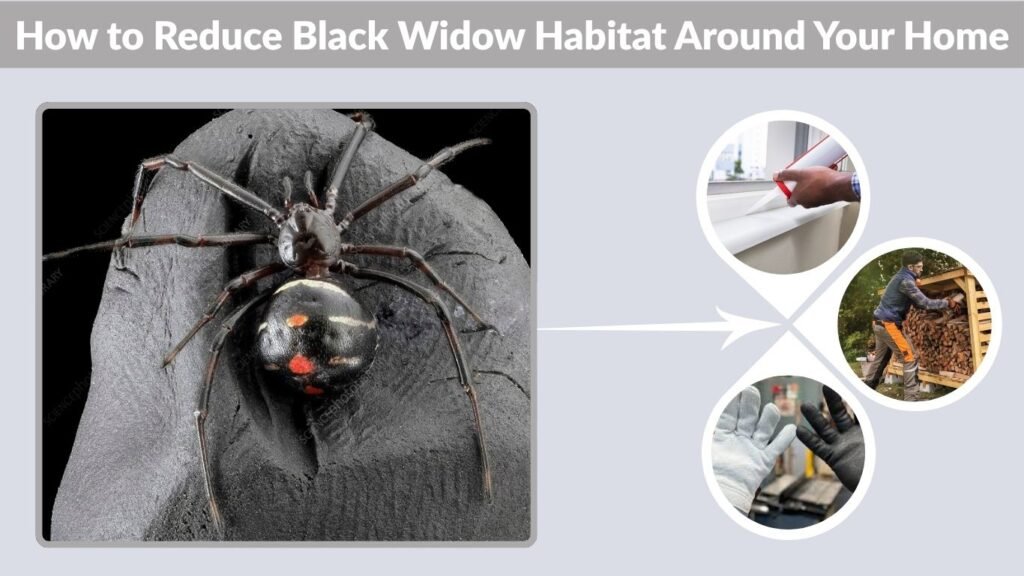
The best way to reduce black widow habitat is to remove the conditions they prefer. You do not need to eliminate every spider, but you can make your home and yard less attractive to widow spiders.
Prevention Tips
Helpful steps include:
- Keep firewood stacked away from the house.
- Wear gloves when moving lumber, rocks, or stored items.
- Shake out stored shoes, gloves, and outdoor clothing.
- Remove clutter from garages, sheds, and basements.
- Seal cracks, gaps, and holes around buildings.
- Vacuum or sweep corners and storage areas.
- Move outdoor furniture and check underneath it.
- Keep trash and recycling areas clean.
- Trim vegetation touching the house.
- Use a flashlight before reaching into dark spaces.
These steps reduce hiding places, web anchor points, and insect prey. Regular cleaning is especially helpful because black widows prefer undisturbed areas.
When to Be Careful in Black Widow Habitat
People are most likely to encounter black widows when disturbing hidden spaces. Gardening, cleaning sheds, moving firewood, lifting stones, and sorting old boxes can bring hands close to webs.
Be especially careful when working in:
- Dark garage corners
- Old storage boxes
- Crawl spaces
- Woodpiles
- Outdoor cabinets
- Yard debris
- Under porches
- Around utility boxes
If you find a black widow, avoid touching it. Use caution, keep children and pets away, and consider professional pest control if you see many spiders or webs in high-use areas.
FAQs
What is the habitat of a black widow spider?
The habitat of a black widow spider is usually dark, dry, sheltered, and quiet. It may include woodpiles, rocks, logs, sheds, garages, crawl spaces, basements, and outdoor clutter. These spiders prefer places where they can build tangled webs close to the ground and catch insects.
Where do black widow spiders live in the US?
Black widow spiders live in many parts of the United States. Southern black widows are common in the Southeast, western black widows are common in the West and Southwest, and northern black widows occur in parts of the eastern and northern regions. Local habitat conditions strongly affect where they appear.
Do black widows live inside houses?
Black widows can live inside houses, but they are more often found in garages, sheds, basements, crawl spaces, and storage areas than in busy living spaces. They prefer quiet corners with clutter, insects, and web support. Regular cleaning and decluttering can reduce indoor hiding places.
What does black widow spider habitat look like?
A black widow spider habitat often looks like a dark, dusty, undisturbed space with a messy cobweb. Common examples include woodpiles, storage boxes, utility boxes, garden debris, stone walls, and corners of sheds or garages. The web is usually irregular rather than round and symmetrical.
How can I keep black widows away from my home?
Reduce hiding places by removing clutter, sealing cracks, cleaning corners, moving firewood away from the house, and wearing gloves when handling stored items. Regularly check sheds, garages, outdoor furniture, and crawl spaces. Reducing insects around the property also makes the habitat less attractive to black widows.
