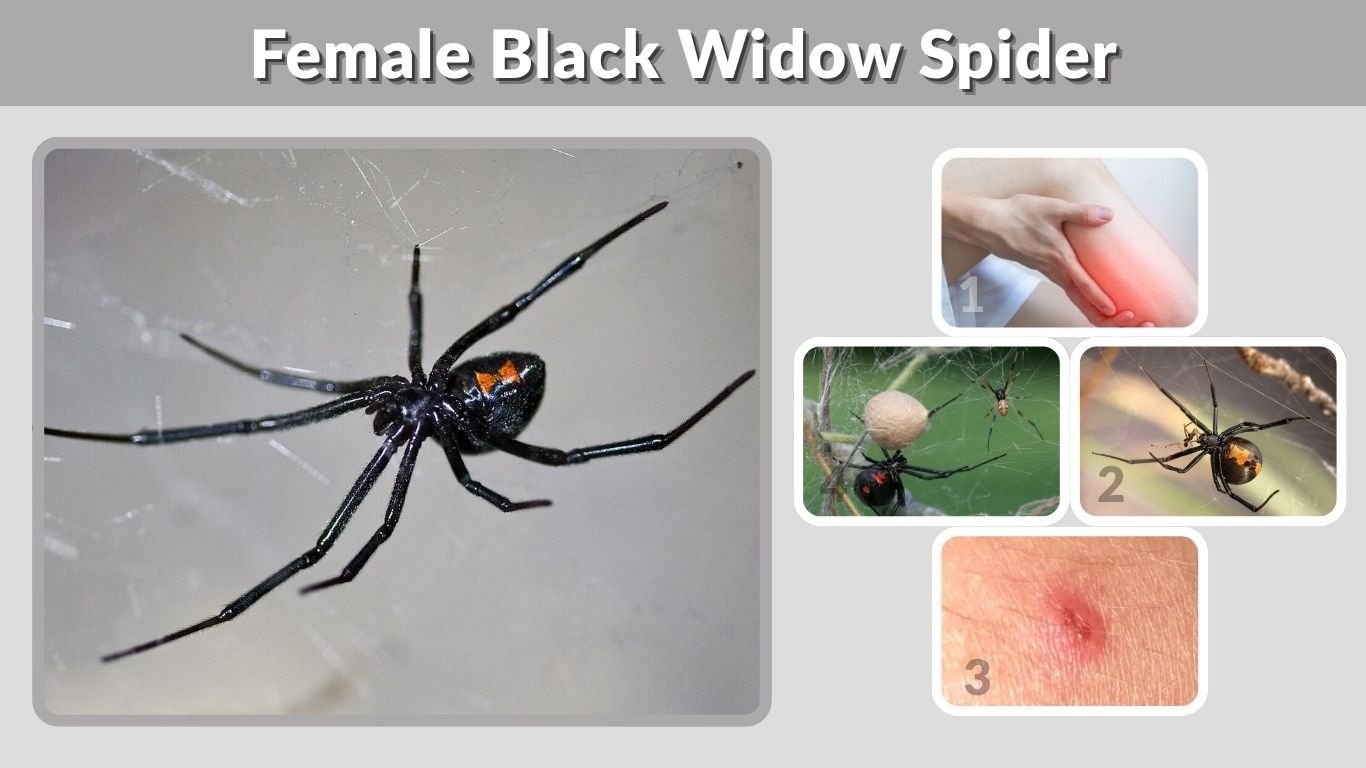
The female black widow spider is one of the most recognizable spiders in North America. Its shiny black body, rounded abdomen, and red hourglass marking make it famous, but also feared. Many people want to know how to identify a female black widow spider, how it differs from the male, and whether its bite is dangerous. This guide explains the key facts clearly.
What Is a Female Black Widow Spider?
A female black widow spider is the adult female form of spiders in the Latrodectus genus. These spiders are known for their strong venom, irregular webs, and distinctive body markings. The adult female is the spider most people picture when they hear “black widow.”
Female black widows are medically important because they are larger than males and can deliver a more significant venomous bite. However, they are not aggressive by nature. Most bites happen when a person accidentally touches, traps, or presses the spider.
Why Female Black Widows Are Better Known
Female black widows are better known than males because they are larger, darker, and easier to identify. The classic red hourglass marking is usually associated with mature females. Males are smaller, lighter, and often mistaken for other spiders.
The female also lives longer and stays near her web, especially when guarding egg sacs. This makes people more likely to encounter females in sheds, garages, woodpiles, outdoor furniture, and other quiet areas.
Is a Female Black Widow Spider Poisonous?
A female black widow spider is venomous, not poisonous. The word poisonous means something causes harm when touched, eaten, or absorbed. Venomous animals inject toxins through a bite or sting.
A female black widow injects venom through her fangs. This venom affects the nervous system and can cause pain, muscle cramps, sweating, nausea, and other symptoms. So, the correct description is “venomous female black widow spider.”
What Does a Female Black Widow Spider Look Like?
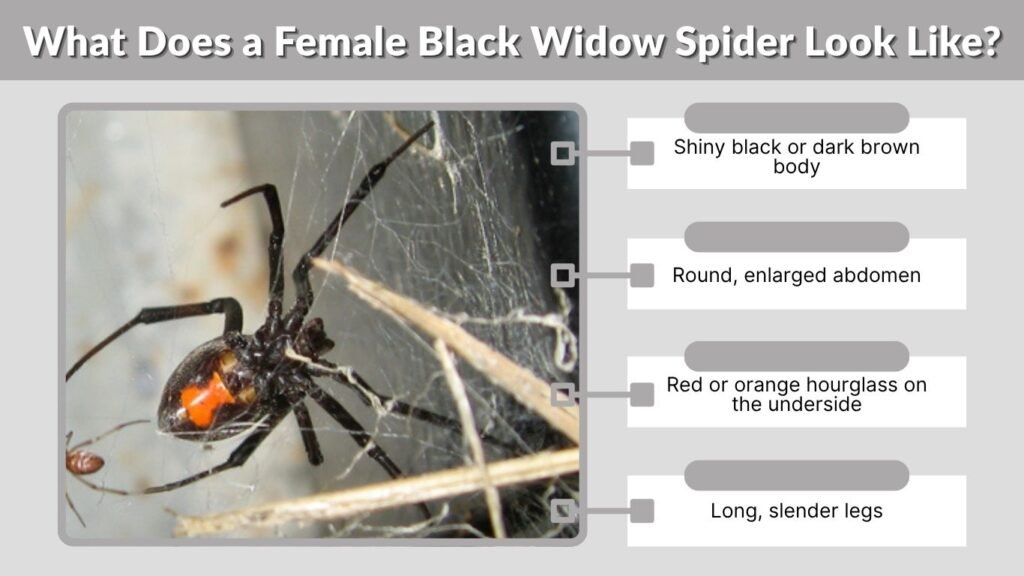
A mature female black widow spider usually has a glossy black or very dark brown body. Her abdomen is rounded and bulb-shaped. The most famous feature is the red or orange hourglass marking on the underside of the abdomen.
However, the hourglass is not always perfect. It may look broken, faint, orange-red, or split into two separate marks. Some females may also have small red spots or markings on the top of the abdomen, depending on species and maturity.
Key Female Black Widow Markings
The most useful identification features include:
- Shiny black or dark brown body
- Round, enlarged abdomen
- Red or orange hourglass on the underside
- Long, slender legs
- Tangled, irregular web
- Secretive behavior in dark, sheltered areas
The underside marking is important because it may not be visible when the spider is standing normally. If you see a dark spider in a messy web, do not pick it up to check the marking. Identification should be done safely from a distance.
Female Black Widow Spider Size
Female black widows are larger than males. The body length varies by species, but adult females are usually large enough to look noticeably rounded and heavy-bodied. Their legs make them appear larger than the body measurement alone.
The female’s size is one reason her bite is more medically important. She has a larger body and can deliver more venom than the male. This does not mean she wants to bite people. It means accidental bites from females deserve more caution.
Juvenile Female Black Widow Spider
A juvenile female black widow spider may not look like a mature adult. Young females can be lighter brown, tan, grayish, or patterned. They may have white, orange, yellow, or reddish bands and spots.
As the juvenile female matures, she often becomes darker and develops the classic adult female appearance. This can make identification difficult because immature females may resemble males or other harmless cobweb spiders.
Black Widow Spider Male vs Female
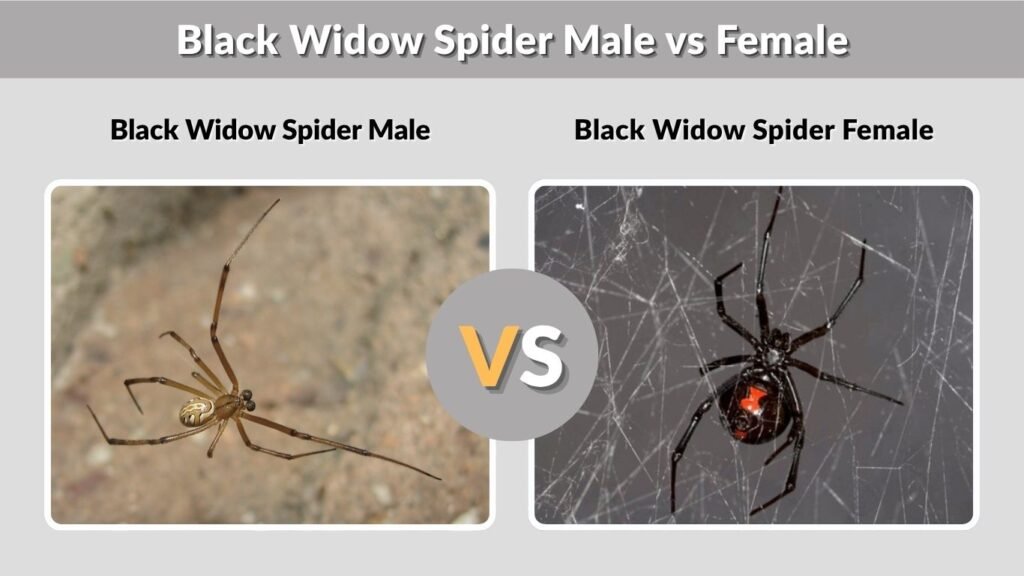
The difference between male and female black widow spiders is one of the most common search topics. They look so different that many people do not realize they are the same type of spider.
Male and Female Comparison
Male black widows are usually smaller, lighter, and more patterned. Female black widows are larger, darker, and more strongly associated with the red hourglass marking. Females are also the main concern for medically significant bites.
| Feature | Female Black Widow Spider | Male Black Widow Spider |
| Size | Larger, rounder abdomen | Much smaller body |
| Color | Usually shiny black or dark brown | Often brown, tan, or grayish |
| Markings | Red/orange hourglass underneath abdomen | White, red, orange, or pale markings |
| Bite risk | More medically important | Much lower concern |
| Behavior | Stays near web and egg sacs | Wanders more to find mates |
| Recognition | Classic “black widow” appearance | Often mistaken for other spiders |
Black Widow Spider Male and Female Pictures
People often search for male and female black widow spider pictures because words alone can be confusing. In pictures, the female usually appears glossy black with a large rounded abdomen. The male often looks thinner, smaller, and patterned.
When comparing images, look for body shape, color, and markings. The female has the iconic widow look, while the male may not look very threatening. Still, avoid handling either one because mistaken identification is common.
What Is More Dangerous: Male or Female?
The female black widow spider is more dangerous than the male. Female bites are the main medical concern because females are larger and can inject more venom. Male black widow bites are uncommon and usually considered far less serious.
That said, any suspected black widow bite should be taken seriously if symptoms develop. Severe pain, muscle cramps, sweating, nausea, or chest and abdominal pain should be checked by a medical professional.
Female Black Widow Spider Bite
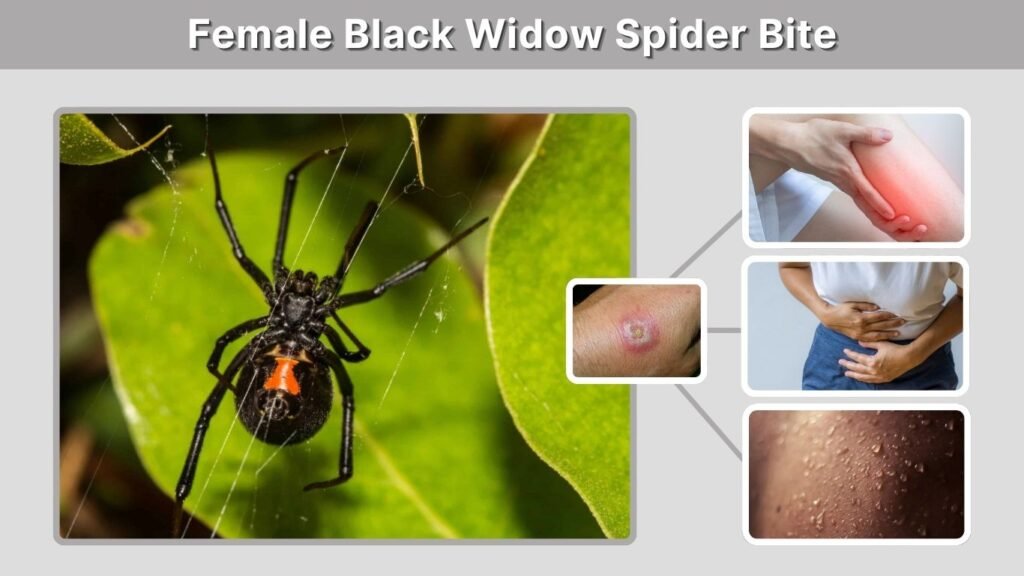
A female black widow spider bite can be painful and sometimes dangerous. The venom is a neurotoxin, meaning it affects nerve signaling. The bite may begin as a small sting but can lead to body-wide symptoms.
Can You Feel a Female Black Widow Bite?
Some people feel the bite right away as a sharp pinprick or burning sensation. Others may not notice it immediately. The bite mark may show two tiny punctures, redness, or mild swelling, but it may not look dramatic.
The more important signs are symptoms that spread beyond the bite area. These may develop within minutes to a few hours.
Female Black Widow Spider Bite Symptoms
Symptoms vary depending on the amount of venom injected, the person’s size, and overall health. Some bites are mild, while others can cause severe discomfort.
Possible symptoms include:
- Sharp pain or burning at the bite site
- Redness or swelling
- Muscle cramps or spasms
- Abdominal pain or tightness
- Back, chest, or shoulder pain
- Sweating
- Nausea or vomiting
- Headache or weakness
- Restlessness or anxiety
- High blood pressure in some cases
Children, older adults, pregnant people, and people with heart or breathing problems should be especially cautious.
When to Seek Medical Help
Seek medical care if the person develops spreading pain, severe cramps, vomiting, chest pain, trouble breathing, faintness, or intense abdominal pain. Medical help is also recommended when a child, older adult, pregnant person, or medically fragile person may have been bitten.
Doctors may treat symptoms with pain control, muscle relaxants, monitoring, and in selected severe cases, antivenom. Do not cut the bite, suck out venom, or use a tourniquet.
Female Black Widow Spider Behavior
Female black widows are shy and secretive. They prefer dark, quiet places and usually avoid people. They are not hunting humans and do not chase people.
Where Female Black Widows Live
Female black widows often stay in irregular webs built in protected areas. They prefer places with shelter and insect prey.
Common hiding places include:
- Woodpiles and stacked lumber
- Garages and sheds
- Basements and crawl spaces
- Outdoor furniture
- Garden tools and storage boxes
- Rock piles and retaining walls
- Utility boxes and meter boxes
- Corners of barns or outbuildings
The spider usually stays close to her web. If she has egg sacs, she may be more defensive when disturbed.
Female Black Widow Web
A female black widow web is messy, tangled, and irregular. It does not look like a neat circular orb web. The silk can be surprisingly strong. The spider may hang upside down in the web, which can reveal the red hourglass marking.
If you see a dark spider in a messy web in a sheltered area, avoid reaching in with bare hands.
What Female Black Widows Eat
Female black widows eat insects and other small arthropods. Their webs catch prey such as flies, beetles, ants, moths, grasshoppers, and other small creatures. Once prey is trapped, the spider bites it, wraps it in silk, and feeds.
This diet makes black widows part of the natural pest-control system, even though they are unwelcome near living spaces.
Do Female Black Widows Eat the Male?
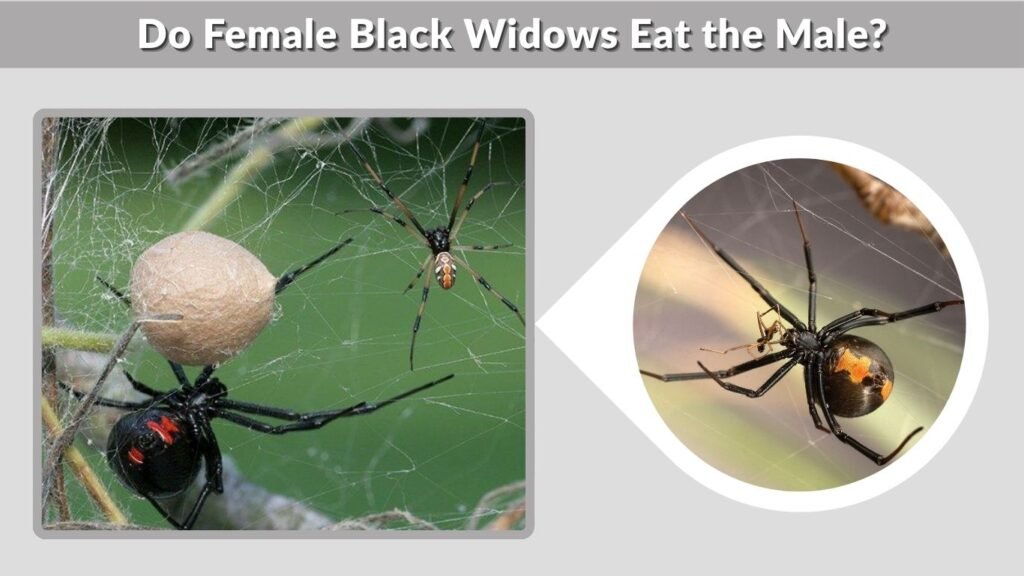
The idea that the female black widow always eats the male after mating is one of the most famous spider myths. Sexual cannibalism can happen in some widow spiders, but it is not guaranteed every time.
Why the Myth Exists
The name “black widow” comes from the reputation that females kill and eat males after mating. In some cases, females may cannibalize males. In other cases, the male escapes or is not eaten.
Mating behavior depends on species, conditions, hunger, timing, and the individual spiders involved. So, “female black widow eats male” is partly true, but not a rule that happens after every mating.
Female Black Widow Mating
Male black widows usually approach a female’s web carefully. They may send vibrations through the silk to signal their presence. This helps reduce the chance of being mistaken for prey.
After mating, the female may produce egg sacs containing many eggs. She often remains close to the sacs and guards the area. This is one reason people may encounter female black widows in protected corners.
Pregnant Female Black Widow Spider
People often use the phrase “pregnant female black widow spider,” but spiders technically produce eggs rather than carrying a pregnancy like mammals. A gravid female may have a swollen abdomen before making egg sacs.
A female with egg sacs should not be disturbed. Use caution around webs containing round, pale egg sacs, especially in dark storage areas or outdoor structures.
Female Black Widow Lookalikes
Not every dark spider is a female black widow. Many harmless or less dangerous spiders are mistaken for black widows.
Female False Black Widow Spider
False widow spiders can look similar because they may have dark rounded bodies and messy webs. However, they usually lack the clear red hourglass marking of a true black widow. Their markings and body color vary by species.
False widow bites can cause discomfort, but they are generally not the same as true black widow envenomation. Still, avoid handling any spider you cannot identify confidently.
Female Northern and Southern Black Widow Spiders
There are several black widow species. The southern black widow, northern black widow, and western black widow have overlapping similarities but different ranges and marking patterns.
A female southern black widow often has a distinct red hourglass. A female northern black widow may have a broken hourglass or red spots. A female western black widow may have a red or orange hourglass that can vary in shape.
How to Avoid Female Black Widow Spider Bites
Avoiding bites is mostly about preventing accidental contact. Female black widows bite defensively when trapped, pressed, or disturbed.
Safety Tips Around the Home
You can reduce risk by being careful in areas where black widows hide.
Use these safety steps:
- Wear gloves when moving wood, rocks, or stored boxes
- Shake out shoes, gloves, and clothing stored outside
- Avoid reaching blindly into dark corners
- Keep garages, sheds, and basements uncluttered
- Move firewood away from the house
- Seal cracks around doors and foundations
- Teach children not to touch spiders or webs
What to Do If You Find One
If you find a female black widow spider, do not handle it. Keep children and pets away from the area. If it is outside and away from living spaces, it may be left alone. If it is indoors or near high-use areas, careful removal or professional pest control may be appropriate.
When cleaning webs, wear gloves and use tools rather than bare hands.
FAQs
What characteristic identifies a female black widow spider?
The most famous identifying feature is a red or orange hourglass marking on the underside of the abdomen. Adult females are usually shiny black or dark brown with a rounded abdomen and long legs. However, markings can vary, and juveniles may look lighter or patterned before becoming mature.
How big is a female black widow spider?
A female black widow is larger than a male and has a rounded, heavy-looking abdomen. Exact size varies by species, but females are noticeably bigger and darker than males. Their leg span can make them appear larger than their body length. Females are the main concern for medically significant bites.
What is the difference between male and female black widow spiders?
Female black widows are larger, darker, and often have a red hourglass underneath the abdomen. Males are smaller, lighter, and may have white, orange, or red markings. Females are more medically important because they can deliver a stronger venomous bite, while males are much less concerning.
Does the female black widow spider eat the male?
Sometimes, but not always. Female black widows may eat males after mating in some situations, which helped create the “black widow” name. However, males can escape, and cannibalism is not guaranteed. The behavior depends on species, hunger, mating conditions, and individual spider behavior.
Is a female black widow spider bite dangerous?
Yes, a female black widow spider bite can be dangerous because the venom affects nerve endings. Symptoms may include severe pain, muscle cramps, sweating, nausea, abdominal pain, chest discomfort, and high blood pressure. Serious symptoms require medical care, especially in children, older adults, pregnant people, and medically fragile individuals.